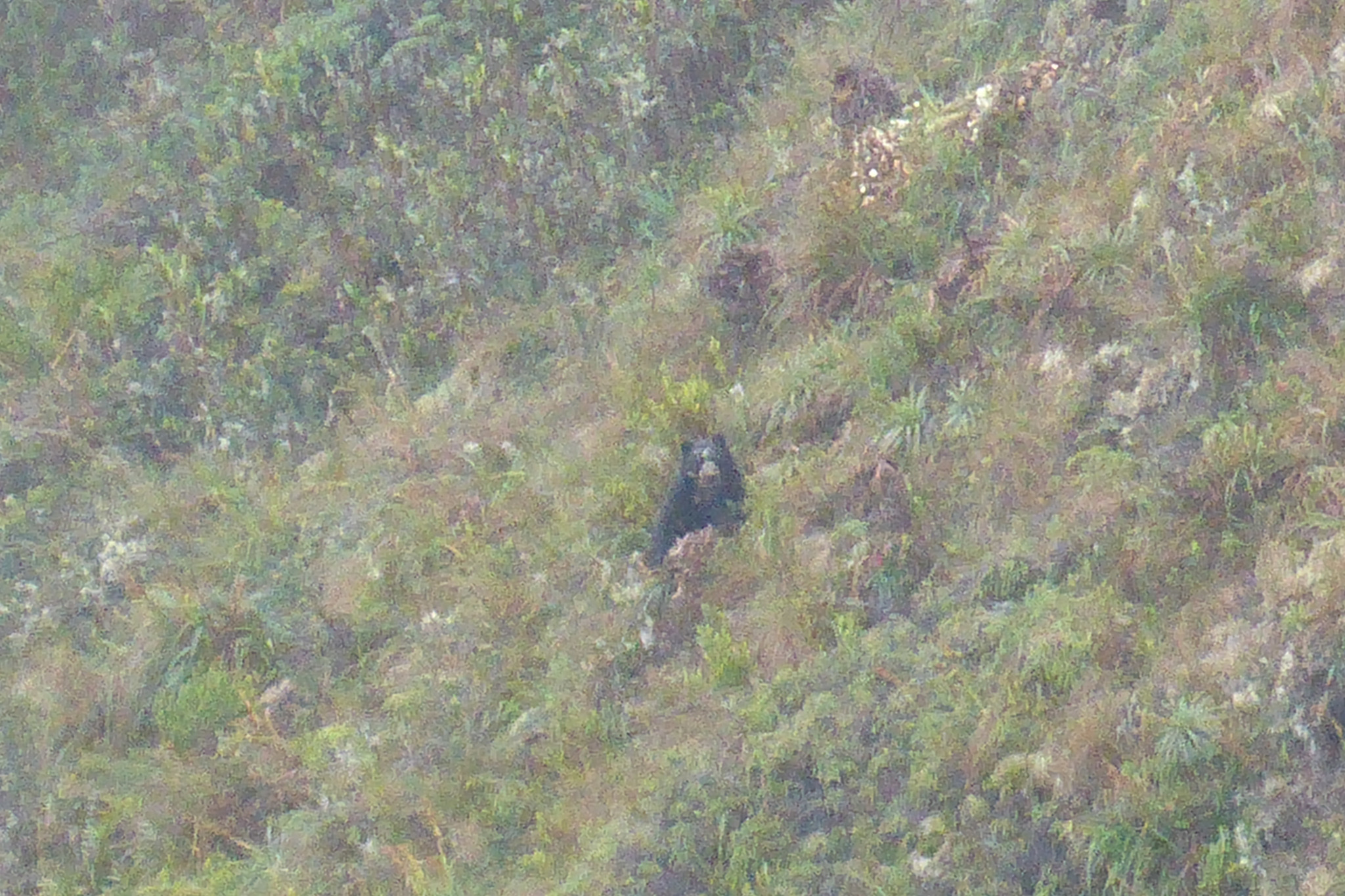
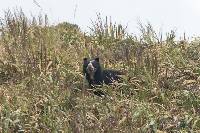
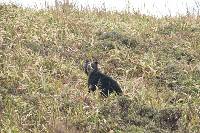
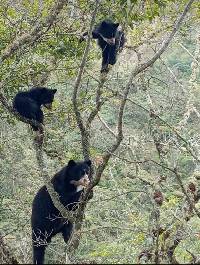
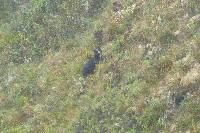
The spectacled bear (Tremarctos ornatus), also known as the Andean bear, is a species of bear native to the Andes Mountains in northern and western South America. It is the only living species of bear native to South America, and the last remaining short-faced bear (subfamily Tremarctinae). Unlike other omnivorous bears, the diet of the spectacled bear is mostly herbivorous. The species is classified as vulnerable by the IUCN because of habitat loss.
Etymology
Tremarctos ornatus is commonly referred to in English as the "spectacled bear", a reference to the light colouring on its chest, neck and face, which may resemble spectacles in some individuals, or the "Andean bear" for its distribution along the Andes. The root trem comes from a Greek word meaning "hole"; arctos is the Greek word for "bear". Tremarctos is a reference to an unusual hole on the animal's humerus. Ornatus, Latin for "decorated", is a reference to the markings that give the bear its common English name. T. ornatus is locally known as jukumari (Aymara and Quechua), ukumari or ukuku (Quechua); translating to "hole bear", the tan facial markings usually appear on the face except around the bear's eyes, making it look like the bear has holes for eyes
Taxonomy
The spectacled bear is last surviving member of the subfamily Tremarctinae (otherwise known as short-faced bears), which also includes its extinct sister species Tremarctos floridanus from North America, and the fellow short-faced bears Arctodus, and Arctotherium, which became extinct at the end of the Pleistocene around 12,000 years ago.
Unlike almost all other extant bears (from the Ursinae subfamily), tremarctine bears like T. ornatus appear to have disproportionately shorter snouts, giving them the name "short-faced". This apparent shortness is an illusion caused by the deep snouts and short nasal bones of tremarctine bears compared with ursine bears; Tremarctine bears have shorter and taller skulls, but not a shorter face than...