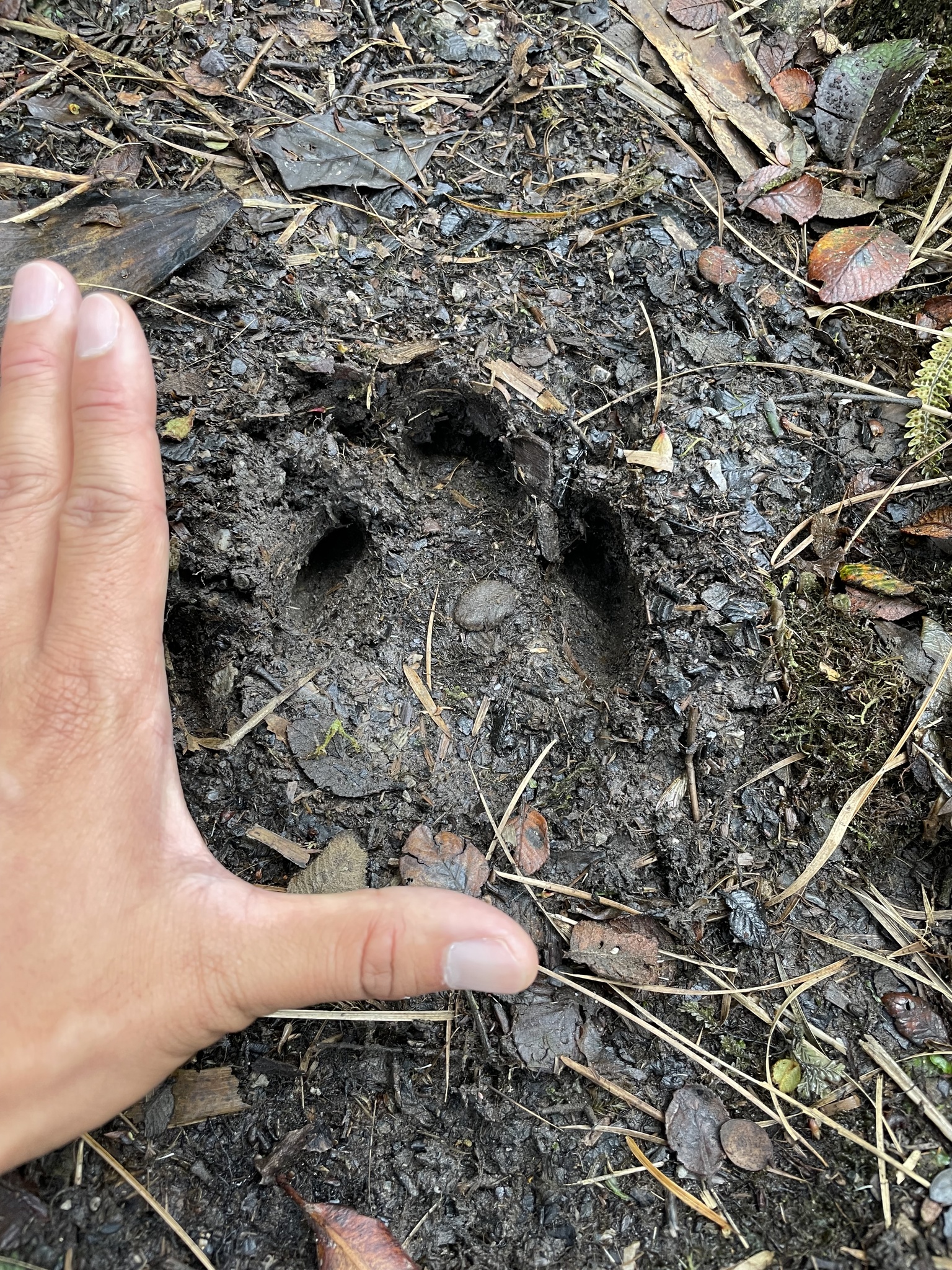
Tapirus is a genus of tapir which contains the living tapir species. The Malayan tapir is usually included in Tapirus as well, although some authorities have moved it into its own genus, Acrocodia.
Extant species
Image
Common name
Scientific name
Distribution
Baird's tapir (also called the Central American tapir)
Tapirus bairdii (Gill, 1865)
Mexico, Central America and northwestern South America.
South American tapir (also called the Brazilian tapir or lowland tapir)
Tapirus terrestris (Linnaeus, 1758)
Venezuela, Colombia, and the Guianas in the north to Brazil, Argentina, and Paraguay in the south, to Bolivia, Peru, and Ecuador in the West
Mountain tapir (also called the woolly tapir)
Tapirus pinchaque (Roulin, 1829)
Eastern and Central Cordilleras mountains in Colombia, Ecuador, and the far north of Peru.
Malayan tapir (also called the Asian tapir, Oriental tapir or Indian tapir)
Tapirus indicus (Desmarest, 1819)
Indonesia, Malaysia, Myanmar, and Thailand
The Kabomani tapir was at one point recognized as another living member of the genus, but is now considered to be nested within T. terrestris.
Evolution
The genus Tapirus first appeared during the Middle Miocene (around 16-10 million years ago), known fossils in both Europe (T. telleri) and North America (T. johnsoni and T. polkensis). The youngest tapir in Europe, Tapirus arvernensis became extinct at the end of the Pliocene, around 2.6 million years ago. In a 2011 mapping of mitochondrial DNA relationships between perissodactyls, the Malayan tapir was estimated to have diverged from the rest of the genus in Asia during the Oligocene. Tapirus dispersed into South America during the Early Pleistocene as part of the Great American Interchange, around 2.6-1 million years ago.
Tapirs suffered considerable extinctions at the end of the Pleistocene, and went completely extinct north of southern Mexico.
†Tapirus arvernensis Croizet & Jobert, 1828
†Tapirus augustus Matthew & Granger, 1923 -...