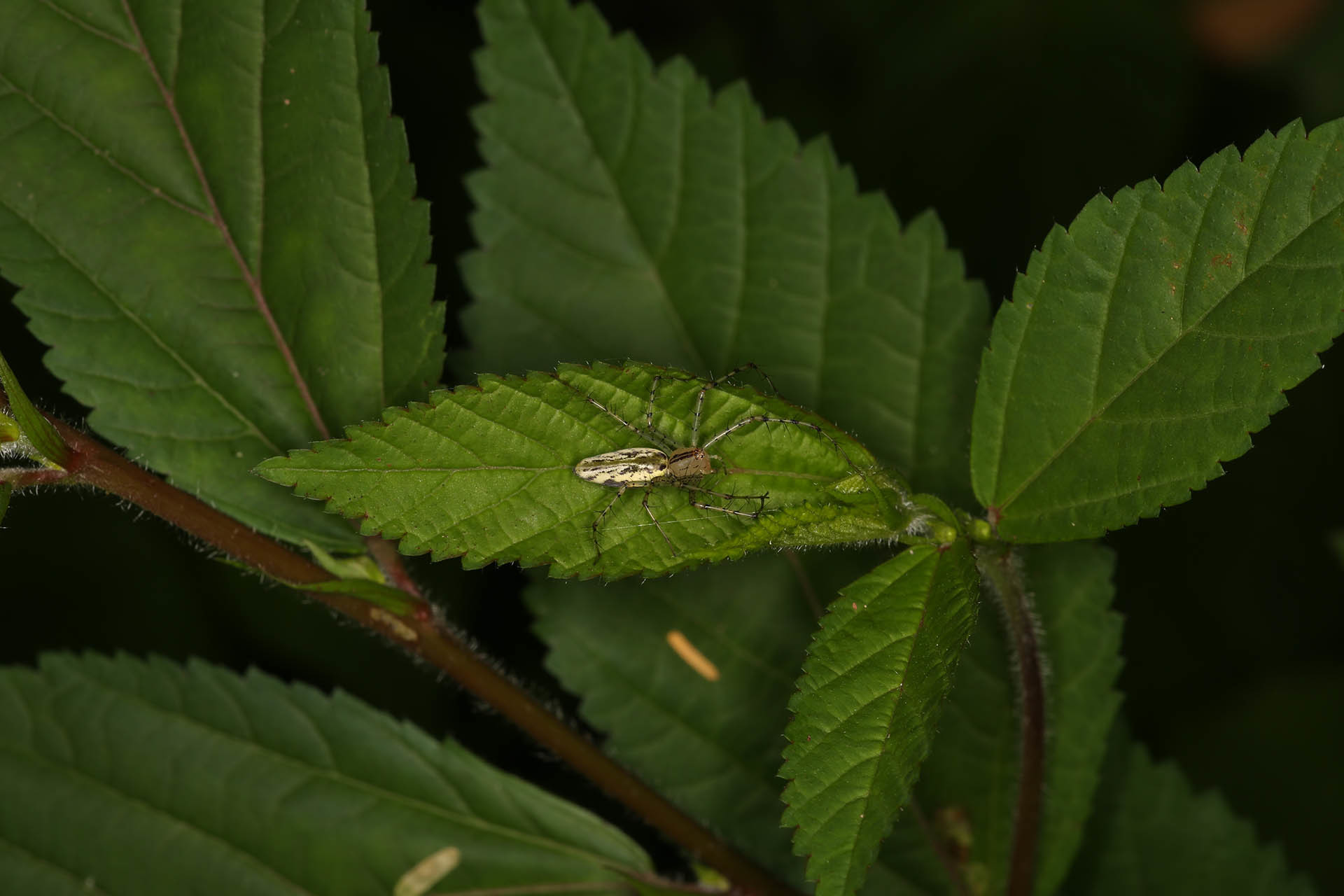
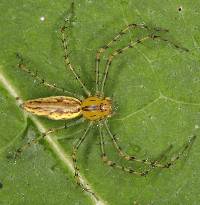
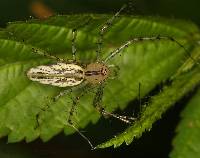
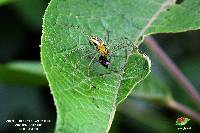
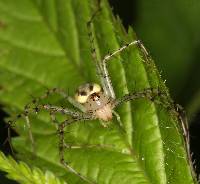
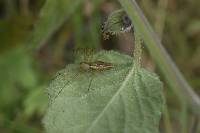
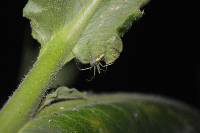
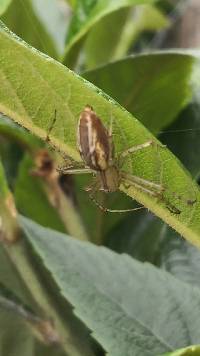
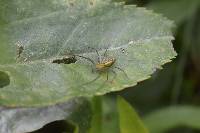
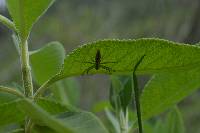
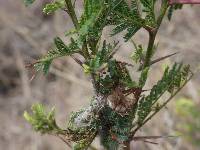
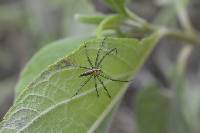
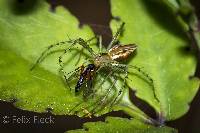
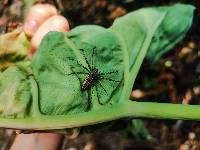
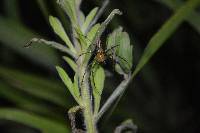
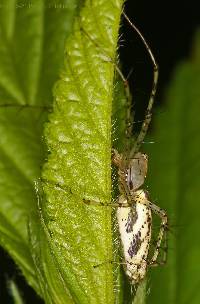
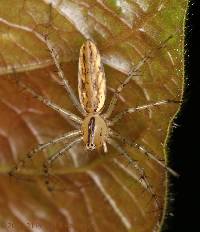
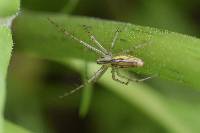
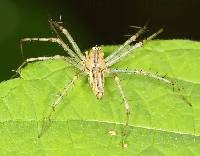
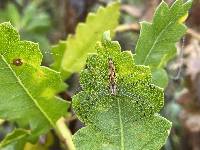
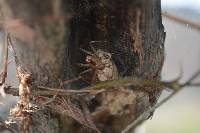
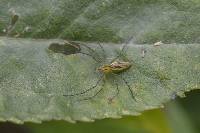
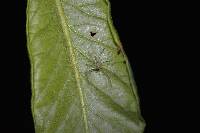
Peucetia rubrolineata is a species of lynx spider in the family Oxyopidae. It was first described by Keyserling in 1877. The species is widely distributed throughout the Neotropics, ranging from Panama to central Argentina.
The species name "rubrolineata" refers to the red bands on the carapace.
Description
Males have a total length ranging from 5.71 to 10.28 mm, while females range from 2.85 to 13.28 mm. The carapace is orange with red thoracic groove and variable red longitudinal bands. In live or fresh specimens, the carapace displays two median red longitudinal bands that can vary in width, sometimes covering almost the entire carapace. The clypeus and chelicerae are orange, with chelicerae bearing two lateral red bands and a black spot on the cheliceral boss.
Males have cream-colored legs with darker metatarsus and tarsus, and dark spots at the base of spines. The abdomen is gray dorsally with lateral white bands, and gray ventrally with white spots near the epigastric furrow and spinnerets. The palpal structure is distinctive, featuring a bifid paracymbium with simple branches and a median apophysis with a curved, bifid apical projection.
Females display more variable coloration, with an orange carapace marked by red margins and longitudinal lines. The sternum is green with orange margins. The legs are orange with black spots at the base of spines, and red spots at the base of ventral femoral spines. The abdomen is white with a gray folium dorsally and a central gray band ventrally. The epigynum is concave with distinctive longitudinal and transverse septa.
Taxonomy
The taxonomic history of this species is complex, with numerous species names now considered synonymous. Santos and Brescovit conducted a comprehensive revision of the genus in 2003, establishing that eight previously recognized species names are junior synonyms of P. rubrolineata. The synonymization was based on detailed morphological comparisons, including examination of type...