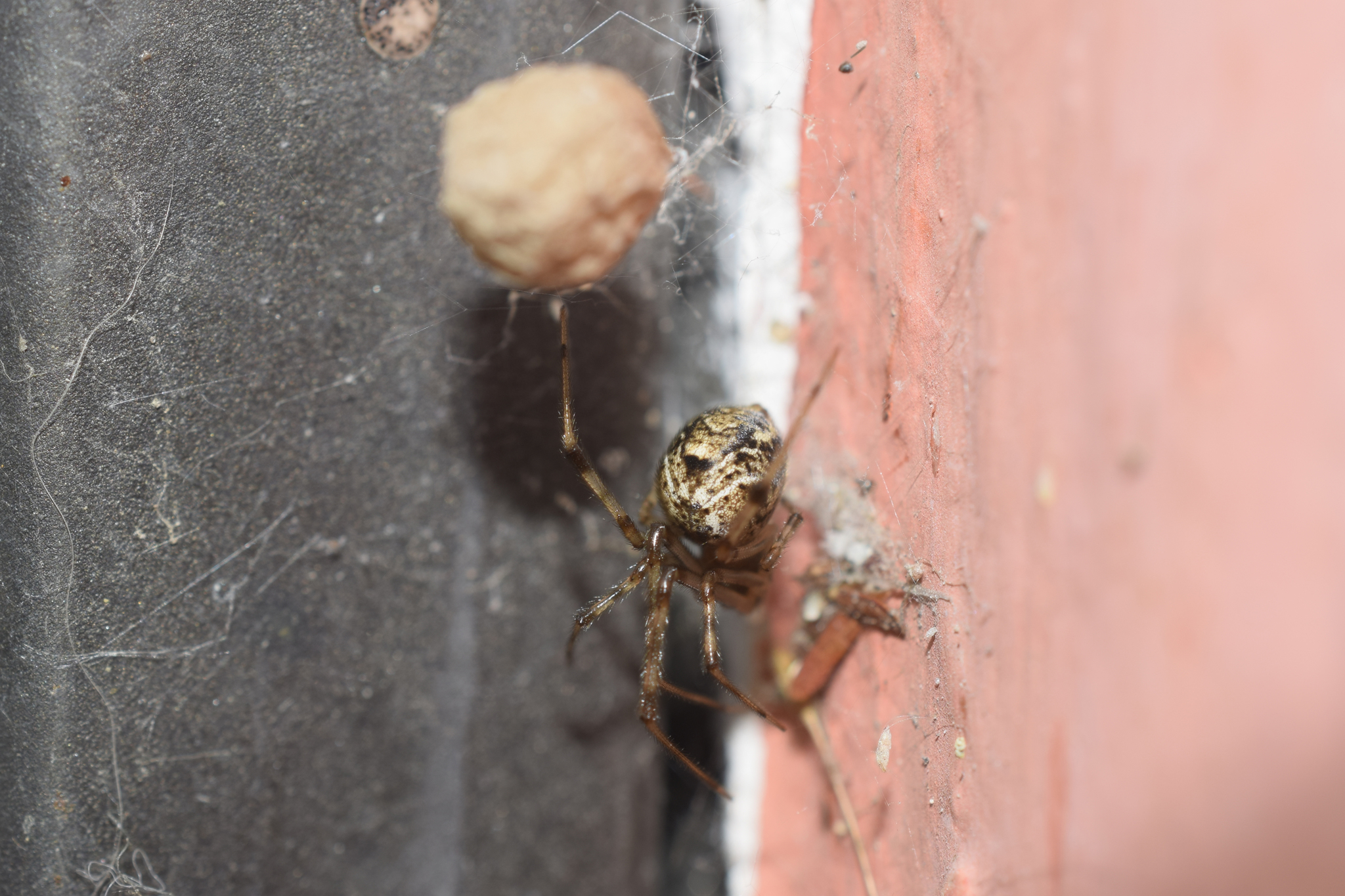
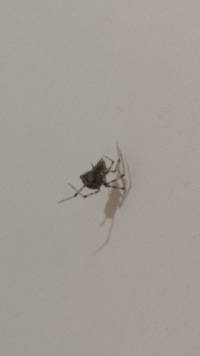
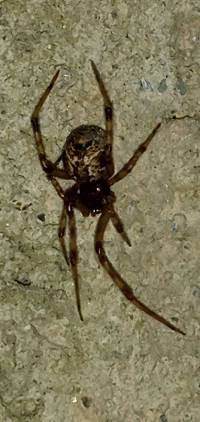
Parasteatoda tepidariorum, the common house spider or American house spider, is a spider species of the genus Parasteatoda with a cosmopolitan distribution. Common house spiders are synanthropic and live in and near human dwellings. Their prey mechanism is similar to that of the other cobweb spiders: the spider follows disturbances transmitted along the web to entangle and then paralyze its prey, which usually consists of household insects and other invertebrates (often considered as pests).
Distribution
Parasteatoda tepidariorum is native to Asia but has been introduced to Canada, the USA, South America, Europe, Morocco, Turkey, the Caucasus, Russia (Europe to Far East), Saint Helena, South Africa, the Seychelles, New Zealand, and Hawaii.
In South Africa, the species has been sampled from the provinces Gauteng, Eastern Cape, and Western Cape. Notable locations include Mountain Zebra National Park and Robben Island.