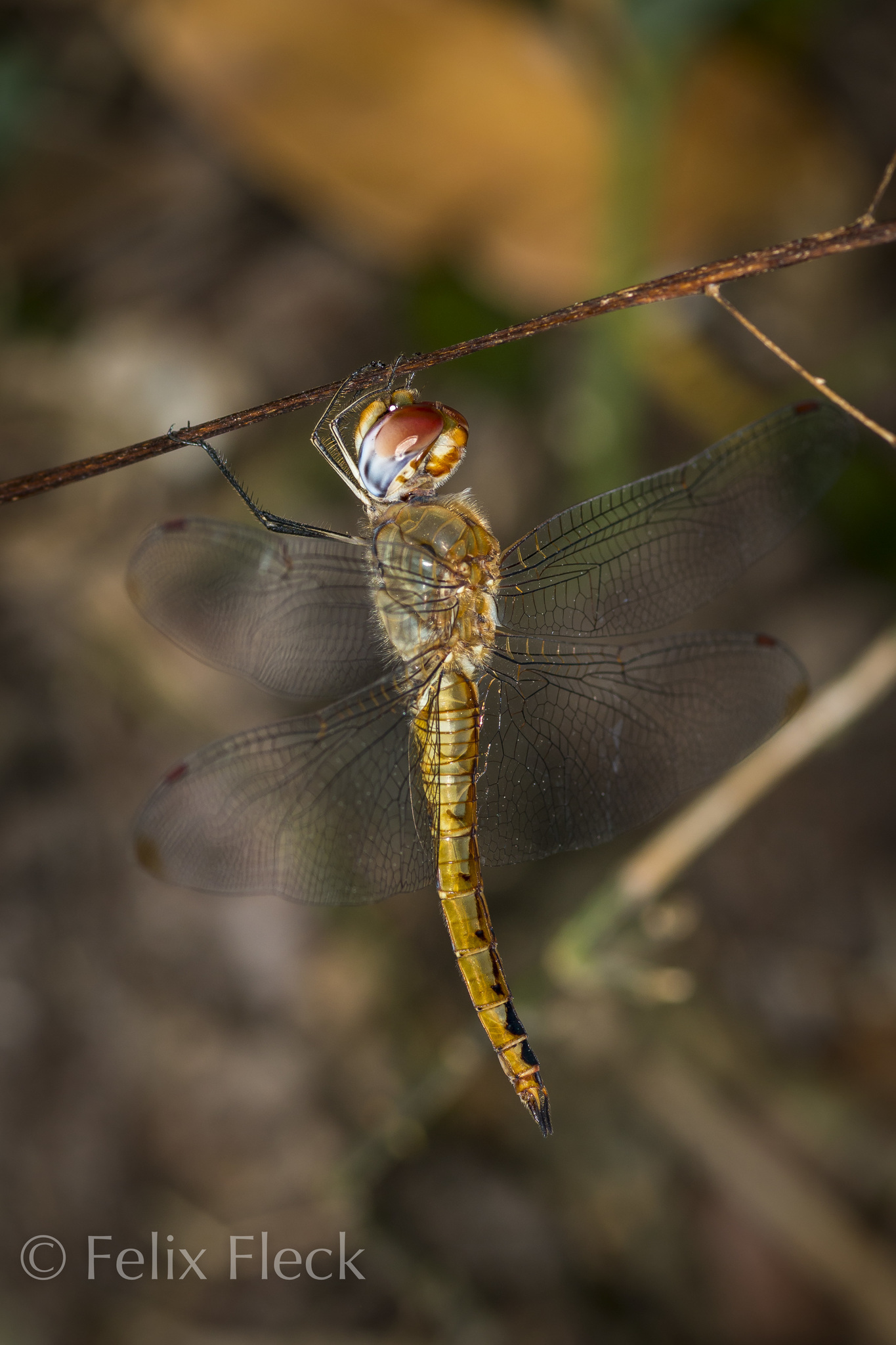
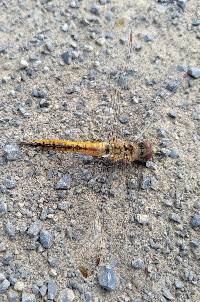
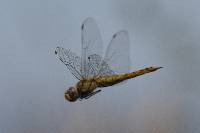
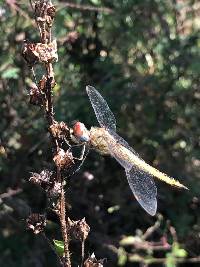
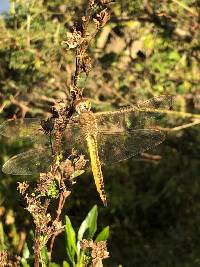
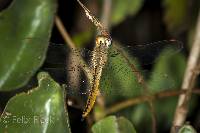
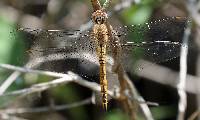
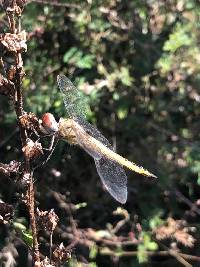
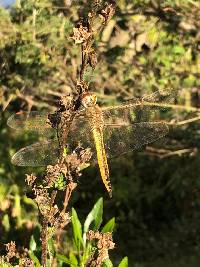
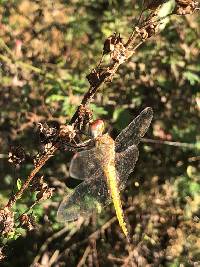
Pantala flavescens, the globe skimmer, globe wanderer or wandering glider, is a wide-ranging dragonfly of the family Libellulidae. This species and Pantala hymenaea, the "spot-winged glider", are the only members of the genus Pantala. It was first described by Johan Christian Fabricius in 1798. It is considered to be the most widespread dragonfly on the planet, with good populations on every continent except Antarctica, although rare in Europe. Globe skimmers make an annual multigenerational journey of some 18,000 km (about 11,200 miles); to complete the migration, individual globe skimmers fly more than 6,000 km (3,730 miles); one of the farthest known migrations of all insect species.
Characteristics
The dragonfly is up to 4.5 cm long, reaching wingspans between 7.2 cm and 8.4 cm. The front side of the head is yellowish to reddish. The thorax is usually yellow to golden coloured with a dark and hairy line. There were also specimens with a brown or olive thorax. The abdomen has a similar colour as the thorax.
The wings are clear and very broad at the base. There, too, there are some specimens with olive, brown and yellow wings. On Easter Island there are wandering gliders with black wings.
The pterostigma turns yellowish. The transparent wings may turn a yellowish shade towards the tip. The chestnut-red eyes take up most of the head, as is usual in the large dragonflies (Anisoptera). The above colours explain the many scientific descriptions of this species under different names.
Females show some differences compared with males. Generally the males have reddish yellow abdomens marked with black, whereas the females lack the reddish wash in the abdomen. The males have golden yellow patches on the base of the hindwings and narrow apical brown spots at the hind border of the wings. The females lack apical brown patches in their wings.
In mainland males, the length of the femur, the longest leg section, varies; they also have longer front...