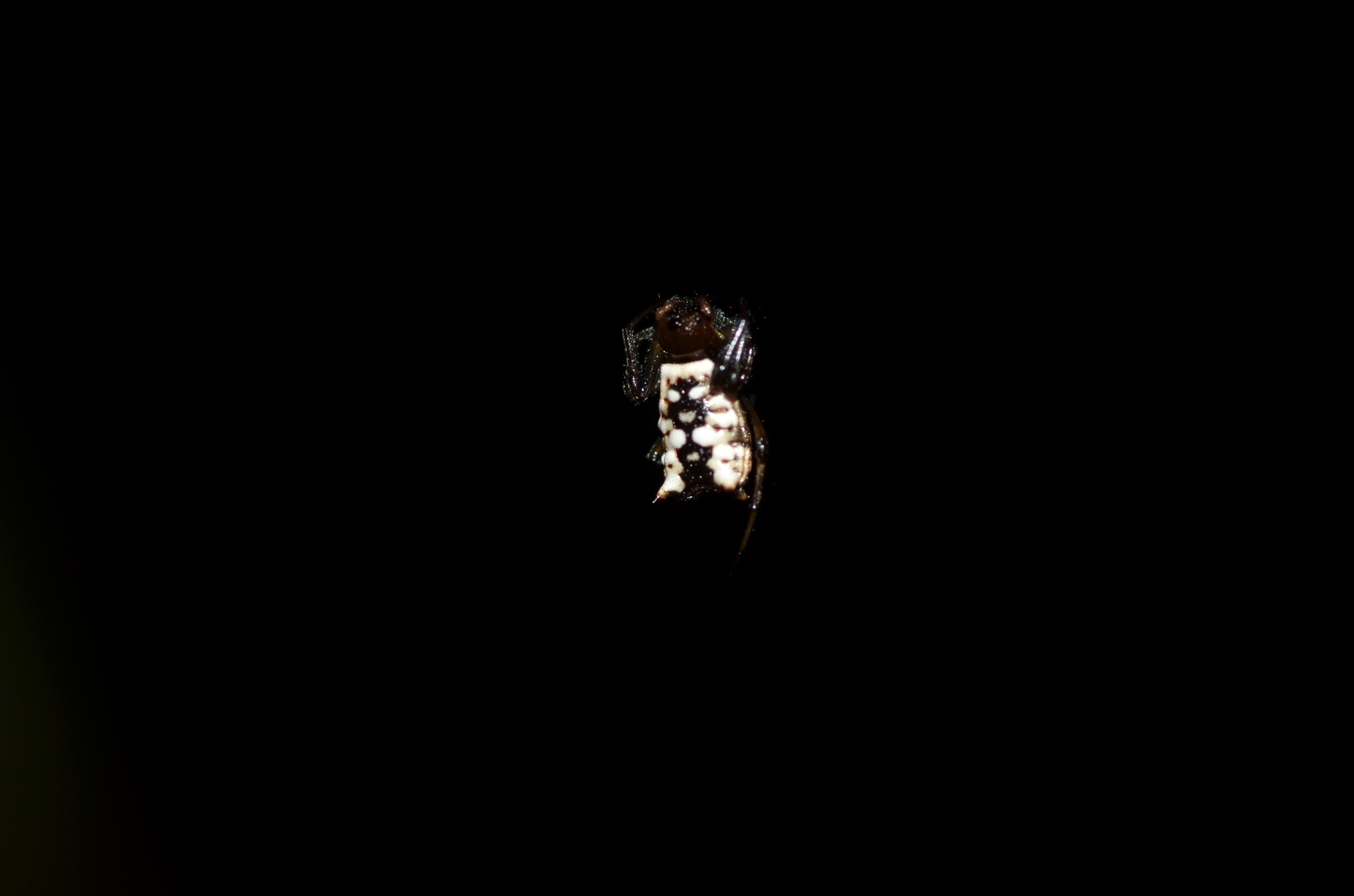
Micrathena mitrata, the white micrathena, is a species of orb weaver in the spider family Araneidae. It is found in a range from the United States to Brazil. The spider has a distinctive appearance with a shiny, black abdomen and spiky, yellowish-brown legs. Its body length ranges from 4 to 9 mm in females and 3 to 4 mm in males. The species is known for its elaborate web, which it uses to capture insects for food. Micrathena mitrata is not considered dangerous to humans and is generally regarded as a harmless spider.
Physiology
Micrathena mitrata, like all spiders, has a unique physiology that is well-adapted to its way of life. It has eight legs, covered in sensory hairs and spines, which are used for walking, climbing, and capturing prey. At the tip of its abdomen, it has several pairs of spinnerets, which produce different types of silk for various purposes, including web-building and wrapping prey. The spider also has venom glands that produce venom to subdue and kill its prey. This venom is injected into prey through its chelicerae, which serve as fangs. Spiders have a unique respiratory system, with flattened sacs called book lungs that exchange gases with the air, and tracheae, which carry air directly to the organs. Micrathena mitrata also has a specialized digestive system, using its chelicerae to inject digestive enzymes into its prey to break it down into a liquid that it can consume. It then uses its mouthparts to suck up the liquid and absorb nutrients. In summary, Micrathena mitrata has a physiology that is specialized for hunting, spinning webs, and thriving in its natural environment.
Habitat
Micrathena mitrata is commonly found in North America, particularly in the eastern and central regions of the United States, as well as in Canada. The spider prefers wooded areas, especially near streams and other bodies of water, where it can build its web low to the ground, often near shrubs or trees. They are also known to inhabit fields and meadows, especially in...