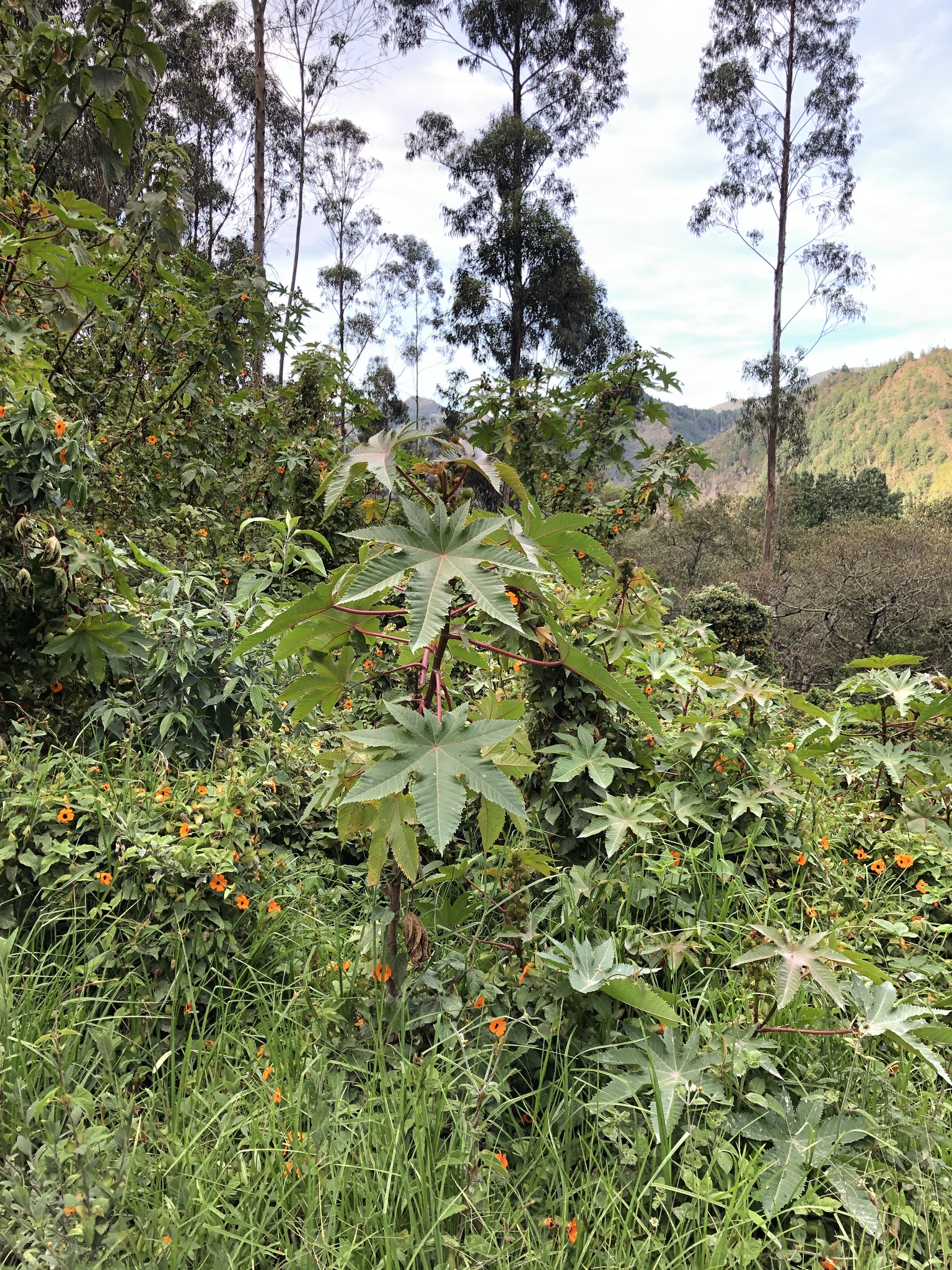
Ricinus communis, the castor bean or castor oil plant, is a species of perennial flowering plant in the spurge family, Euphorbiaceae. It is the sole species in the monotypic genus, Ricinus, and subtribe, Ricininae.
Its seed is the castor bean, which despite the term is not a bean (as it is not the seed of a member of the family Fabaceae). Castor is native to the Horn of Africa, but it is now widespread throughout tropical regions (and widely grown elsewhere as an ornamental plant).
Castor seed is the source of castor oil, which has a wide variety of uses. The seeds contain 40–60% oil that is rich in triglycerides, mainly ricinolein. The seed also contains ricin, a highly potent water-soluble toxin.
Description
Ricinus communis can vary greatly in its growth habit and appearance. The variability has been increased by breeders who have selected a range of cultivars for leaf and flower colours, and for oil production. It is a fast-growing, suckering shrub that can reach the size of a small tree, around 12 metres (39 feet), but it is not cold hardy.
The glossy leaves are 15–45 centimetres (6–18 inches) long, long-stalked, alternate and palmate with five to twelve deep lobes with coarsely toothed segments. In some varieties they start off dark reddish purple or bronze when young, gradually changing to a dark green, sometimes with a reddish tinge, as they mature. The leaves of some other varieties are green practically from the beginning, whereas in yet others a pigment masks the green color of all the chlorophyll-bearing parts, leaves, stems and young fruit, so that they remain a dramatic purple-to-reddish-brown throughout the life of the plant. Plants with the dark leaves can be found growing next to those with green leaves, so there is most likely only a single gene controlling the production of the pigment in some varieties. The stems and the spherical, spiny seed capsules also vary in pigmentation. The fruit capsules of some varieties are more showy than the...