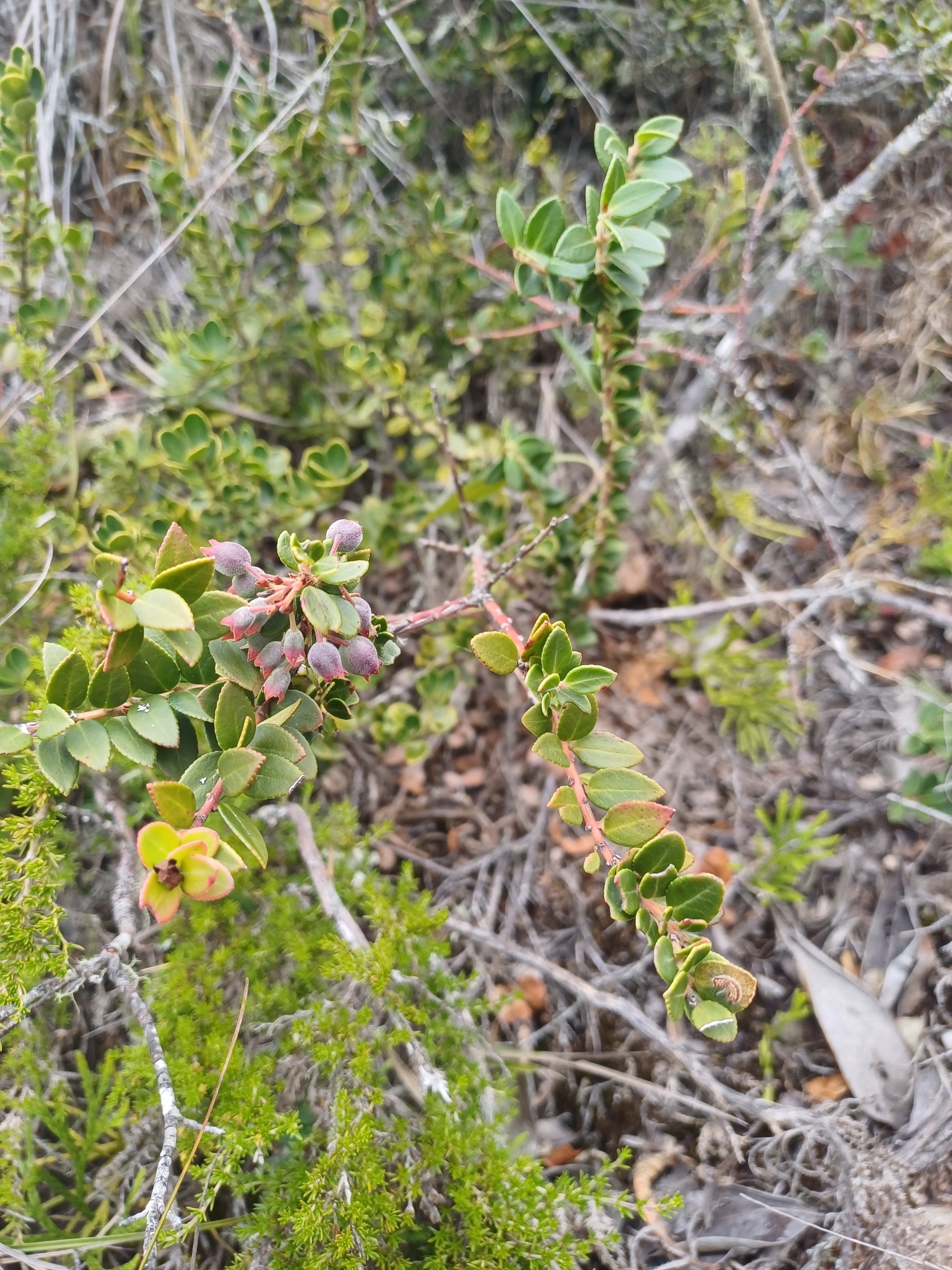
Vaccinium ( vak-SIN-ee-əm) is a common and widespread genus of shrubs or dwarf shrubs in the heath family (Ericaceae). The fruits of many species are eaten by humans and some are of commercial importance, including the cranberry, blueberry, bilberry (whortleberry), lingonberry (cowberry), and huckleberry. Like many other heath plants, they are restricted to acidic soils.
Description
The plant structure varies between species: some trail along the ground, some are dwarf shrubs, and some are larger shrubs perhaps 1 to 2 metres (3 to 7 feet) tall. Some tropical species are epiphytic. Stems are usually woody. Species found in tropical bioregions like Malesia are evergreen.
Flowers are epigynous with fused petals and have long styles that protrude from their bell-shaped corollas. Inflorescences can be axillary or terminal. Stamens have anthers with extended tube-like structures called "awns" through which pollen is released when mature.
The fruit develops from an inferior ovary and is a four- or five-parted berry; it is usually brightly coloured, often red or bluish with purple juice. Its seeds are small and smooth on the surface. Roots are commonly mycorrhizal, which likely help the plants to access nutrients such as nitrogen and phosphorus in the acidic, nutrient-poor soils they inhabit.
Taxonomy
The genus was first described scientifically by Carl Linnaeus in 1753. The name Vaccinium was used in classical Latin for a plant, possibly the bilberry or a hyacinth, and may be derived from the Latin bacca, meaning berry, although its ultimate derivation is obscure. It is not the same word as Vaccinum, which means "of or pertaining to cows".
The taxonomy of the genus is complex and still under investigation. Genetic analyses indicate that the genus Vaccinium is not monophyletic. A number of the Asian species are more closely related to Agapetes than to other Vaccinium species. A second group includes most of Orthaea and Notopora, at least some of Gaylussacia...