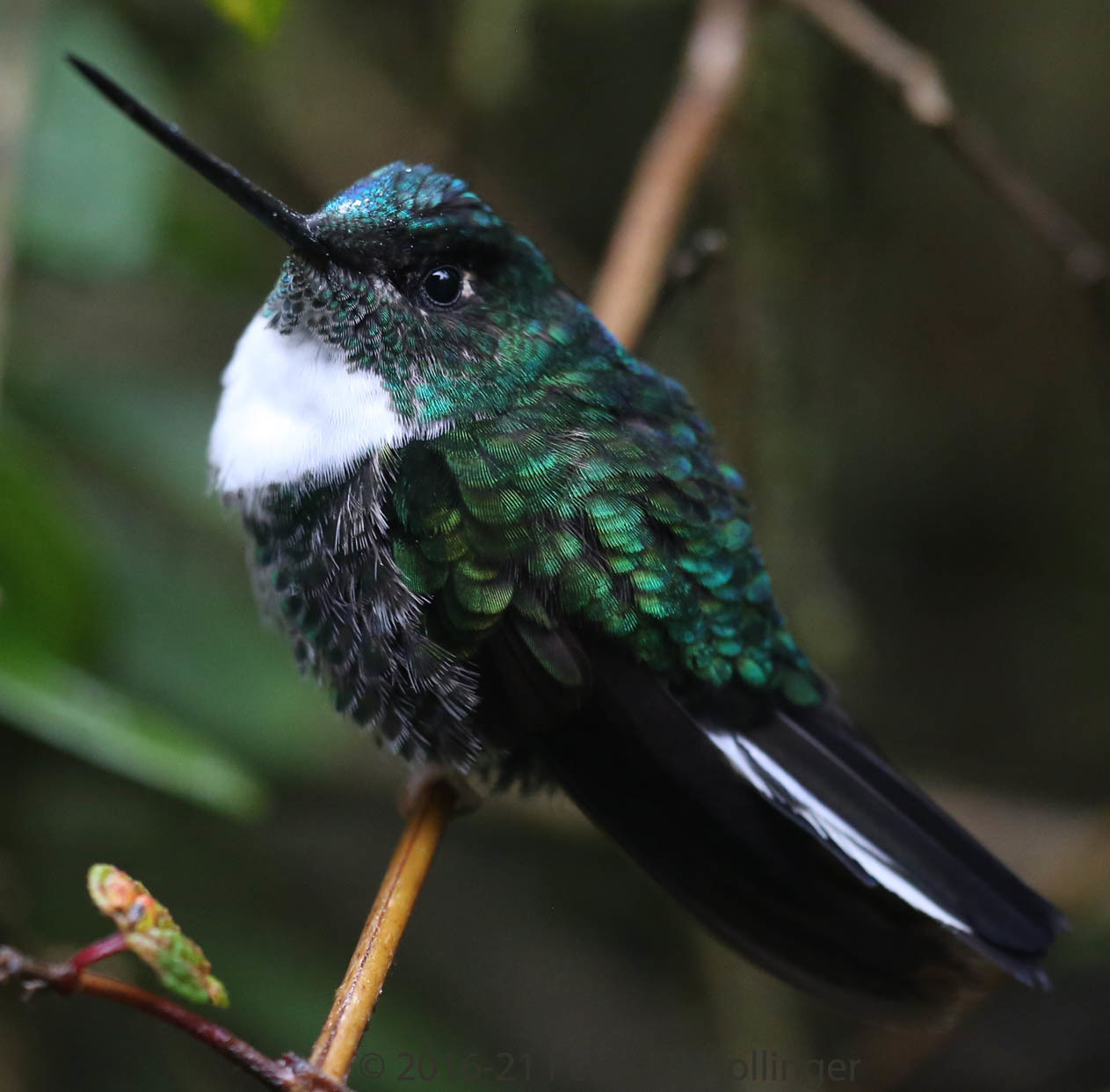
The collared inca (Coeligena torquata) is a species of hummingbird found in humid Andean forests from western Venezuela through Colombia and Ecuador to Peru. It is very distinctive in having a white chest-patch and white on the tail. Like other hummingbirds it takes energy from flower nectar (especially from bromeliads), while the plant benefits from the symbiotic relationship by being pollinated. Its protein source is small arthropods such as insects. It is normally solitary and can be found at varying heights above the ground, often in the open.
Taxonomy
The collared inca is a member of subfamily Lesbiinae, the so-called "typical hummingbirds", of family Trochilidae. The family is placed by some taxonomic systems in the order Apodiformes, which contains swifts as well as hummingbirds. Others assign hummingbirds and swifts to order Caprimulgiformes.
Collared incas found in different parts of their range tend to have certain morphological features characteristic of that region, and are considered separate subspecies. The species' taxonomy is unsettled.
The International Ornithological Committee (IOC) and the Clements taxonomy recognize these five subspecies:
C. t. torquata (Boissonneau, 1840) – Colombia, east slope of Andes in Ecuador, and part of Peru.
C. t. fulgidigula (Gould, 1854) – West slope in Ecuador. Greener than typical. Patch on male's forehead shimmering blue. Male's chin metallic turquoise.
C. t. margaretae Zimmer, J.T., 1948 – Central Amazonas Region of Peru to the Pasco Region of Peru. Two-part (shimmering green and blue) forehead patch in male. Female has white and green-spotted chin.
C. t. insectivora (Tschudi, 1844) – Pasco Region to the Ayacucho Region of Peru.
C. t. eisenmanni Weske, 1985 – Within a relatively small area to the northwest of Cusco, Peru. Both sexes have some coppery uppertail coverts. Male has black head except for crown. Female has rufous chin.
The South American Classification Committee of the...