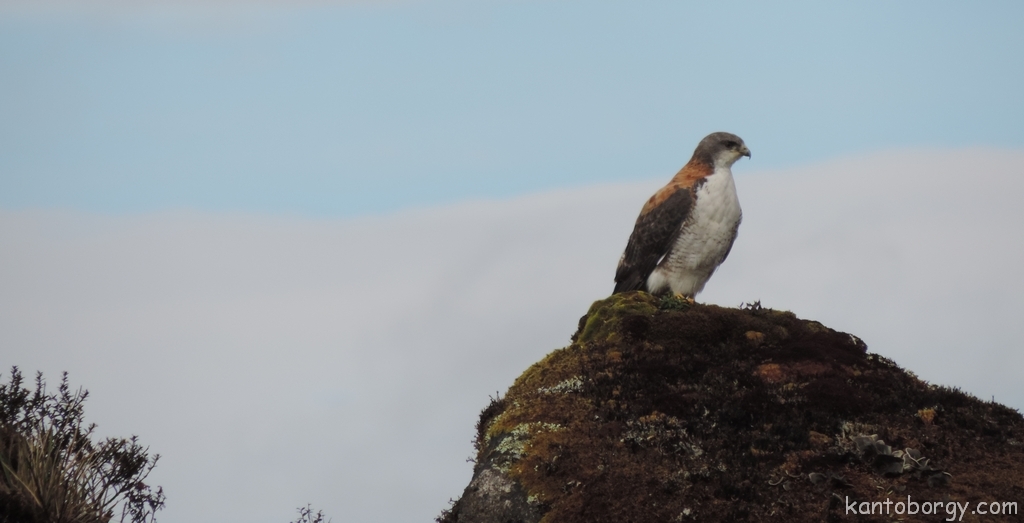
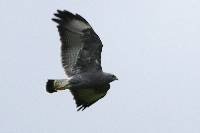
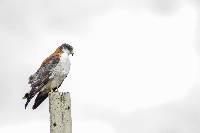
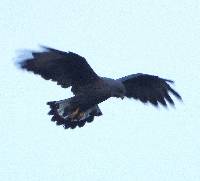
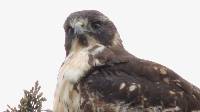
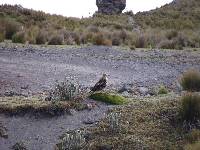
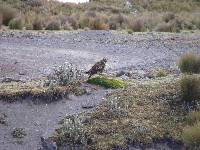
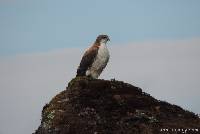
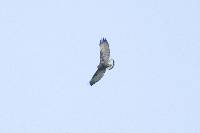
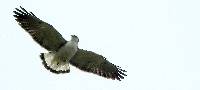
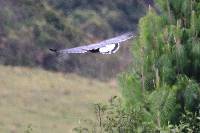
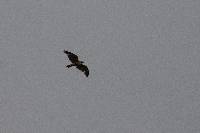
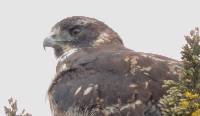
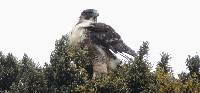
The name variable hawk is fully deserved, as both sexes occur in several morphs. Adults of all have a white tail with a contrasting black subterminal band and grey wings barred dark (in flight from below, the remiges appear whitish with fine barring and a broad black tip). The remaining plumage varies from very dark grey to whitish, and some individuals have reddish-brown to the underparts. Females usually have a reddish-brown back, which males usually lack, although at least some males also have this. The taxon exsul from the Juan Fernández Islands is far less variable, being whitish below and grey above in adults of both sexes. At least 27 distinct adult plumages are known in this species, possibly the most of any raptor (although the widespread red-tailed hawk & Eurasian buzzard have also been noted for a widespread but more uniform spectrum of plumage variations) with no relationship to morphometric variables and only minor geographic variation.
Size
Size is also variable in this confusing species. Lengths can range from 45 to 62 cm (18–25 in) and wingspans from 113 to 151 cm (45–60 in). Weights can range from 800 to at least 1,800 grams (1.8-4 lbs). The Puna hawk subspecies is generally considered to be at the larger end of the size spectrum and the red-backed hawk at the smaller (Juan Hernandez hawk being intermediate), but these distinctions are difficult at best in the field. Overall, however, this species rates as a large Buteo.
Habitat
Variable hawks occupy open habitats at all elevations. The red-backed race inhabits the widest range of areas of the variable hawk races, including above tree line in mountains, Pacific coastal foothills, Patagonian steppes, agricultural areas and edges of river galleries, beech woods and humid premontane and lowland forests. Though often the most likely race to be found in lowlands, even the red-backed is less than common below an elevation of...