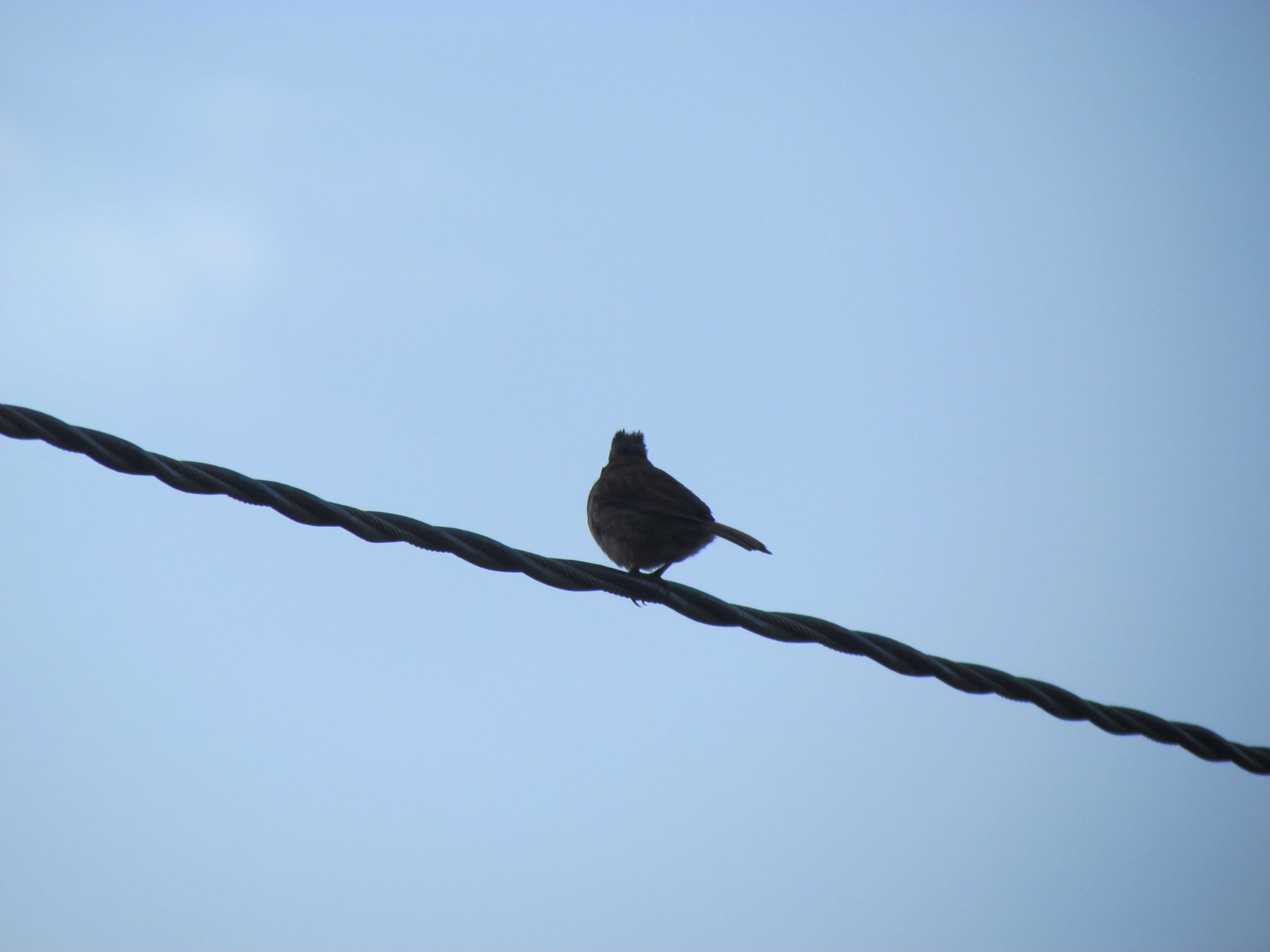
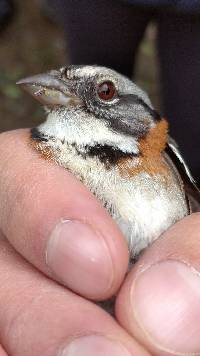
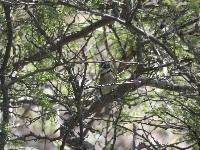
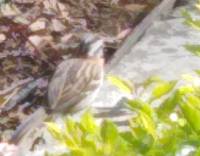
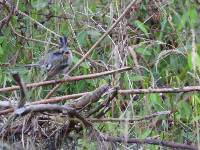
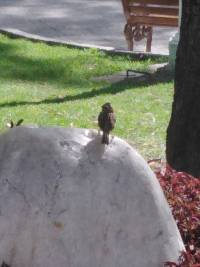
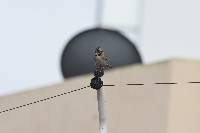
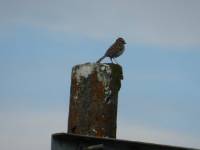
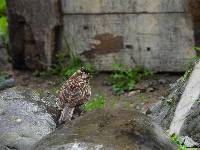
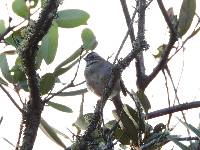
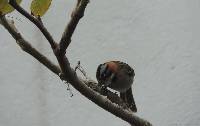
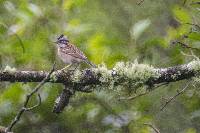
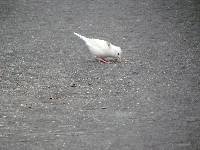
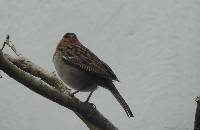
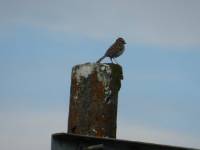
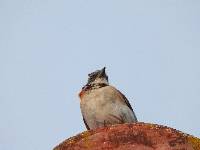
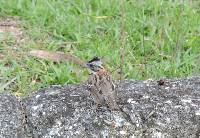
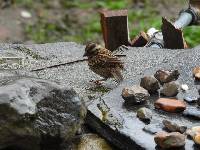
The rufous-collared sparrow or Andean sparrow (Zonotrichia capensis) is an American sparrow found in a wide range of habitats, often near humans, from the extreme south-east of Mexico to Tierra del Fuego, and the island of Hispaniola in the Caribbean. It has diverse vocalizations, which have been intensely studied since the 1970s, particularly by Paul Handford and Stephen C. Lougheed (UWO), Fernando Nottebohm (Rockefeller University) and Pablo Luis Tubaro (UBA). Local names for this bird include the Portuguese tico-tico and mariquinha, the Aymara Pichitanka the Spanish copetón ("tufted") in Colombia, as well as chingolo and chincol, comemaíz "corn eater" in Costa Rica, chincol in Chile and Cigua de Constanza in the Dominican Republic.
Description
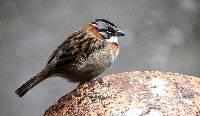
The rufous-collared sparrow is
Young birds have a duller, indistinct head pattern, with brown stripes and a buff ground colour. They lack the rufous collar and have streaked underparts.
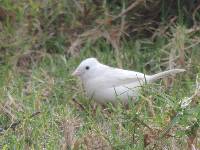
There are 27 subspecies of the rufous-collared sparrow. In general, the smaller forms occur in coastal mountains, intermediate birds in the Andes, and large, darker, forms breed on the tepuis. The largest of the tepui subspecies, Z. c. perezchincillae, has grey underparts, and the rufous collar extends as a black band of freckles across the breast. This form might be separable as a distinct species, or it might just be a particularly distinct population due to genetic bottleneck effects.
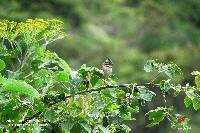
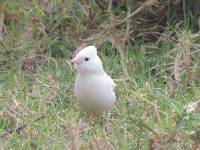
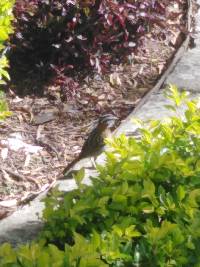
Z.c. costaricensusJuvenile Colombia
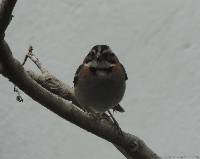
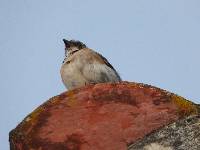
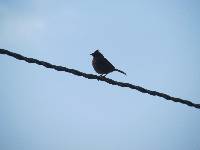
Z. c. chilensis Santiago, Chile
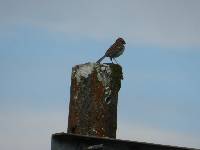
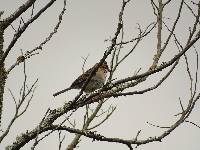
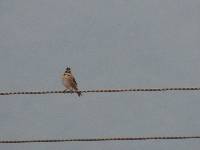
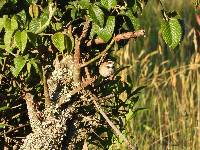
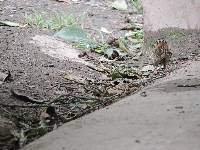
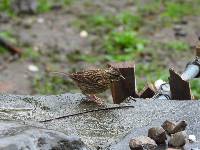
Z. c. australis Los Glaciares National Park, Argentina
Distribution and habitat
In the northern and western parts of its range, this generally abundant bird is typically found at altitudes of 600–4,000 m (2,000–13,100 ft), but in the southern and eastern parts, it is commonly found down to near sea level. It can be seen in virtually any open or semi-open habitat, including cultivations, gardens, parks, grasslands, and scrubby second...