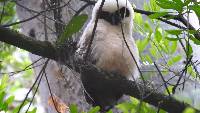
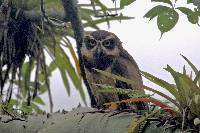
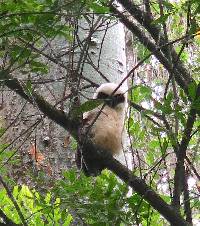
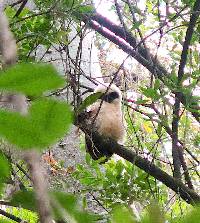
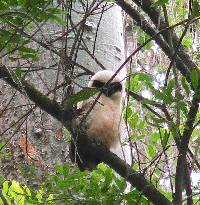
The spectacled owl (Pulsatrix perspicillata) also called a Murucututu, is a large tropical owl native to the neotropics. It is a resident breeder in forests from southern Mexico and Trinidad, through Central America, south to southern Brazil, Paraguay, and northwestern Argentina. There are six subspecies. One is occasionally treated as a separate species called the short-browed or brown-spectacled owl but the consensus is that it is still merely a race until more detailed analysis can be done.
Distribution and habitat
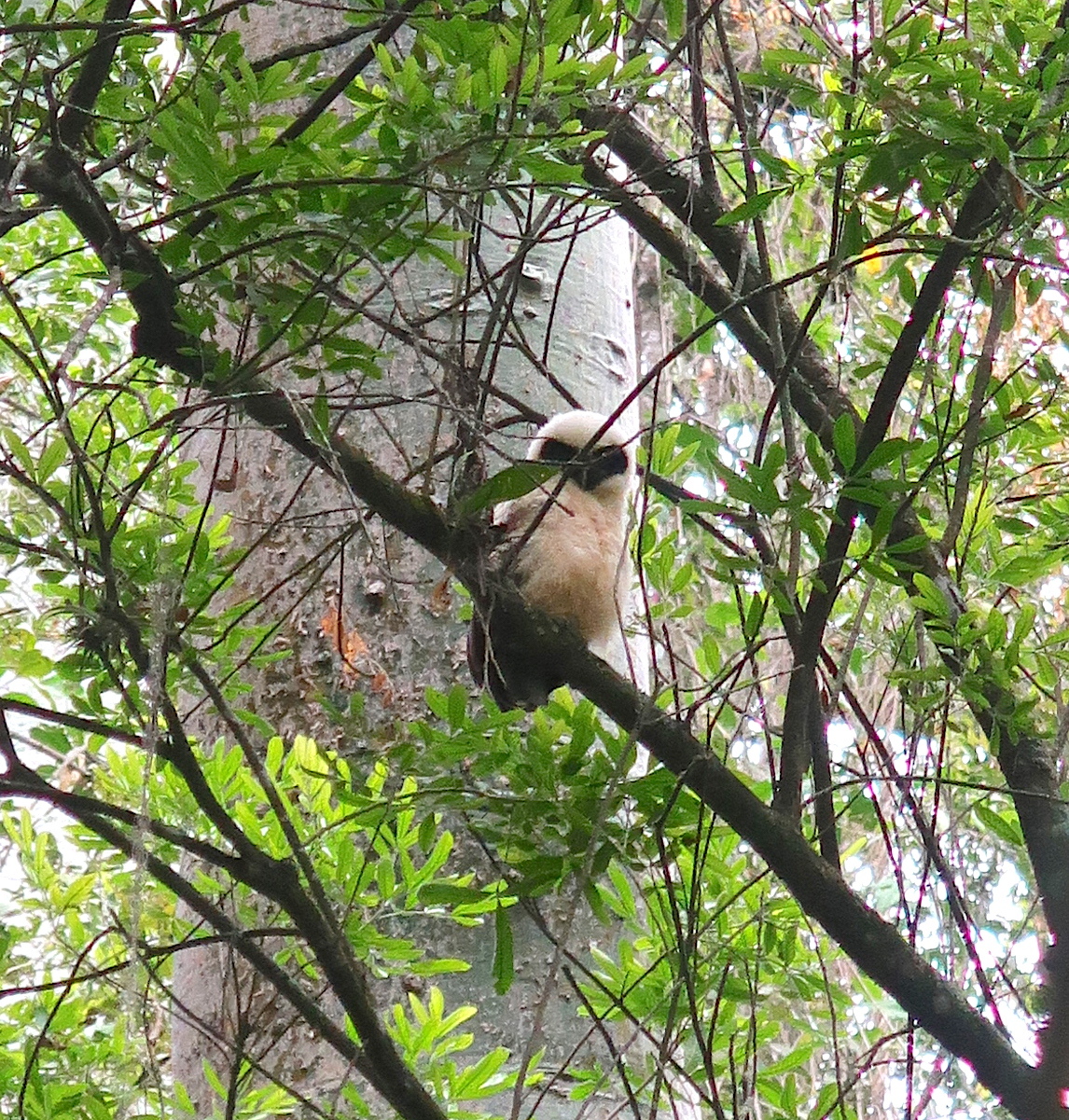
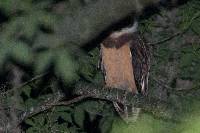
Chan Chich Lodge area, Belize - flash photo
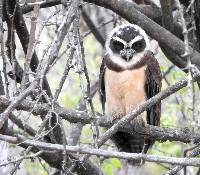
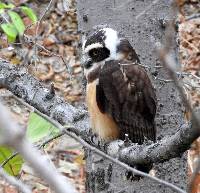
Spectacled Owl, Palo Verde Nat'l. Park, Costa Rica
The spectacled owl is found in Mexico, Central America (Belize, Guatemala, El Salvador, Honduras, Nicaragua, Costa Rica, Panama), Trinidad and Tobago, and South America (Colombia, Venezuela, Suriname, French Guiana, Guyana, Paraguay, Ecuador, Peru, Bolivia, Brazil, Argentina). The spectacled owl is primarily a bird of tropical rainforests, being found mostly in areas where dense, old-growth forest is profuse. However, it may enter secondary habitats, such as forest edges, especially while hunting. On occasion, they have been found in dry forests, treed savanna plains, plantations, and semi-open areas with trees. In areas such as Costa Rica, they may inhabit subtropical montane cloud forests of up to 1,500 m (4,900 ft), although are generally associated with lowland forests.
Description
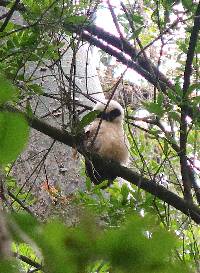
The spectacled owl can range from 41 to 52.3 cm (16.1 to 20.6 in) in length. Mass in males can range from 453 to 1,075 g (1.00 to 2.37 lb), whereas females can weigh from 680 to 1,250 g (1.50 to 2.76 lb). 10 males from the nominate subspecies (P. p. perspicillata) were found to average 767 g (1.69 lb) while 8 females averaged 908 g (2.00 lb). It is unmistakable in most of its range (except with other Pulsatrix owls) with blackish brown upperparts, head and upper breast, white facial markings, and whitish to yellowish-ochre underparts. The eyes...