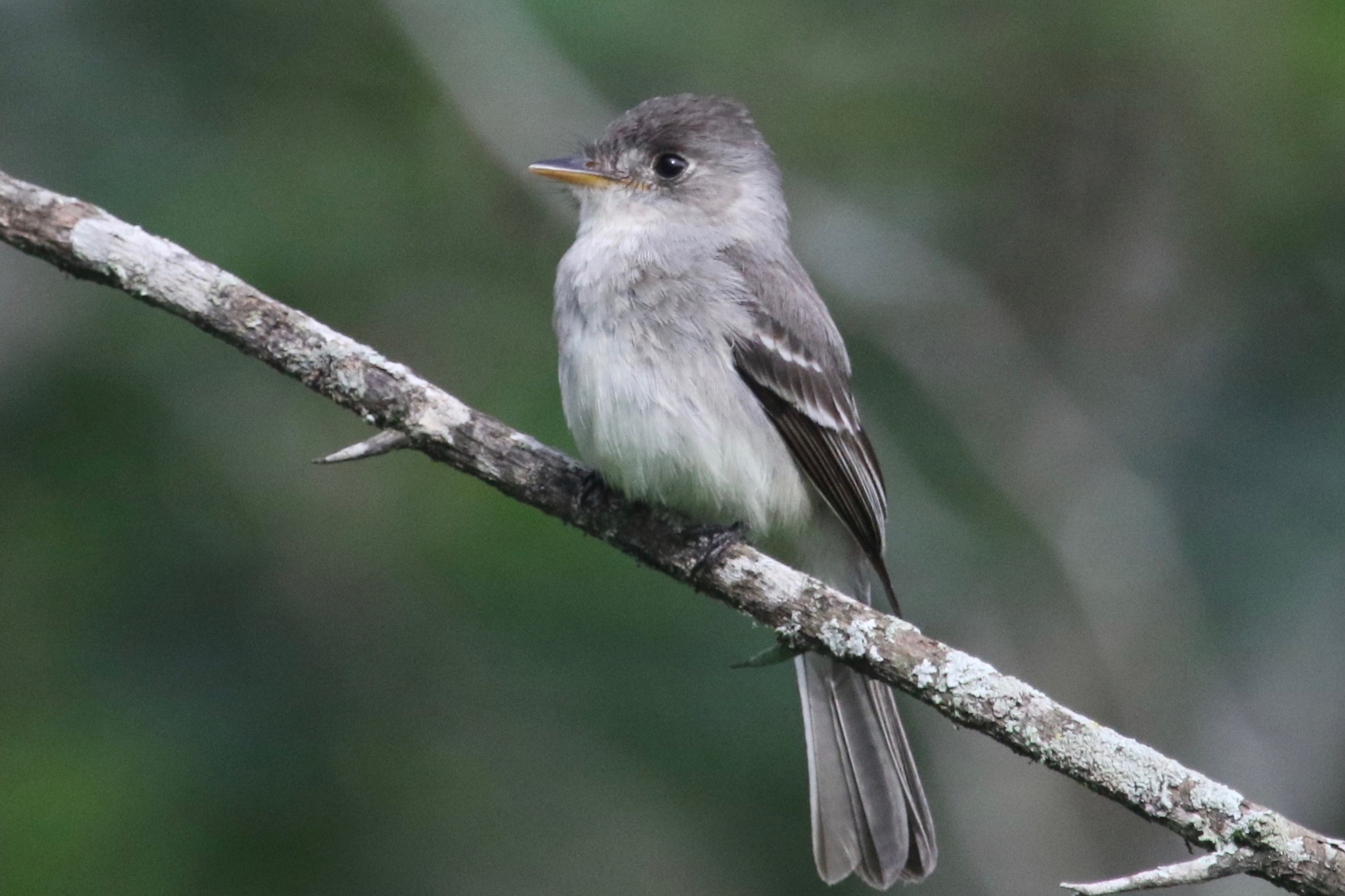
The southern tropical pewee (Contopus cinereus) is a small passerine bird in the family Tyrannidae, the tyrant flycatchers. It is found in Argentina, Bolivia, Brazil, and Paraguay.
Taxonomy and systematics
The southern tropical pewee's taxonomy is unsettled. The International Ornithological Committee (IOC), the Clements taxonomy, and BirdLife International's Handbook of the Birds of the World (HBW) treat it as a species with two subspecies: the nominate C. c. cinereus (Spix, 1825) and C. c. pallescens (Hellmayr, 1927).
The North and South American Classification Committees of the American Ornithological Society treat those subspecies and six others as the tropical pewee with the binomial Contopus cinereus. In 2016 HBW separated three of the subspecies as the two-subspecies southern tropical pewee (C. cinereus) and the monotypic western tropical pewee (C. punensis). In 2022 Clements recognized the southern tropical pewee as a species and the IOC followed suit in 2023.
Description
The southern tropical pewee is 13.5 to 14.5 cm (5.3 to 5.7 in) long and weighs about 10 to 15 g (0.35 to 0.53 oz). The sexes have the same plumage. Adults of the nominate subspecies have a dark blackish gray crown with a slight crest, white to grayish white lores, and a thin white eye-ring on an otherwise grayish olive face. Their back is sooty olive-gray and their rump and uppertail coverts brownish olive with a hidden white feather tuft on either side of the rump. Their wings are mostly dusky. The wing's secondaries have white to brownish gray edges at the ends and the median and greater coverts have grayish white to brownish gray tips that show as two thin wing bars. Their tail is olive-gray. Their chin and throat are white, their upper breast white with a gray tinge, their lower breast and belly white to yellowish white, and their undertail coverts pale brown. Juveniles have browner upperparts than adults with buff to cinnamon-buff edges on the feathers. Their wing coverts have wide...