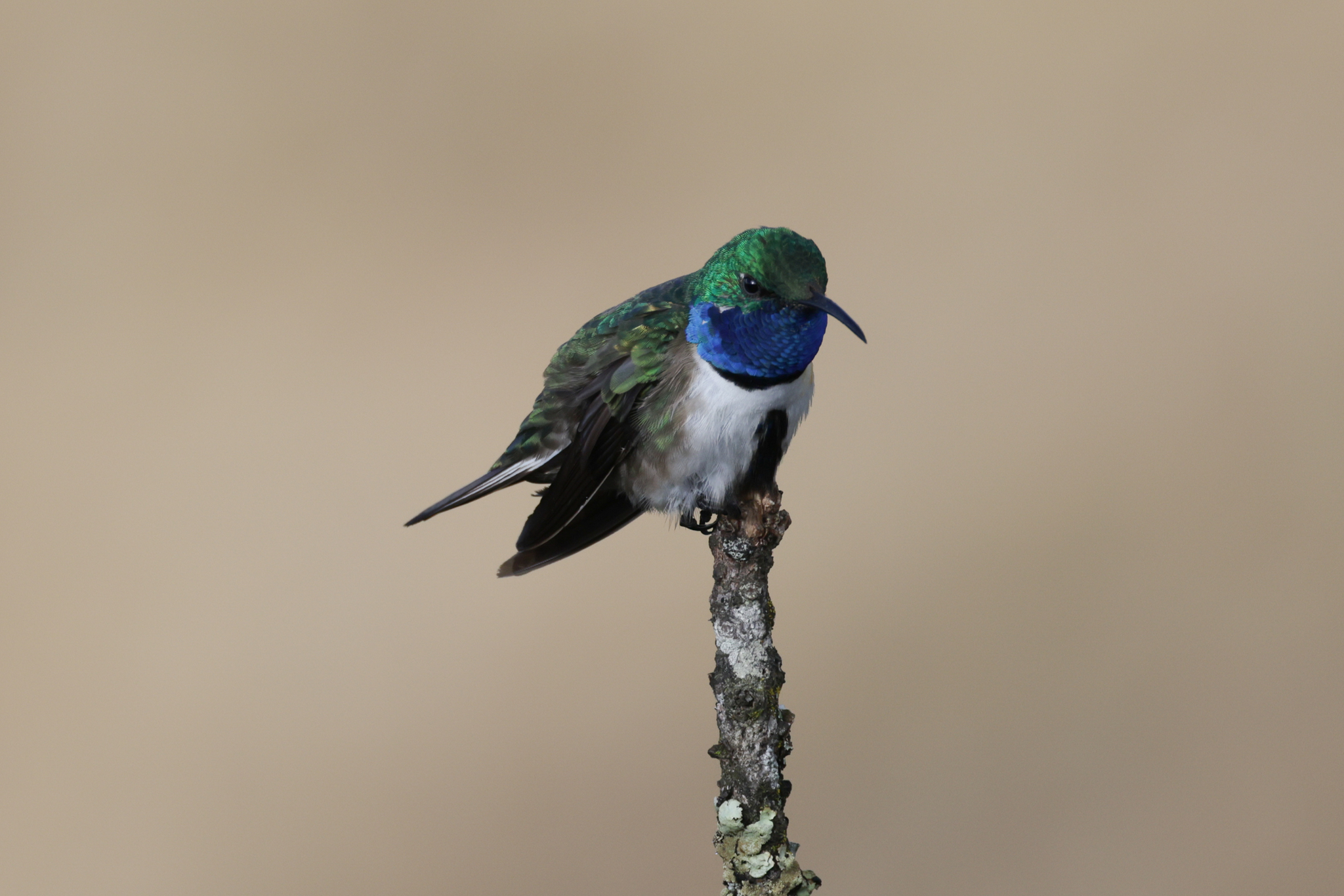
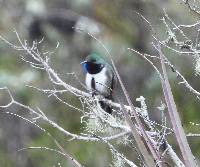
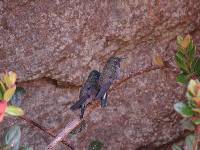
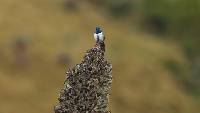
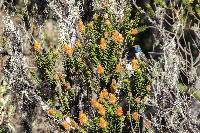
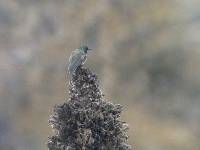
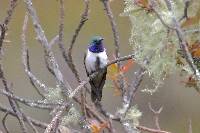
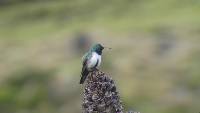
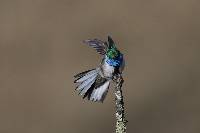
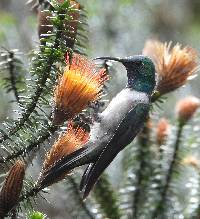
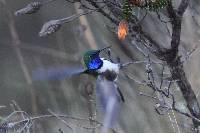
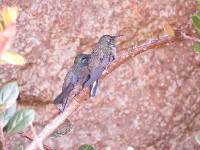
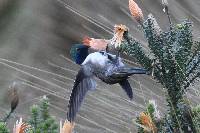
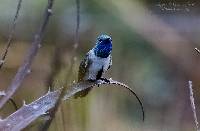
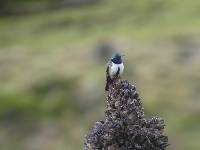
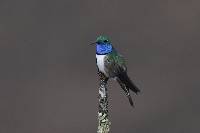
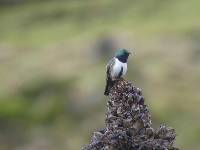
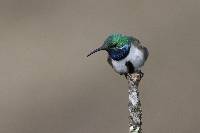
The blue-throated hillstar (Oreotrochilus cyanolaemus) is a hummingbird found only in a small portion of the southwestern Andes in Ecuador. It was discovered in 2017.
Taxonomy and evolution
The species name "cyanolaemus" is based on the Latinized Greek words for ultramarine blue (kuanos) and throat (laimos). Based on a sequences of a single mitochondrial gene, ND2, the species was found to be closely related to a clade composed of the black-breasted hillstar (O. melanogaster) and the green-headed hillstar (O. stolzmanni).
Description
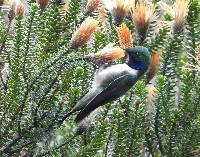
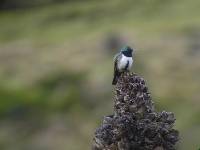
The top of the head of the male blue-throated hillstar is iridescent emerald green, which extends from the forehead to the base of the crown. The iridescent highlights are blue-green. The nape of the neck, mantle, lower portion of the back, rump, and upperwing coverts are bright emerald green. Some feathers in these regions have blue-green edging, and some have bronze highlights. The uppertail coverts are emerald blue-green. The upper surface of the central flight feathers are blackish blue. The other flight feathers and the upperwing coverts are dull black to dusky greenish blue, with a blue sheen. The outermost primary feathers have a white edge. The feathers of the throat and chin are a glittering ultramarine blue, with white bases separated from the blue parts of the feather by a black line. The feathers of the throat have slightly green tips, and are longer on the sides of the throat than in the middle; the extent of these green tips varies between individuals. The bright blue throat patch was the basis for its name. The bird has a velvety black collar around its throat. The belly and the breast are a dull white color, and the feathers in these regions have black bases. There is a black longitudinal stripe in the middle of the belly. The sides and flanks of the bird are between green and greenish gray, with metallic green highlights. The undertail coverts are dull grayish-buff, while the lower surface of the tail is dull white. The flight feathers of the...