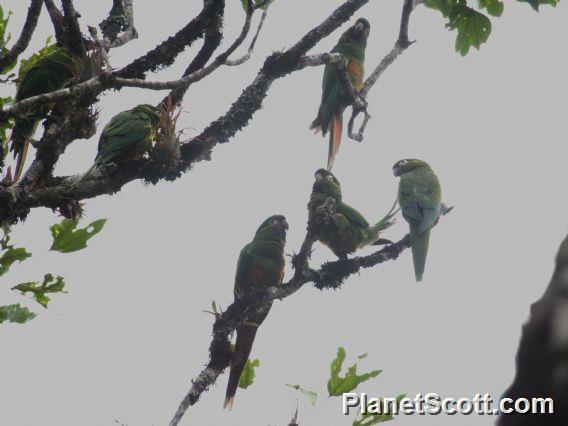
The golden-plumed parakeet (Leptosittaca branickii) is a Neotropical parrot species within the family Psittacidae, belonging to the monotypic genus Leptosittaca. This somewhat Aratinga-like species is found in humid temperate highland forests, especially with Podocarpus, on the east Andean slope in Colombia, Ecuador, and Peru. It is generally local and uncommon. It is threatened by habitat loss. Clearing of high-altitude forests for agricultural reasons have greatly impacted the loss of habitat for this parakeet species. Further reduction of such habitats will continue to diminish the number of golden-plumed parakeets left in South America. It is the only known parakeet species that can detect ultraviolet radiation.
Description
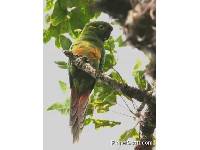
The golden-plumed parakeet is a large and long tailed montane parakeet that resides in the Andean cloud forests of Colombia, Peru, and Ecuador. Adults are mostly bright green with orange-yellow lores and small golden yellow crests behind the eyes. Their bellies are a faded yellowish color with reddish orange feathers scattered about. Golden-plumed parakeets have yellowish flight feathers on their underside as well as strongly reddish color feathers on the underside of their tail. Juveniles strongly resemble the adults, but their bellies are a paler green, yellow, and orange color as well as having pale pink bills.