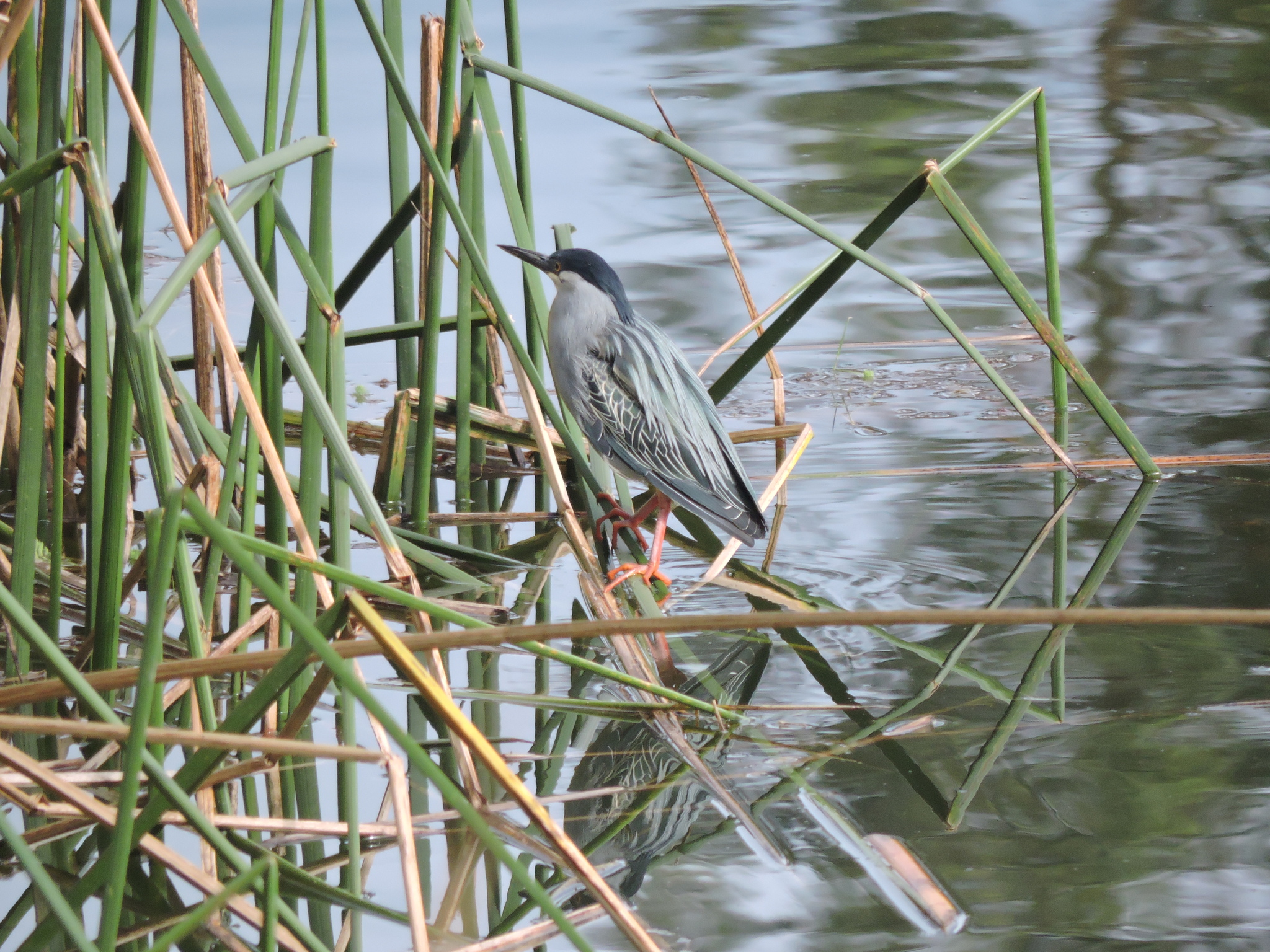
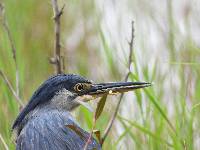
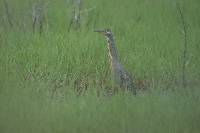
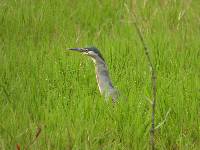
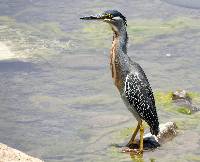
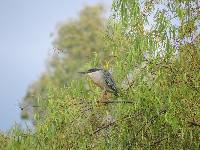
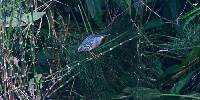
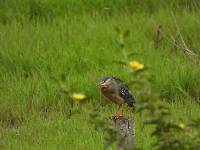
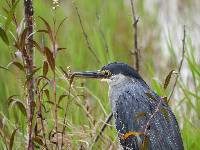
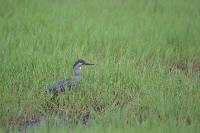
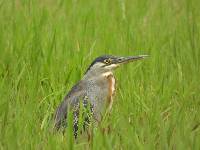
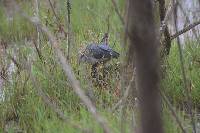
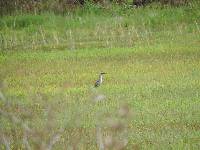
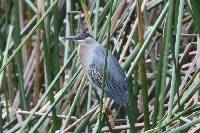
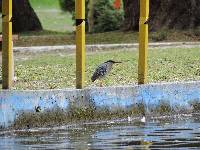
The striated heron (Butorides striata) also known as mangrove heron or little green heron, is a small heron, about 44 cm tall. It is mostly sedentary and noted for some interesting behavioural traits. The breeding habitat is in South America and the Caribbean. The striated heron was formerly considered to be conspecific with the little heron that is found in the Old World tropics from west Africa to Japan and Australia.
Taxonomy
The striated heron was formally described by the Swedish naturalist Carl Linnaeus in 1758 in the tenth edition of his Systema Naturae. He placed it with the other herons in the genus Ardea and coined the binomial name Ardea striata. Linnaeus specified the locality as Suriname. The specific epithet is from Latin striatus meaning "striated". The striated heron is now one of four closely related species placed in the genus Butorides that was described in 1852 by the English zoologist Edward Blyth.
This bird was long considered to be conspecific with the closely related North American species, the green heron, which is now usually separated as Butorides virescens, as well as the lava heron of the Galápagos Islands (now Butorides sundevalli, but often included in Butorides striata, e.g. by BirdLife International); collectively they were called "green-backed heron".
A molecular phylogenetic study of the genus Butorides, submitted in 2023 as a master's thesis, found that the striated heron was paraphyletic. To resolve the paraphyly, twenty subspecies of the striated heron were moved to a new species, the little heron, making the striated heron a monotypic species restricted to South America.
Description
The striated heron is 35–48 cm (14–19 in) in length, weighs 130–250 g (4.6–8.8 oz) and has a wing-span of 52–60 cm (20–24 in). The sexes are alike. The plumage is variable below, from mid grey to pinkish-purple or orangey toned. Adults have a blue-grey back and wings, white underparts, a black cap, a dark...