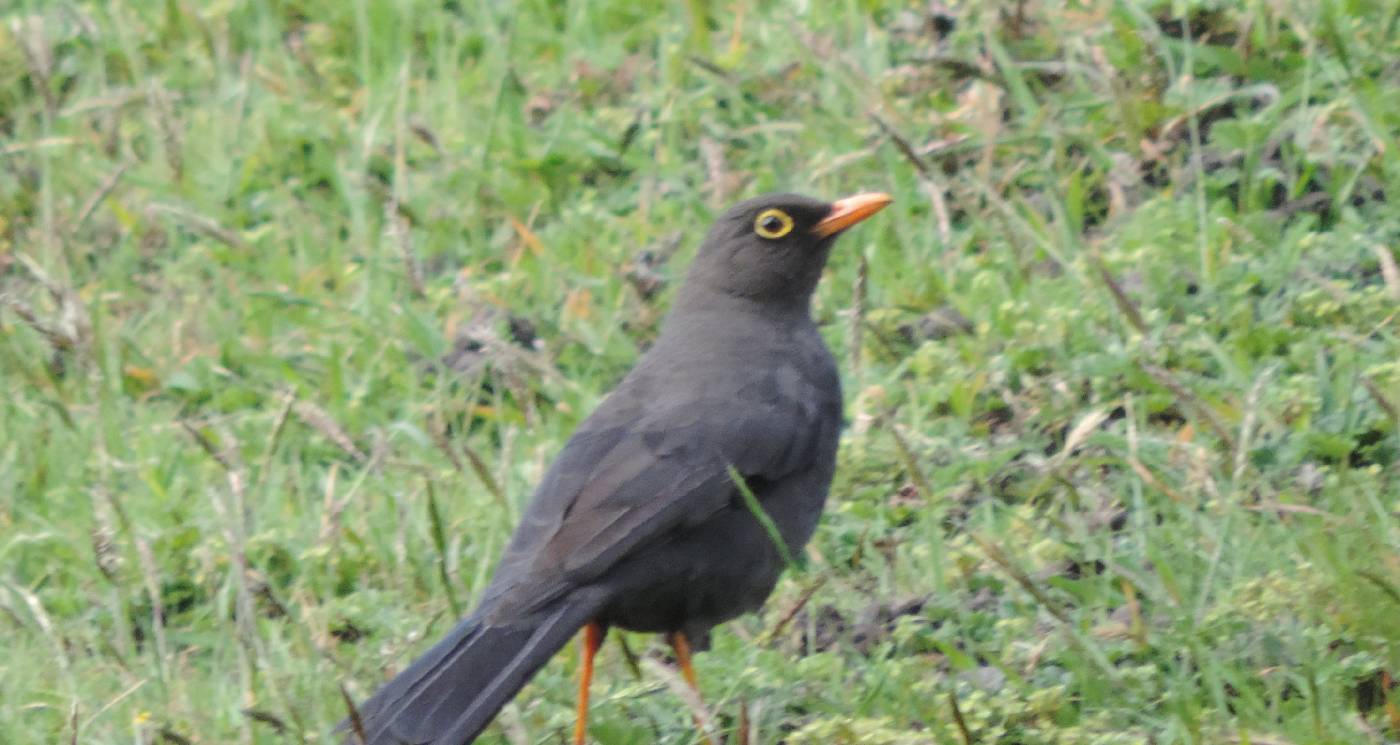
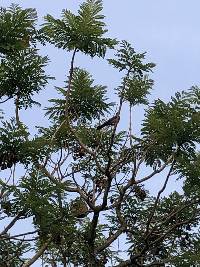
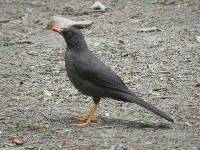
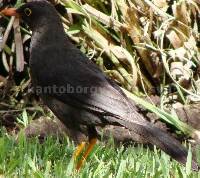
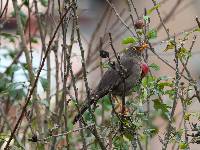
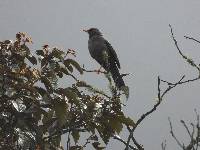
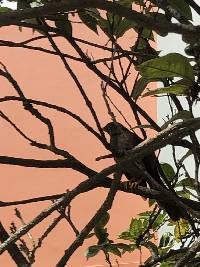
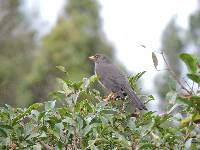
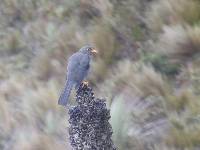
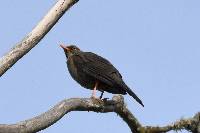
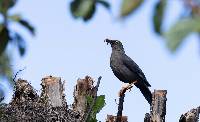
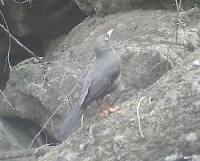
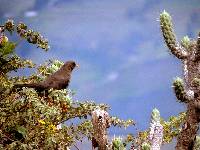
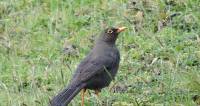
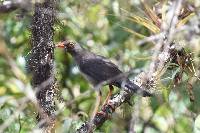
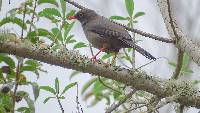
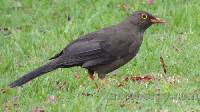
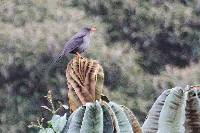
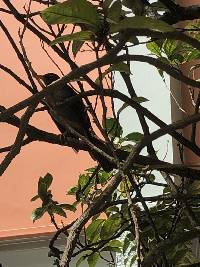
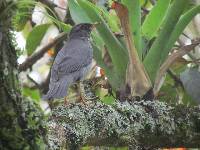
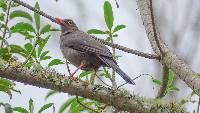
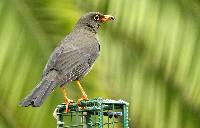
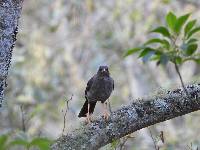
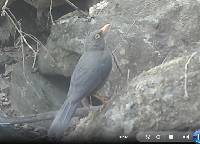
The great thrush (Turdus fuscater) is a species of bird in the family Turdidae. It is found in Bolivia, Colombia, Ecuador, Peru, and Venezuela. It is considered as the largest thrush in South America. The great thrush's size distinguishes it from the several other uniform slaty-colored thrushes in its range. It inhabits subtropical or tropical moist montane forests and high-altitude shrubland, but can also make use of degraded forest and urban areas.
Subspecies
Female T f. gigas, Chingaza National Park, Colombia
Seven subspecies are recognized:
T. f. fuscater (d´Orbigny, Lafresnaye, 1837). The nominate subspecies can be found in west Bolivia.
T. f. cacozelus (Bangs, 1898). It can be found in the Santa Marta mountain range in Colombia.
T. f. clarus (Phelps, Phelps, 1953). Inhabits the frontier between Venezuela and Colombia, in the Sierra del Perijá.
T. f. quindio (Chapman, 1925). This subspecies is found in south Colombia and the north of Ecuador.
T. f. gigas (Fraser, 1841). It is native to the Andes mountains of Venezuela and Colombia.
T. f. gigantodes (Cabanis, 1873). It can be found from south Ecuador to central Peru.
T. f. ockendeni (Hellmayr, 1906). It can be found in southeast Peru.
Description
Adults are 28 to 33 cm (11 to 13 in) in length and weigh 128 to 175 g (4.5 to 6.2 oz), averaging 141 g (5.0 oz), making the species the largest member of the wide-ranging Turdus genus, and one of the largest thrushes although the Amami thrush may match or exceed it in size. It can be easily identified by its yellowish-orange beak and legs and yellow ring around the eye. Slight sexual dimorphism is sometimes present, with males having more strongly coloured legs and eye rings. Tail feathers are long. The plumage is black-brown, darker on wings and tail and pale on the belly. Juveniles are predominantly greenish gray with a pale belly and some spots of buff colour on the head and wings. Subspecies show subtle differences in colouration, with T. f....