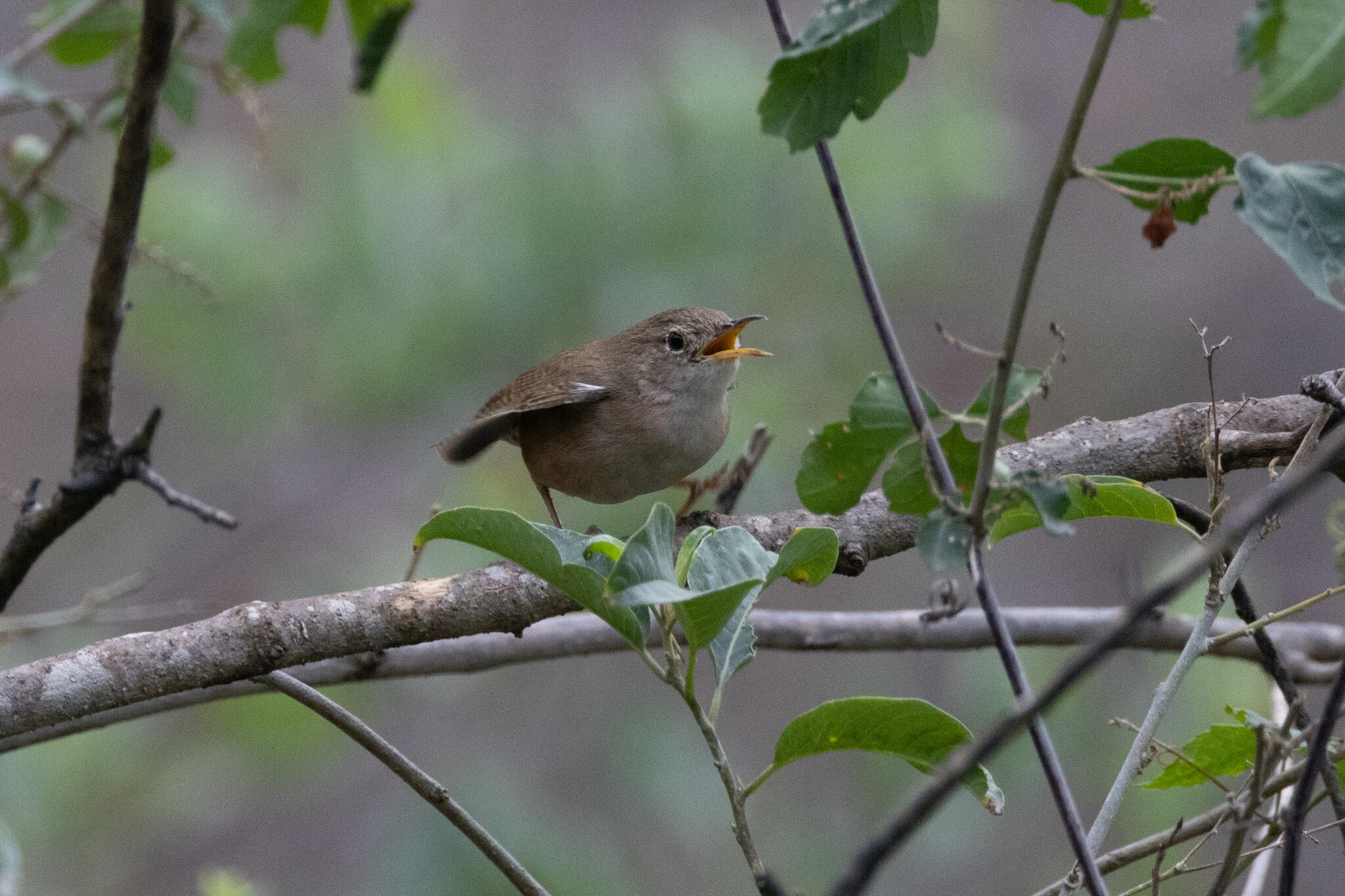
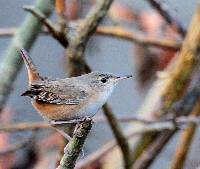
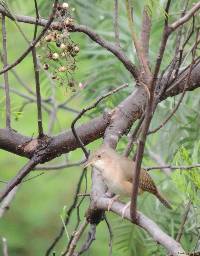
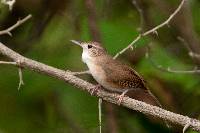
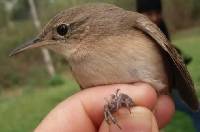
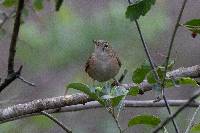
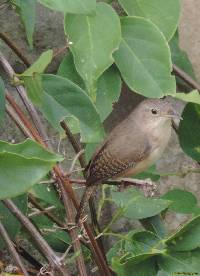
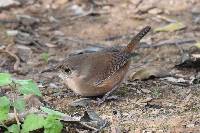
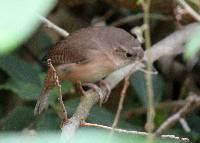
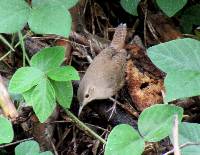
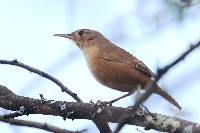
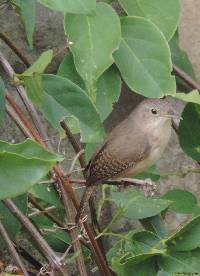
The northern house wren (Troglodytes aedon) is a very small passerine in the wren family Troglodytidae. It is found in southern Canada, the USA and Mexico. It occurs in most suburban areas in its range. It formerly included many subspecies resident in South America and in the Caribbean that are now considered as separate species. The name troglodytes means "hole dweller", and is a reference to the bird's tendency to disappear into crevices when hunting insects or to seek shelter.
Taxonomy
The northern house wren was formally described in 1809 by the French ornithologist Louis Pierre Vieillot under the current binomial name Troglodytes aedon. The specific epithet is from the Ancient Greek aēdōn meaning "nightingale". The type locality was designated as New York City by Harry Oberholser in 1934. An earlier specific name, domestica in the combination Sylvia domestica, was introduced in 1808 by the American ornithologist Alexander Wilson. This was rarely used and in 1998 to conserve the widely used name aedon, the International Commission on Zoological Nomenclature suppressed the specific name domestica for the purposes of the principle of priority.
Four subspecies are recognised:
Troglodytes aedon parkmanii Audubon, 1839 – southwest, central south Canada and west, central USA to north Mexico (north Baja California)
Troglodytes aedon aedon Vieillot, 1809 – southeast Canada and east USA
Troglodytes aedon cahooni Brewster, 1888 – southeast Arizona (southwest USA) to central Mexico (Nayarit and Zacatecas)
Troglodytes aedon brunneicollis Sclater, PL, 1858 – central, south Mexico (Jalisco to Coahuila, central Nuevo León)
The following species were formerly considered as subspecies in the house wren complex. The species were split based on the deep genomic divergence and differences in vocalizations and morphology.