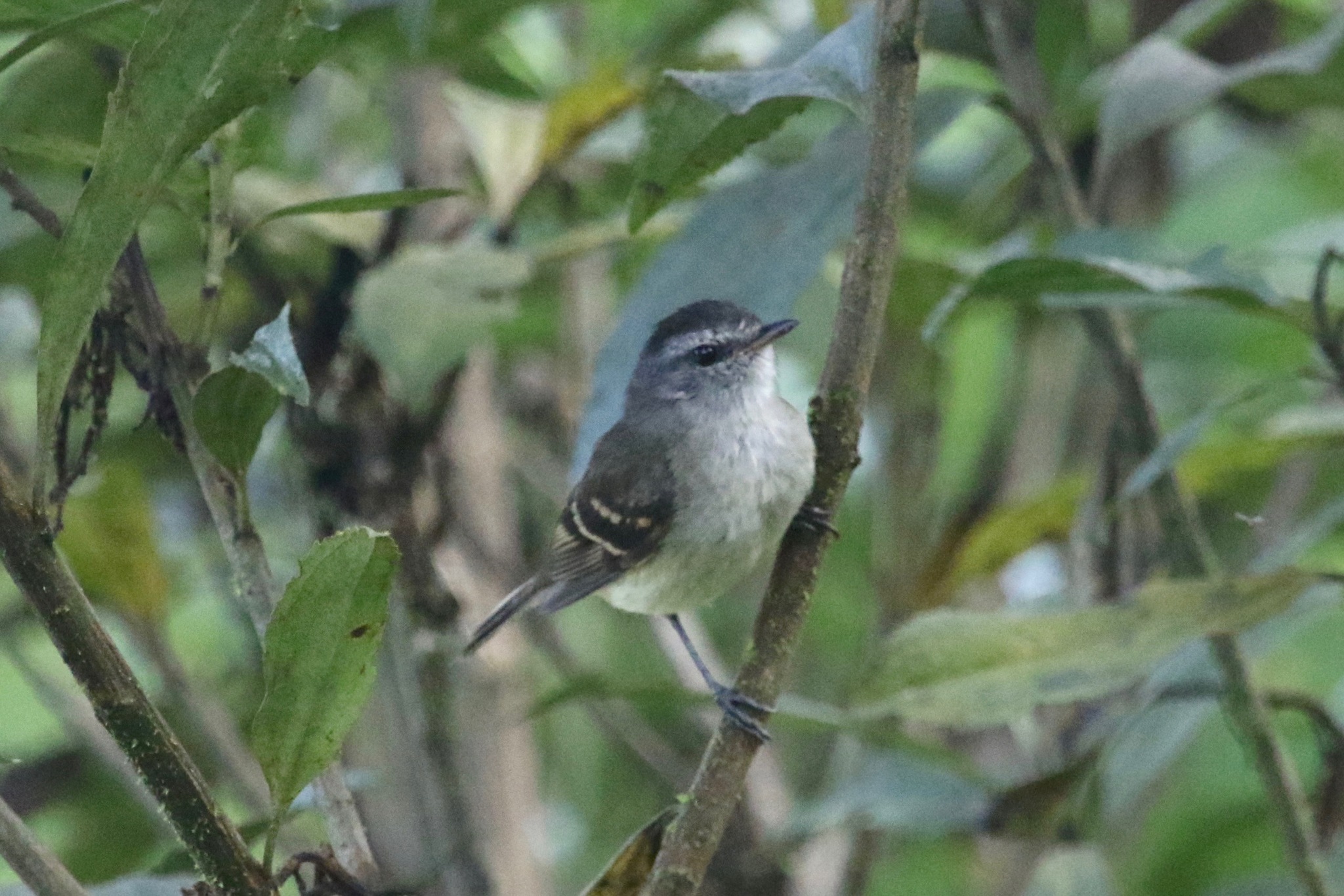
The tawny-rumped tyrannulet (Tyranniscus uropygialis) is a species of bird in subfamily Elaeniinae of family Tyrannidae, the tyrant flycatchers. It is found in Bolivia, Colombia, Ecuador, Peru, Venezuela, and possibly Argentina.
Taxonomy and systematics
The tawny-rumped tyrannulet was originally described as Mecocerculus uropygialis. During much of the twentieth century it was placed in genus Tyranniscus and in the 1970s was transferred to genus Phyllomyias. A study published in 2020 showed that Phyllomyias was polyphyletic and that the tawny-rumped and several other tyrannulets did not belong in it. In September 2023 the South American Classification Committee of the American Ornithological Society (SACC) resurrected genus Tyranniscus and moved the tawny-rumped tyrannulet back into it. The International Ornithological Committee (IOC) followed suit in August 2024. As of September 2024 the Clements taxonomy and BirdLife International's Handbook of the Birds of the World (HBW) retain the species in genus Phyllomyias.
The tawny-rumped tyrannulet is monotypic.
Description
The tawny-rumped tyrannulet is about 10 to 11.5 cm (3.9 to 4.5 in) long and weighs about 8 to 9 g (0.28 to 0.32 oz). The sexes have the same plumage. Adults have a dark brown crown. Their nape and back are brownish olive and their rump and uppertail coverts bright cinnamon. They have white lores and supercilium. They have a thin dark line through the eye and a grayish lower face. Their wings are dark brown with two bright buffy bars, yellow edges to the inner flight feathers, and bright orange-buff edges to the outer ones. Their tail is dusky. Their throat is grayish white, their breast and flanks olive-brown, and their belly yellow to yellowish white. They have a dark brown iris, a small and rounded black bill, and black legs and feet.
Distribution and habitat
The tawny-rumped tyrannulet has a disjunct distribution. It is found in the Andes of Venezuela's Mérida state, in Colombia's Eastern Andes south to western Meta...