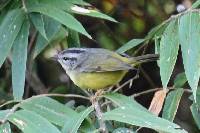
The three-banded warbler (Basileuterus trifasciatus) is a species of bird in the family Parulidae, the New World warblers. It is found in Ecuador and Peru.
Taxonomy and systematics
The three-banded warbler was formally described in 1880 with its current binomial Basileuterus trifasciatus. Some authors have treated it as a subspecies of the golden-crowned warbler (M. culicivorus).
The three-banded warbler has two subspecies, the nominate B. t. trifasciatus (Taczanowski, 1880) and B. t. nitidior (Chapman, 1924).
Description
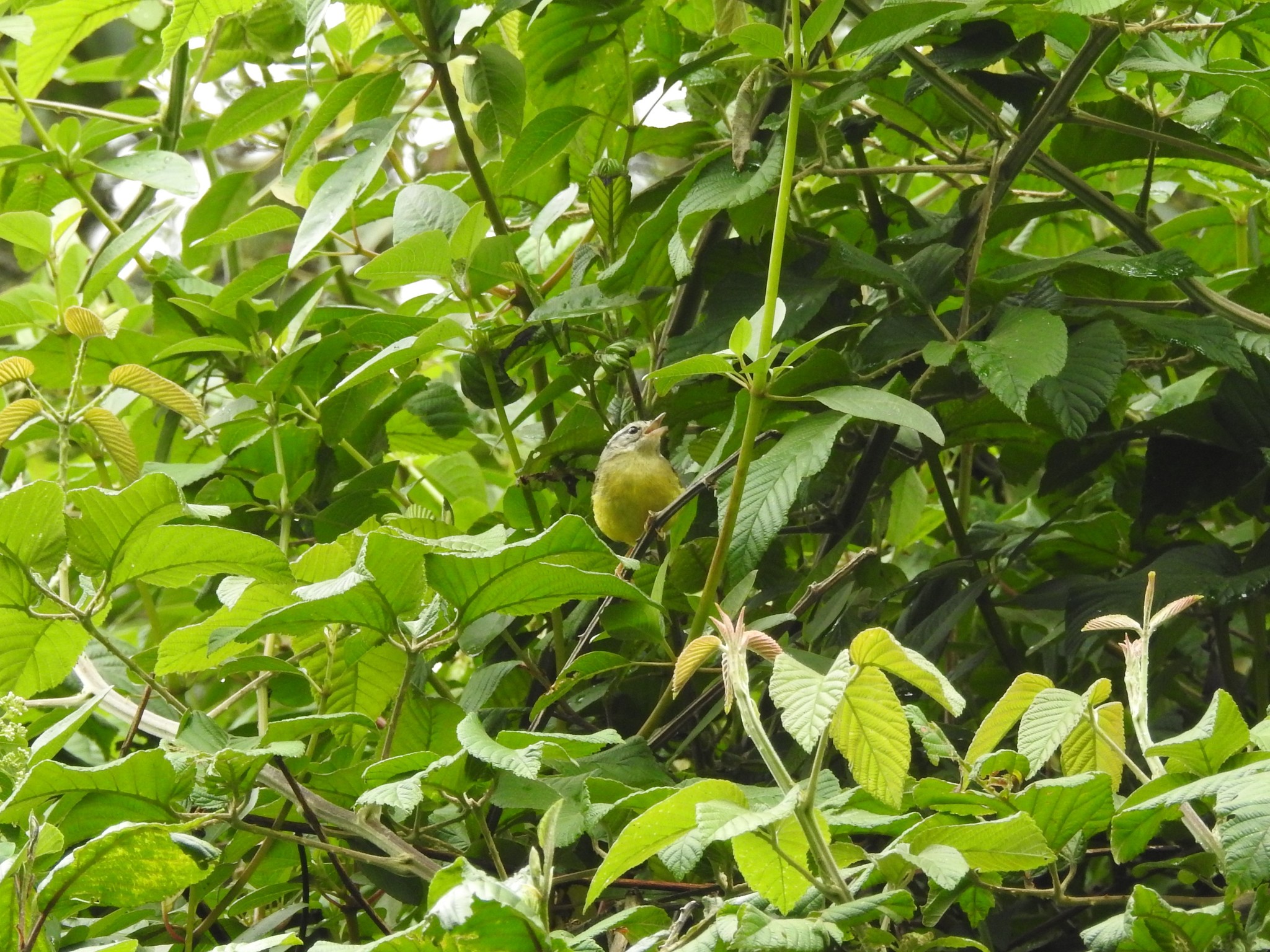
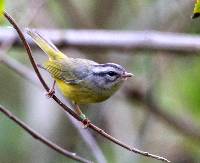
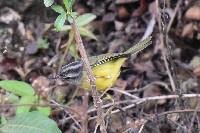
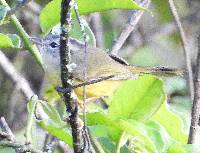
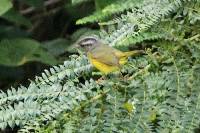
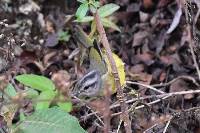
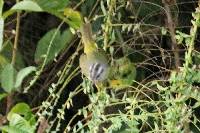
The three-banded warbler is 12.5 cm (4.9 in) long and weighs 8.5 to 11 g (0.30 to 0.39 oz). The sexes have the same plumage. Adults of the nominate subspecies have a pale gray crown stripe with black borders, grayish white lores and supercilium, a thin black stripe through the eye, and medium gray ear coverts with a blackish rear edge. Their nape and upper mantle are medium gray, their back and wings olive-gray, and their rump and tail olive. Their throat is white that becomes yellow on the rest of the underparts; the throat and upper breast are smudged with gray. Subspecies B. t. nitidior has a yellow wash on the gray crown stripe and more olive (less gray) upperparts than the nominate. Both subspecies have a dark iris, a blackish horn maxilla, a paler horn mandible, and dusky pinkish legs and feet.