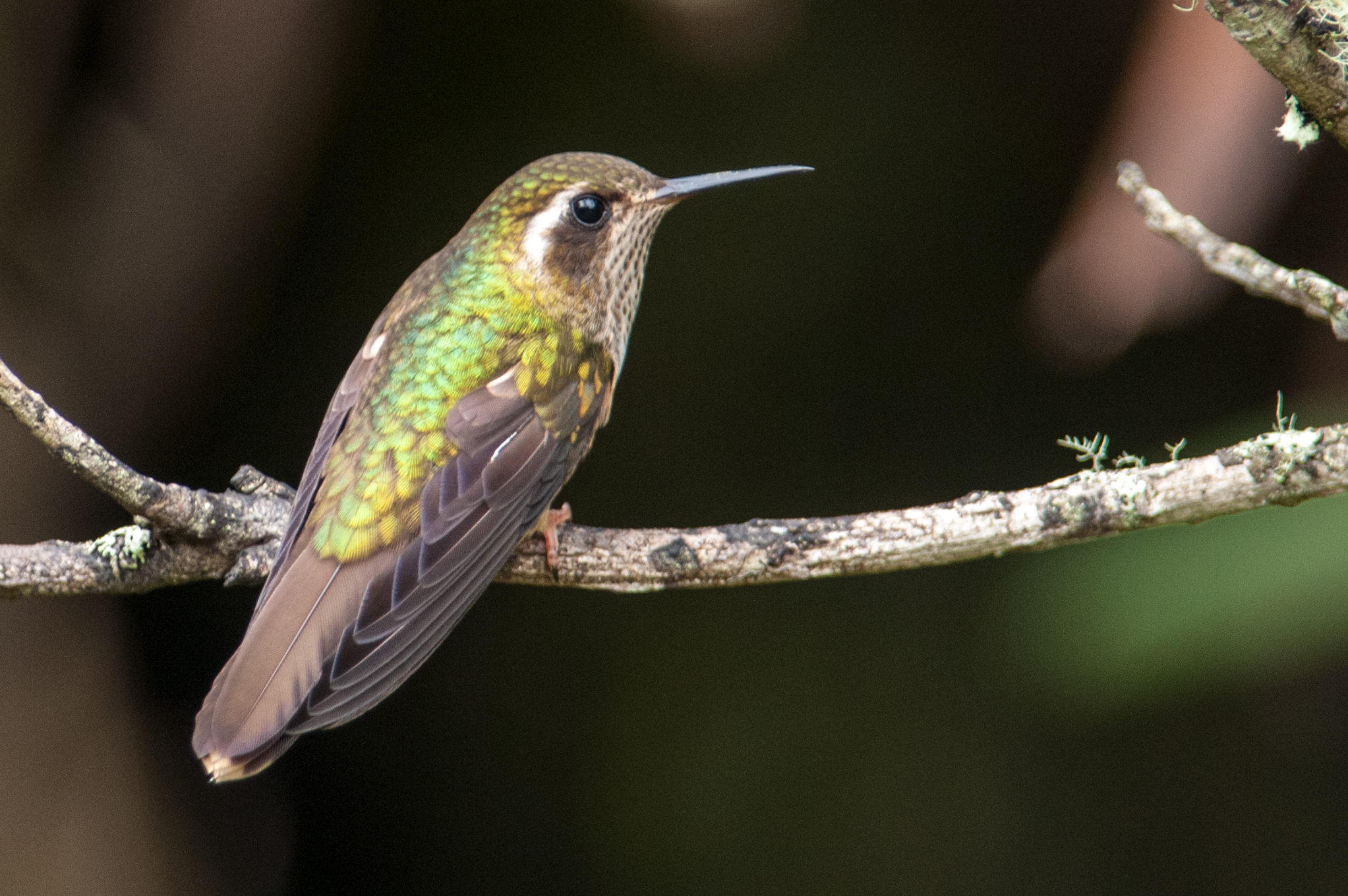
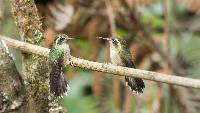
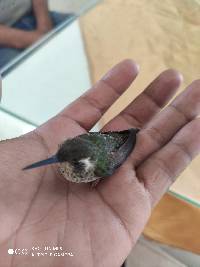
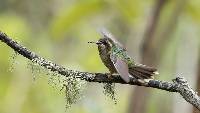
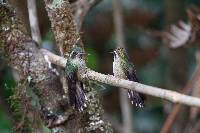
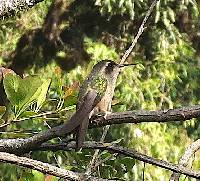
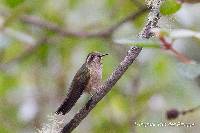
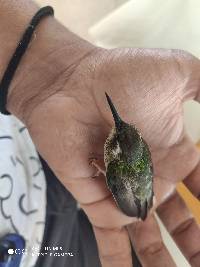
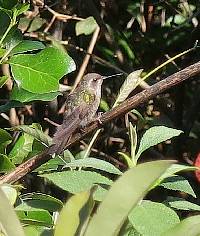
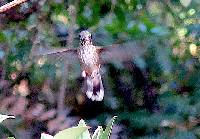
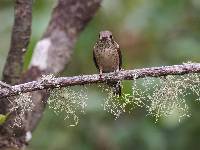
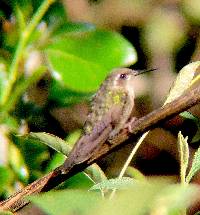
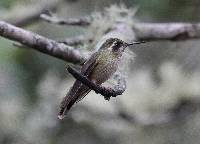
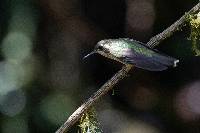
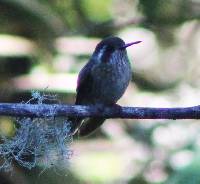
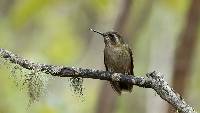
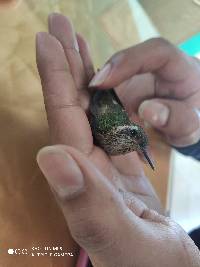
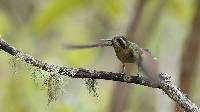
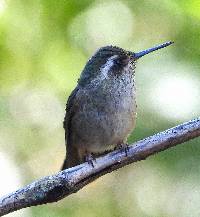
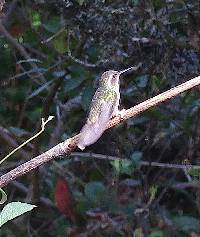
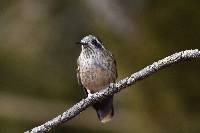
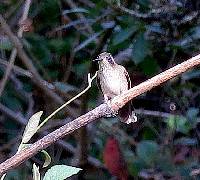
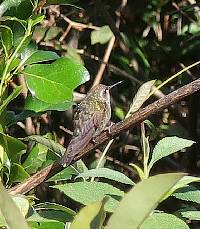
The speckled hummingbird (Adelomyia melanogenys) is a species of hummingbird. It is the only member of the genus Adelomyia. It inhabits Neotropical montane cloud forests at elevations of 1,000–2,500 meters and is confined to the Andes of Argentina, Bolivia, Peru, Ecuador, Colombia and Venezuela; as well as to some isolated montane forests in western Ecuador and Venezuela. In Ecuador, it ranges across both the eastern and western slopes of the Andes and occupies a broad altitudinal range from subtropical forests (1400 m) to cloud forests (3000 m). In addition, one isolated population inhabits the Chongón Colonche cordillera in the coastal evergreen montane forest (600 m) located ca. 130 km away from the Andes.
Description
The speckled hummingbird is a monomorphic species, making females and males indistinguishable. Adults measure approximately 8 cm, or 3 inches, in length (from bill to tip of tail). The upper plumage is a glossy green/bronze. The underside is pale, with green and bronze specks. It has a black cheek patch below its eye with a white stripe above.
Systematics
While the speckled hummingbird is the only species in its genus, evidence suggests that populations on either side of the Andes mountains are genetically distinct, especially due to its broad geographic and ecological distribution. Relationships with other hummingbirds are uncertain and is still in need of further studies.
Based on plumage coloration and biogeography, eight subspecies have been described, and known as Adelomyia melanogenys melanogenys, inornata, connectens, maculata, aenosticta, chlorospila, debellardiana and cervina. A recent study of this genus, based on molecular, morphological and ecological data recovered six monophyletic clades which show distributional limits at well-defined geographic barriers, not corresponding with the currently recognized limits of subspecies. Sequence divergence ranged between 5.8% and 8.2% between phylogroups separated by >4000 km and...