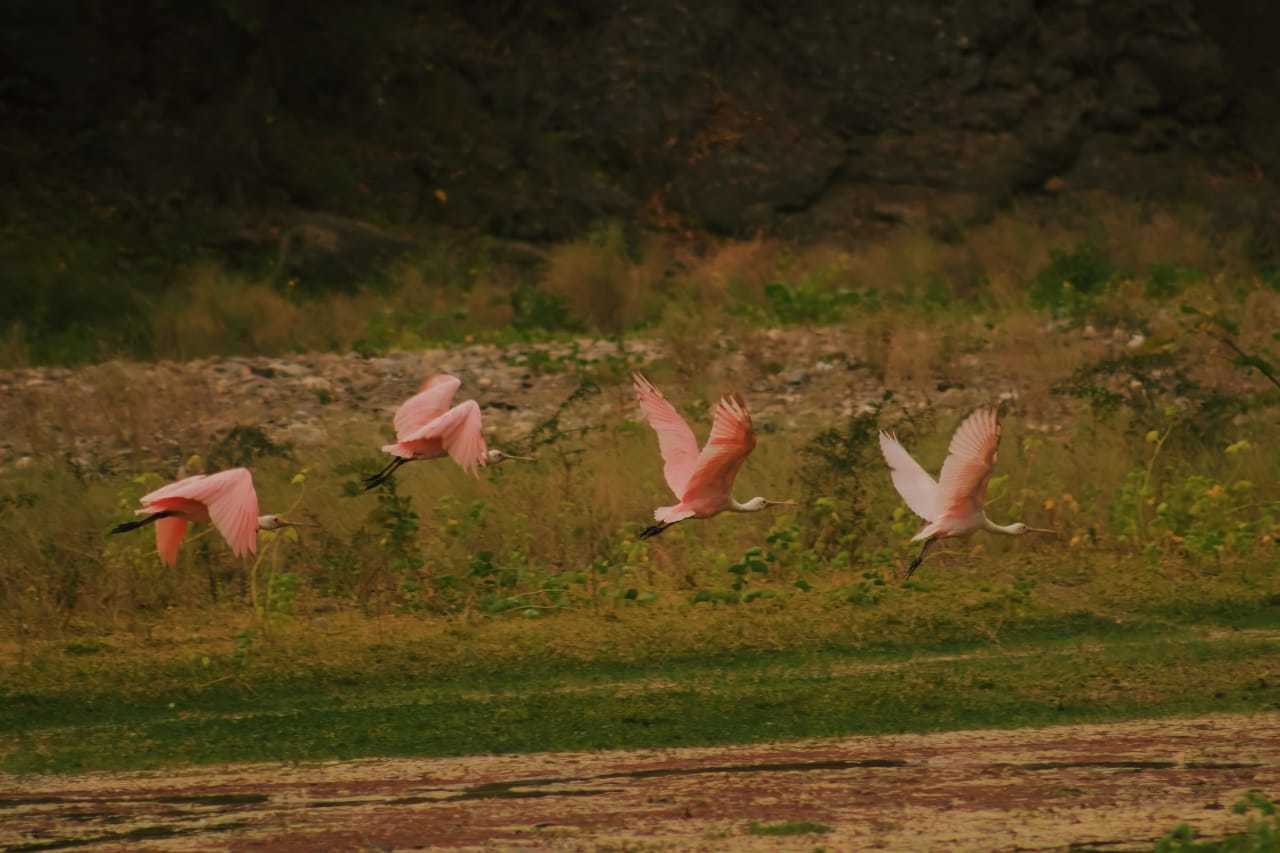
Spoonbills are a genus, Platalea, of large, long-legged wading birds. The spoonbills have a global distribution, being found on every continent except Antarctica. The genus name Platalea derives from Ancient Greek and means "broad", referring to the distinctive shape of the bill. Six species are recognised, which although usually placed in a single genus have sometimes been split into three genera.
All spoonbills have large, flat, spatulate bills and feed by wading through shallow water, sweeping the partly opened bill from side to side. The moment any small aquatic creature touches the inside of the bill—an insect, crustacean, or tiny fish—it is snapped shut. Spoonbills generally prefer fresh water to salt but are found in both environments. They need to feed many hours each day.
Taxonomy
The genus Platalea was introduced in 1758 by the Swedish naturalist Carl Linnaeus in 1758 in the tenth edition of his Systema Naturae. The genus name is Latin for "spoonbill" and is derived from the Ancient Greek platea meaning "broad", referring to the distinctive shape of the bill. The type species was designated as the Eurasian spoonbill (Platalea leucorodia) by George Robert Gray in 1840.
They have traditionally been thought to form one of two subfamilies, Plataleinae, in the family Threskiornithidae, which also includes the ibises (Threskiornithinae). Molecular studies, including a 2013 study, have suggested instead that they form a clade within the family with several cosmopolitan ibis genera, separate from another clade of New World ibises.
A 2010 study of mitochondrial DNA of the spoonbills found that the roseate and yellow-billed spoonbills were each other's closest relative, and the two were descended from an early offshoot from the ancestors of the other four spoonbill species. The study concluded from the genetic evidence that it was equally valid to consider all six to be classified within the genus Platalea, or alternatively for two of the species to be...