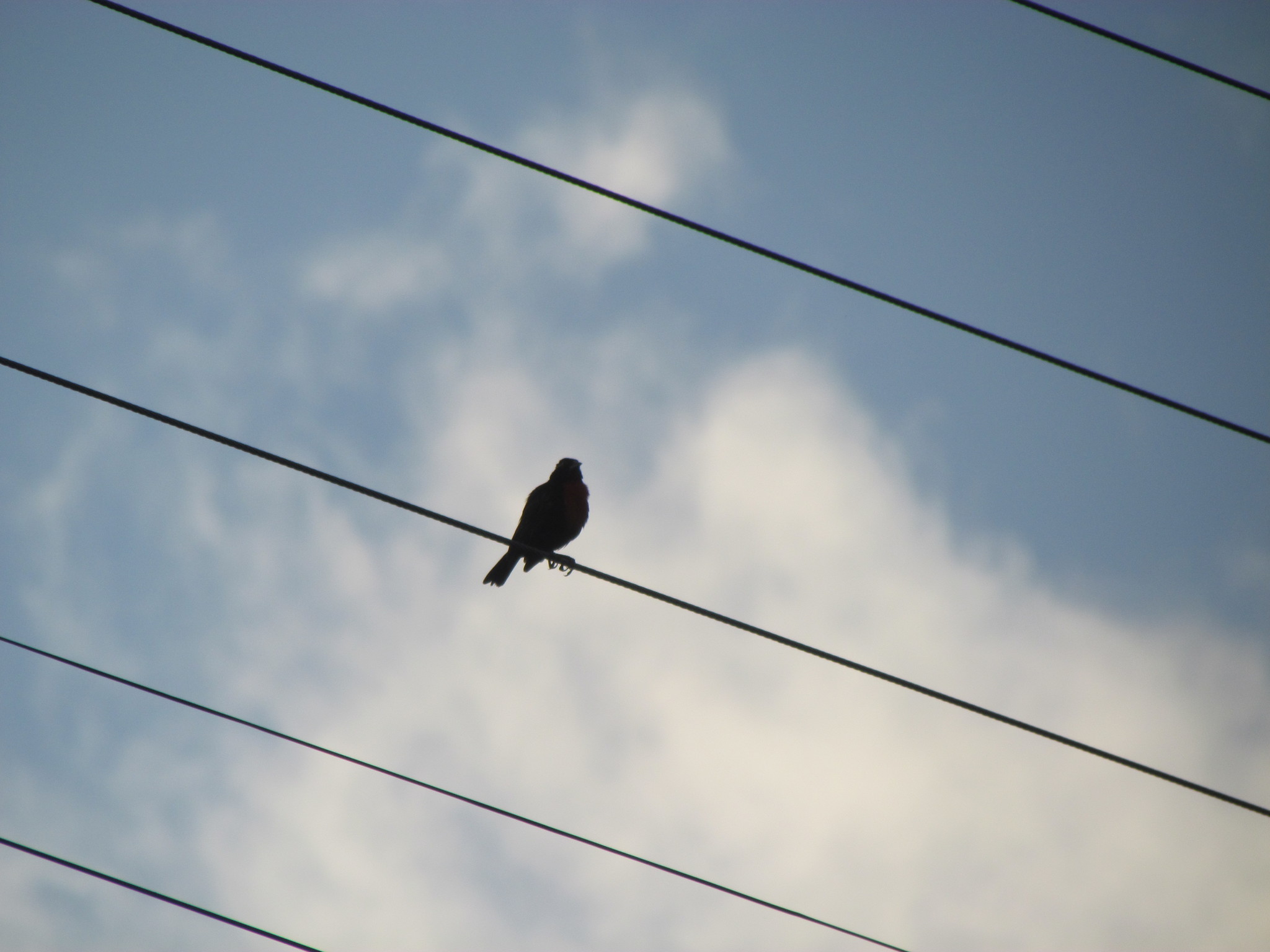
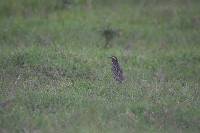
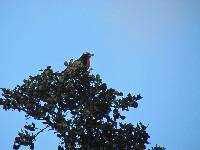
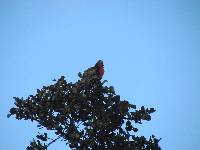
The Peruvian meadowlark (Leistes bellicosus) is a species of bird in the family Icteridae, the oropendolas, New World orioles, and New World blackbirds. It is found in Chile, Colombia, Ecuador, and Peru.
Taxonomy and systematics
The Peruvian meadowlark has a complicated taxonomic history. It was formally described in 1847 with the binomial Sturnella bellicosa. For a time it and two other species were separated in genus Pezites. This genus was later again merged into Sturnella. In 2016 BirdLife International's Handbook of the Birds of the World assigned it to its current genus Leistes that had been erected in 1825. By 2019 the IOC, the Clements taxonomy, and the South American Classification Committee had also made the reassignment.
The Peruvian meadowlark has two subspecies, the nominate L. b. bellicosus (De Filippi, 1847) and L. b. albipes (De Filippi & Landbeck, 1861).
Description
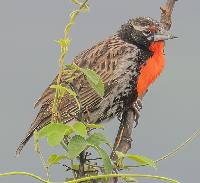
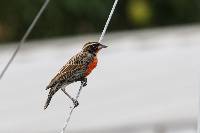
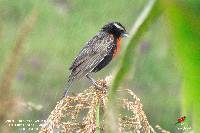
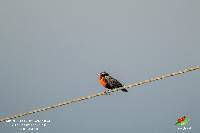
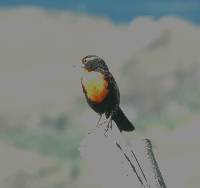
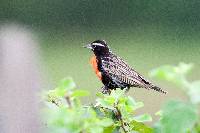
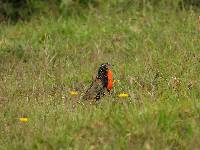
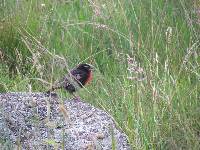
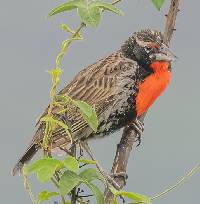
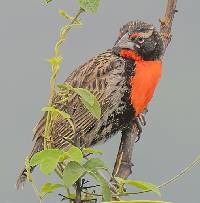
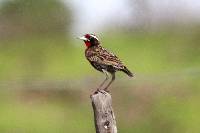
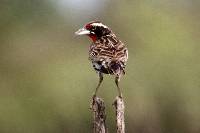
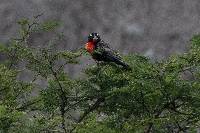
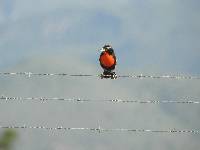
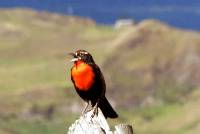
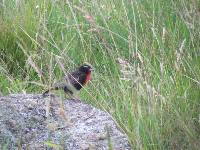
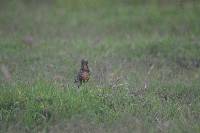
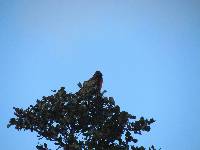
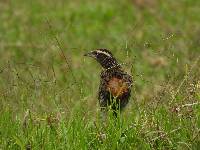
The Peruvian meadowlark is about 21 cm (8.3 in) long and weighs 61 to 78 g (2.2 to 2.8 oz); males are larger than females. Adult males of the nominate subspecies have a mostly black head with a white forehead, a long supercilium that is red from the bill to the eye and white beyond it, a white lower eyelid, and a short white "moustache". Their upperparts, wings, and tail are mostly grayish brown with blackish streaks. A few wing coverts are red and the underwing coverts are grayish white. Their chin, throat, and breast are bright red with blackish sides. Their belly is black and their flanks and undertail coverts are striped with buffish gray and black. Adult females have an all-white supercilium. Their upperparts are paler and more dusky than the male's. Their throat is whitish, their central belly is pale red, and the rest of their underparts are pale gray with dusky streaks. Juveniles resemble adult females without the reddis belly and heavier streaking on the underparts. Subspecies L. b. albipes is very like the nominate but smaller and less red. Both sexes of both subspecies...