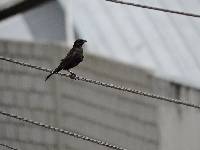
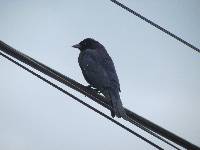
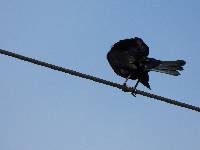
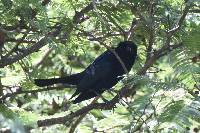
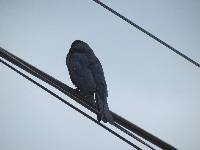
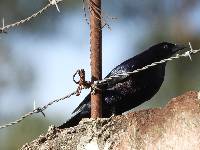
The shiny cowbird (Molothrus bonariensis) is a passerine bird in the New World family Icteridae. It breeds in most of South America except for dense forests and areas of high altitude such as mountains. Since 1900 the shiny cowbird's range has shifted northward, and it was recorded in the Caribbean islands as well as the United States, where it is found breeding in southern Florida. It is a bird associated with open habitats, including disturbed land from agriculture and deforestation.
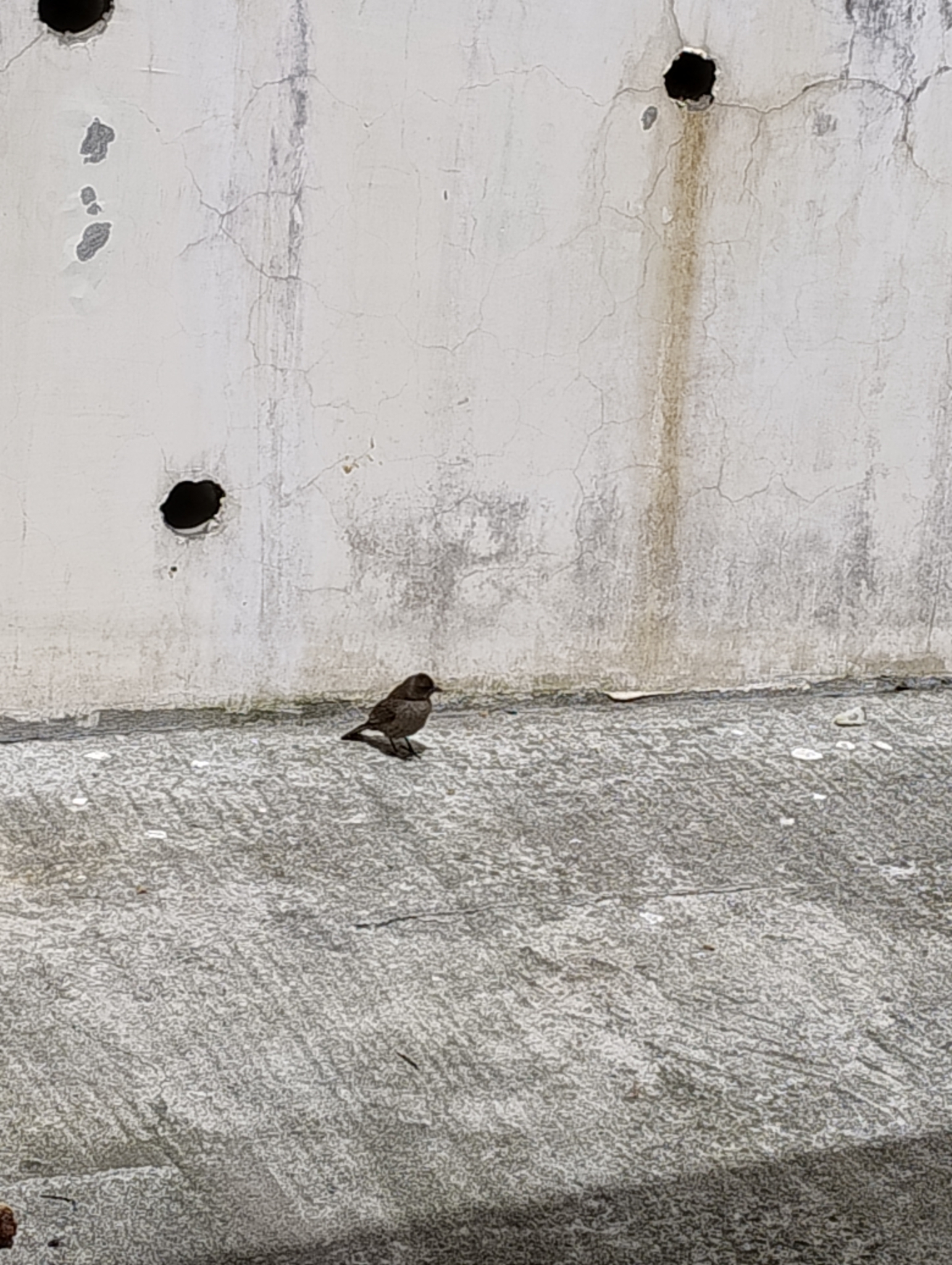
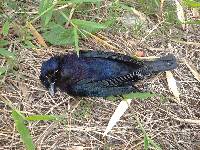
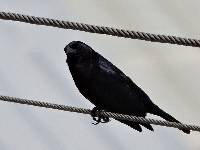
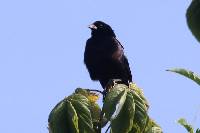
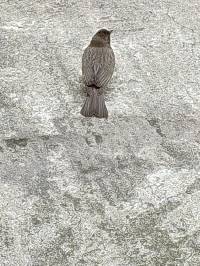
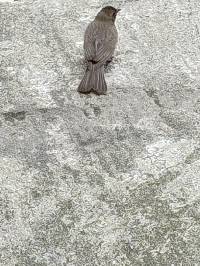
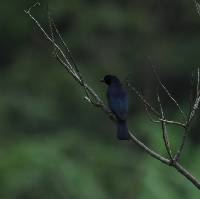
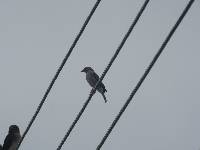
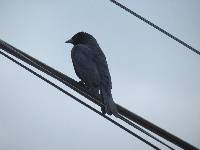
Adults are sexually dimorphic. Males are all black with a purple-blue iridescence. The female is smaller, with dull brown plumage that is sometimes paler on the underparts. Females of the species can be distinguished from the female brown-headed cowbird by their longer, finer bills and flatter heads. The shiny cowbird's diet consists mainly of insects, other arthropods and seeds, and they have been recorded foraging for grains in cattle troughs.
Like most other cowbirds, it is an obligate brood parasite, laying its eggs in the nests of many other bird species such as the rufous-collared sparrow. Different host species show different responses to their nests being parasitised, with behaviours ranging from accepting and caring for the cowbird eggs, to rejecting the eggs from the nest. As the shiny cowbird is an effective generalist brood parasite, it can be considered the South American counterpart to the brown-headed cowbird.
Taxonomy
The shiny cowbird was formally described in 1789 by the German naturalist Johann Friedrich Gmelin in his revised and expanded edition of Carl Linnaeus's Systema Naturae. He placed it with the tanagers in the genus Tangara and coined the binomial name Tanagra bonariensis. The specific epithet is Modern Latin for Buenos Aires, the type location. Gmelin based his description on "le tangavio" from Buenos Aires that had been described in 1778 by the French polymath the Comte de Buffon. A hand-coloured engraving by François-Nicolas Martinet was published separately...