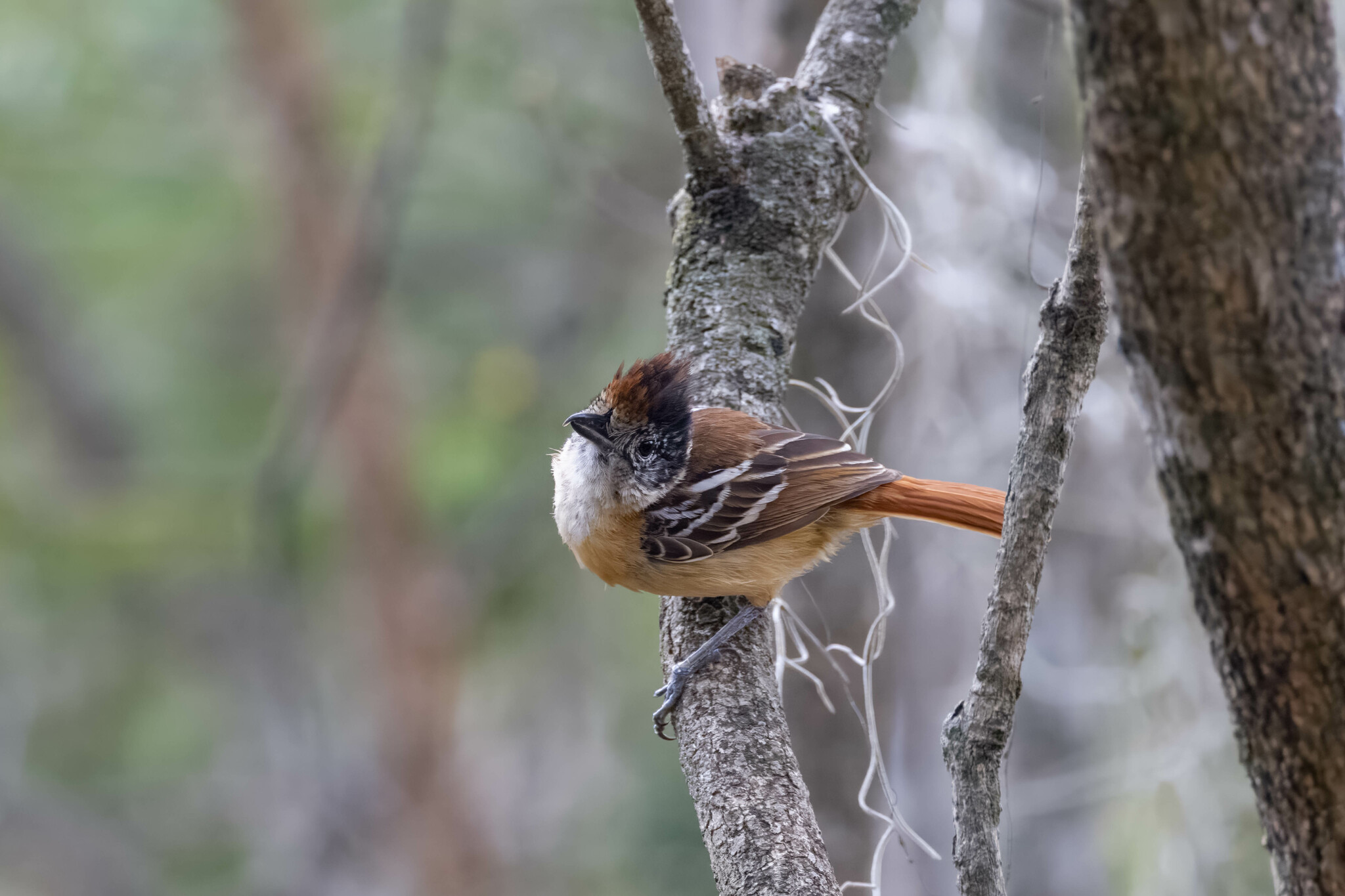
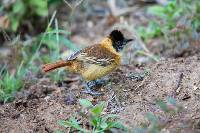
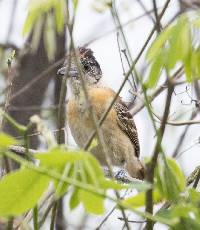
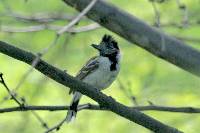
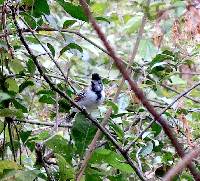
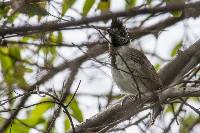
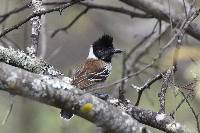
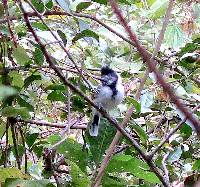
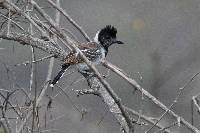
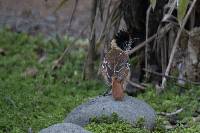
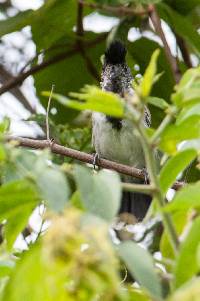
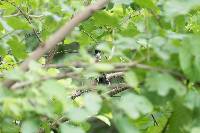
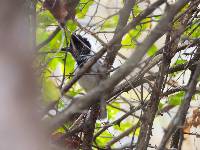
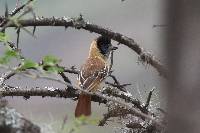
The collared antshrike (Thamnophilus bernardi) is a species of bird in subfamily Thamnophilinae of family Thamnophilidae, the "typical antbirds". It is found in Ecuador and Peru.
Taxonomy and systematics
The collared antshrike was described by the French naturalist René Lesson in 1844 and given the binomial name Thamnophilus bernardi (the genus was misspelled as Tamnophilus) with the type locality of Guayaquil in Ecuador. The specific epithet honors Captain Bernard, a French mariner and collector from Bordeaux. The collared antshrike was subsequently placed in the genus Sakesphorus. A molecular phylogenetic study published in 2007 found that Sakesphorus was polyphyletic and that three species including the collared antshrike were embedded within a clade containing members of Thamnophilus. The collared antshrike was therefore moved back to its original genus.
The collared antshrike's further taxonomy is unsettled. The South American Classification Committee of the American Ornithological Society, the International Ornithological Committee, and the Clements taxonomy assign it two subspecies, the nominate T. b. bernardi (Lesson, 1844) and T. b. shumbae (Carriker, 1934). Carriker described shumbae as a subspecies but BirdLife International's Handbook of the Birds of the World (HBW) treats it as a separate species, the "Maranon antshrike".
This article follows the one-species two-subspecies model.
Description
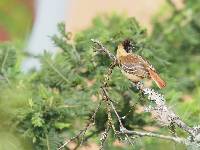
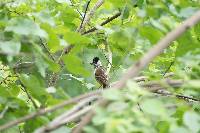
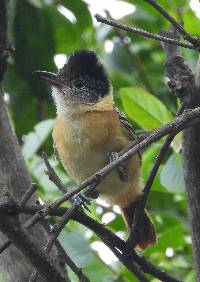
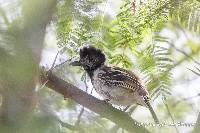
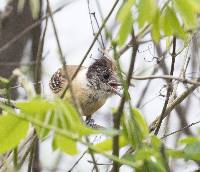
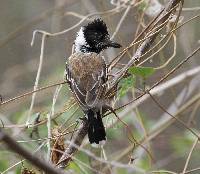
The collared antshrike is 16.5 to 18 cm (6.5 to 7.1 in) long and weighs 30 to 38 g (1.1 to 1.3 oz). Members of genus Thamnophilus are largish members of the antbird family; all have stout bills with a hook like those of true shrikes. Both sexes of this species have a bushy crest. Adult males of the nominate subspecies have a black crown and crest; their forehead has white spots. Their lores are grayish white on an otherwise black face. They have a white collar that connects to the white underparts. Their upperparts are mostly dull rufous brown with a hidden...