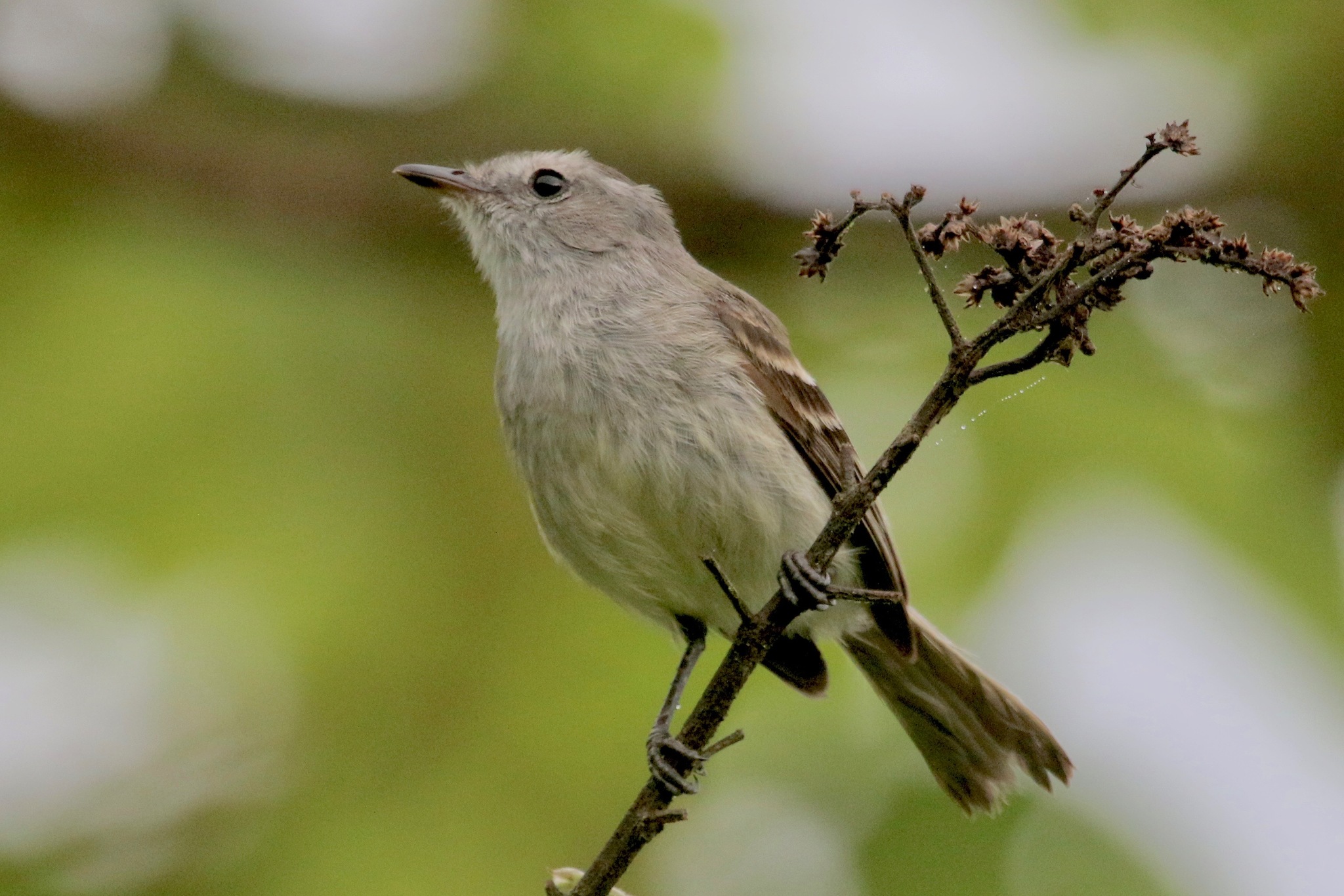
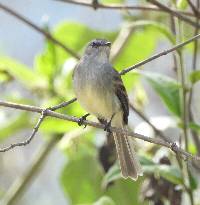
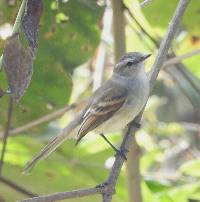
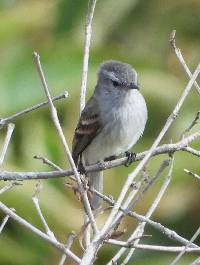
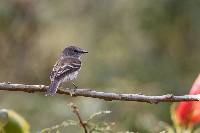
The mouse-colored tyrannulet (Nesotriccus murinus) is a species of bird in subfamily Elaeniinae of the tyrant flycatchers family Tyrannidae. It is found from Costa Rica and Panama south to Brazil and northern Argentina. The mouse-colored tyrannulet has sometimes been split into two species, the northern mouse-colored tyrannulet and the southern mouse-colored tyrannulet.
Taxonomy and systematics
The mouse-colored tyrannulet was formally described in 1825 by the German naturalist Johann Baptist von Spix under the binomial name Platyrhynchus murinus based on a specimen from Brazil. The specific epithet is Modern Latin meaning "mouse-grey" from Latin murinus meaning "of mice". The type locality has been restricted to Juazeiro in the state of Bahia in eastern Brazil. The mouse-colored tyrannulet is now one of four species placed in the genus Nesotriccus that was introduced by Charles Haskins Townsend in 1895.
Four subspecies are recognised:
N. m. eremonomus (Wetmore, 1953) – Pacific lowlands of south Costa Rica and Panama
N. m. incomtus (Cabanis & Heine, 1860) – Colombia, northeast Ecuador, Venezuela, Trinidad and Guyana
N. m. murinus (Spix, 1825) – central, east, south Brazil; central, south Bolivia, Paraguay, and northwest, northeast Argentina
N. m. wagae (Taczanowski, 1884) – the Guianas, Amazonian Brazil, east Peru, and north Bolivia
The mouse-colored tyrannulet has sometimes been split into two species with the subspecies N. m. eremonomus and N. m. incomtus known as the northern mouse-colored tyrannulet and the subspecies N. m. murinus and N. m. wagae known as the southern mouse-colored tyrannulet.
The mouse-colored tyrannulet was formerly placed in the genus Phaeomyias. Genetic analysis showed that Nesotriccus was embedded within Phaeomyias making Phaeomyias paraphyletic and by the principle of priority, beginning in 2018 most taxonomists moved the species to Nesotriccus. Nesotriccus murinus formerly also included what are now the tumbesian tyrannulet...