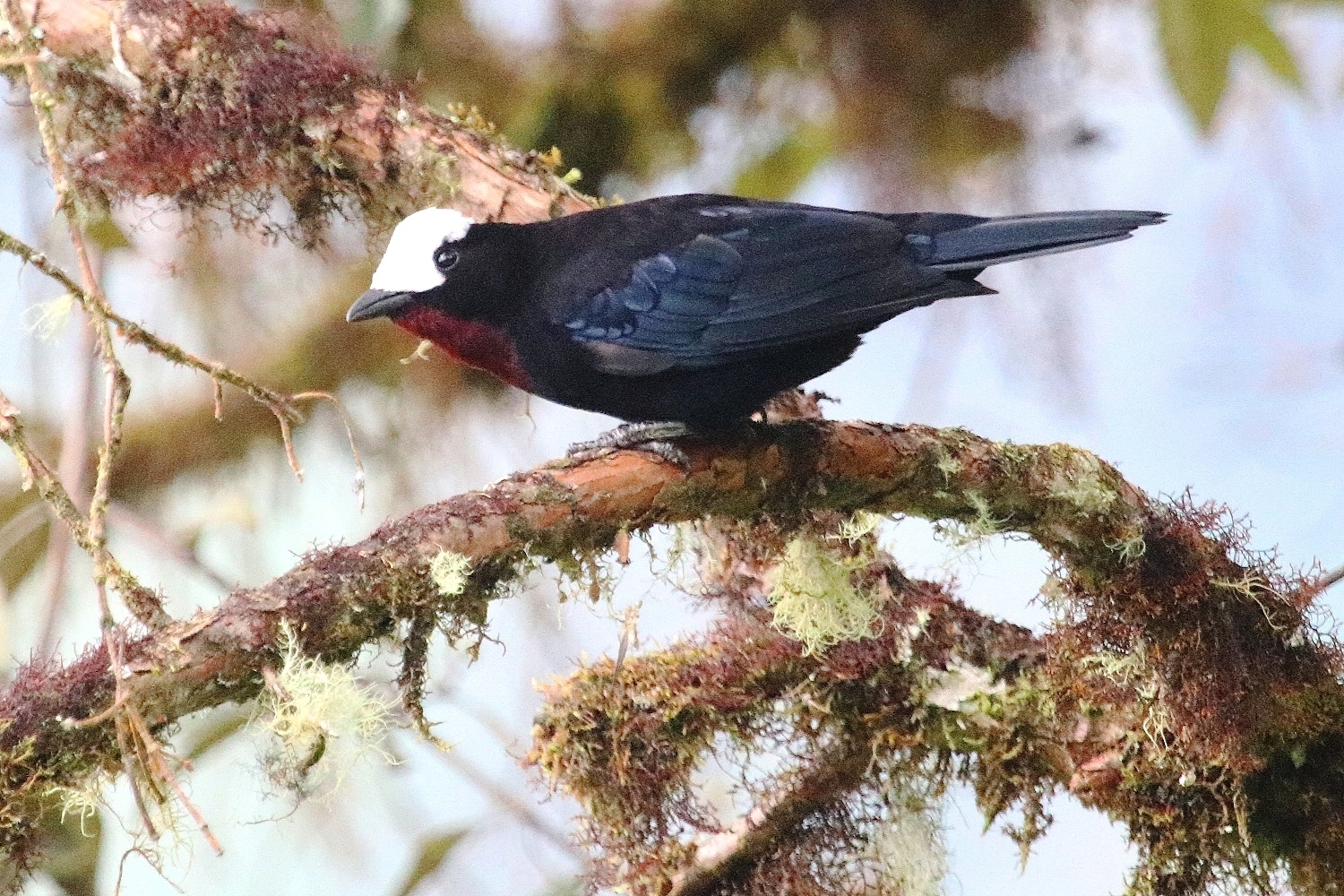
The white-capped tanager (Sericossypha albocristata) is a Vulnerable species of bird in the family Thraupidae, the tanagers and allies. It is found from Venezuela to Peru.
Taxonomy and systematics
The white-capped tanager was formally described in 1843 by the French ornithologist Frédéric de Lafresnaye under the Latin name Tangara (Lamprotes) albo-cristatus. The species is now the only species in the genus Sericossypha that was introduced in 1844 by René Lesson. The genus name combines the Ancient Greek sērikos meaning "silken" with kossuphos meaning "blackbird". The specific epithet albocristata is formed from the Latin albus meaning "white" with cristatus meaning "crested" or "plumed". The species is monotypic: No subspecies are recognized.