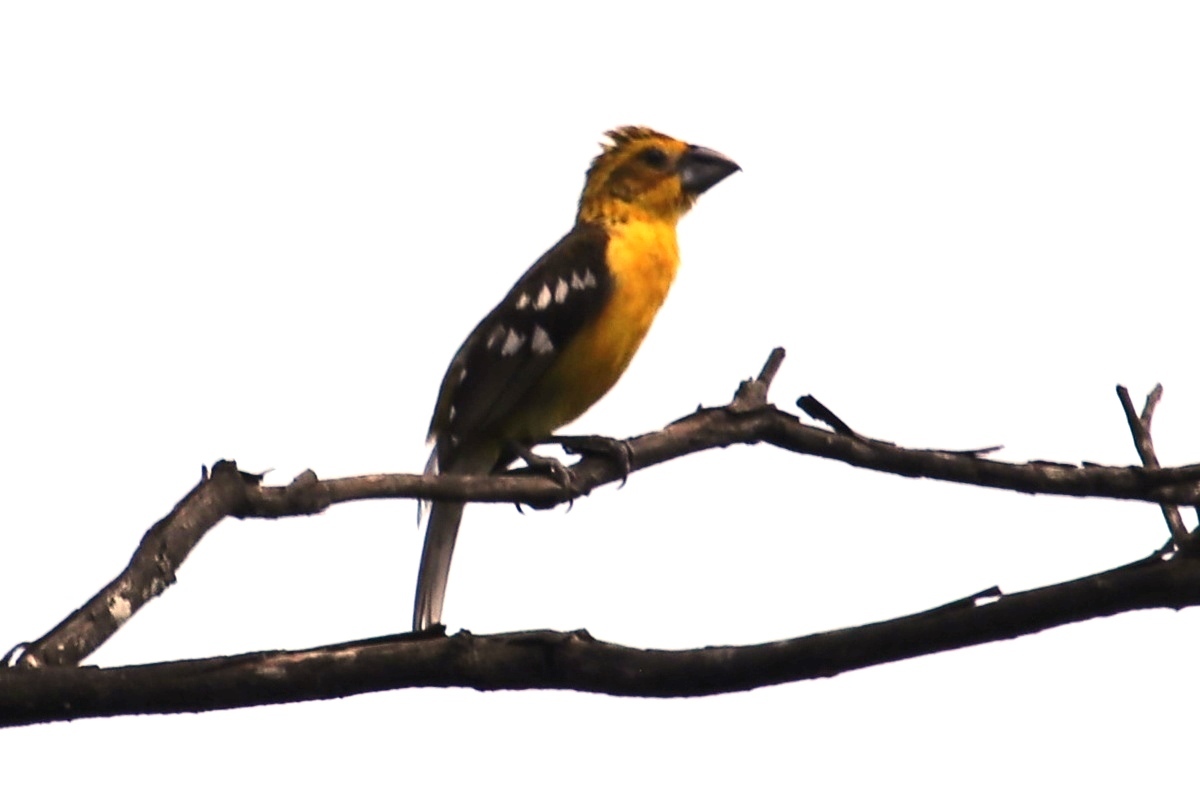
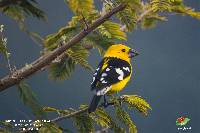
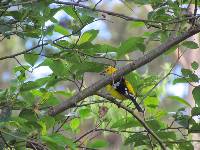
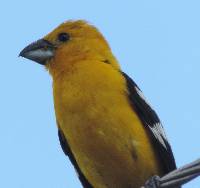
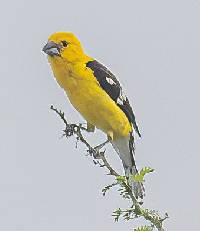
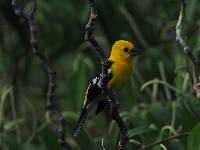
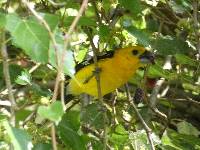
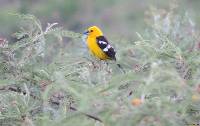
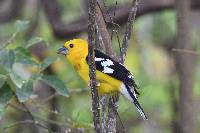
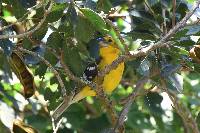
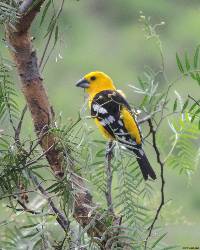
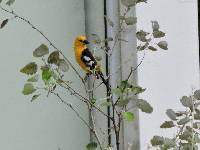
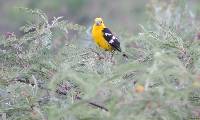
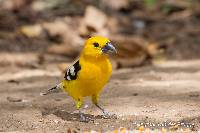
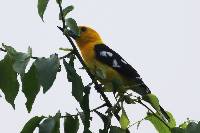
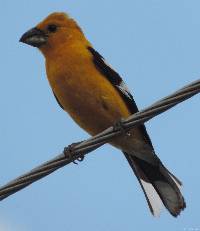
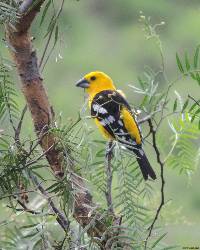
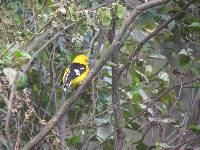
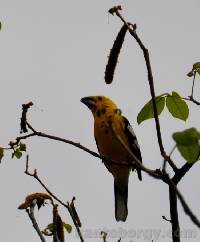
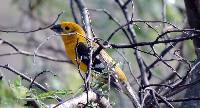
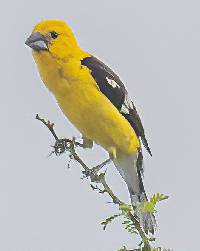
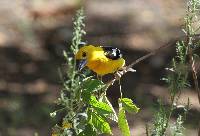
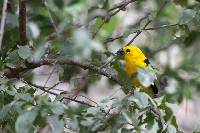
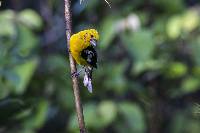
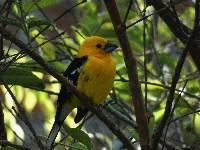
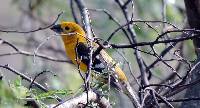
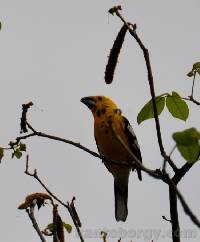
The golden grosbeak (Pheucticus chrysogaster) is a species of bird in the family Cardinalidae, the cardinals, grosbeaks, and “tanager” allies. It is found in Colombia, Ecuador, Peru, and Venezuela.
Taxonomy and systematics
The golden grosbeak was formally described in 1832 with the binomial Pitylus chrysogaster. It is now one of six species in the genus Pheucticus. This name derives from Greek and means "shy". Some authors have treated it, the black-thighed grosbeak (P. tibialis), and the yellow grosbeak (P. chrysopeplus) as conspecific. A 2013 phylogenetic study supports their separation and suggests that the golden grosbeak is more closely related to the black-backed grosbeak (P. aureiventris) than to the black-thighed or yellow. It has also been called the golden-bellied grosbeak and southern yellow grosbeak.
The golden grosbeak has two subspecies, the nominate P. c. chrysogaster (Lesson, 1832) and P. c. labumanni (Hellmayr & Seilern, 1915).
Description
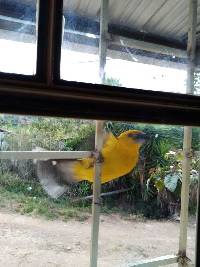
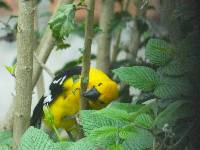
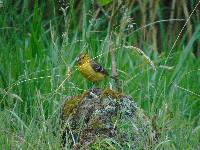
The golden grosbeak is 21.5 cm (8.5 in) long and weighs about 54 to 60 g (1.9 to 2.1 oz). Adult males of the nominate subspecies have an orange-tinged deep yellow head and nape. Their back is black, their rump yellow, and their uppertail coverts black with white tips. Their wings are mostly black with wide white tips on the greater and median coverts, white bases on the primaries, and white tips on the outer webs of the secondaries and tertials. Their tail is mostly black with much white on all but the innermost two pairs of feathers. Their throat and underparts are mostly bright yellow with white undertail coverts. Their thigh feathers are black. Adult females have a dull yellow crown with heavy black streaks. Their mantle is gray-brown with a greenish tinge and the rest of their upperparts greenish yellow with blackish streaks. Their wings have about the same pattern as the male's but are mostly blackish gray with smaller areas of white. Their tail is blackish brown with small white tips on the...