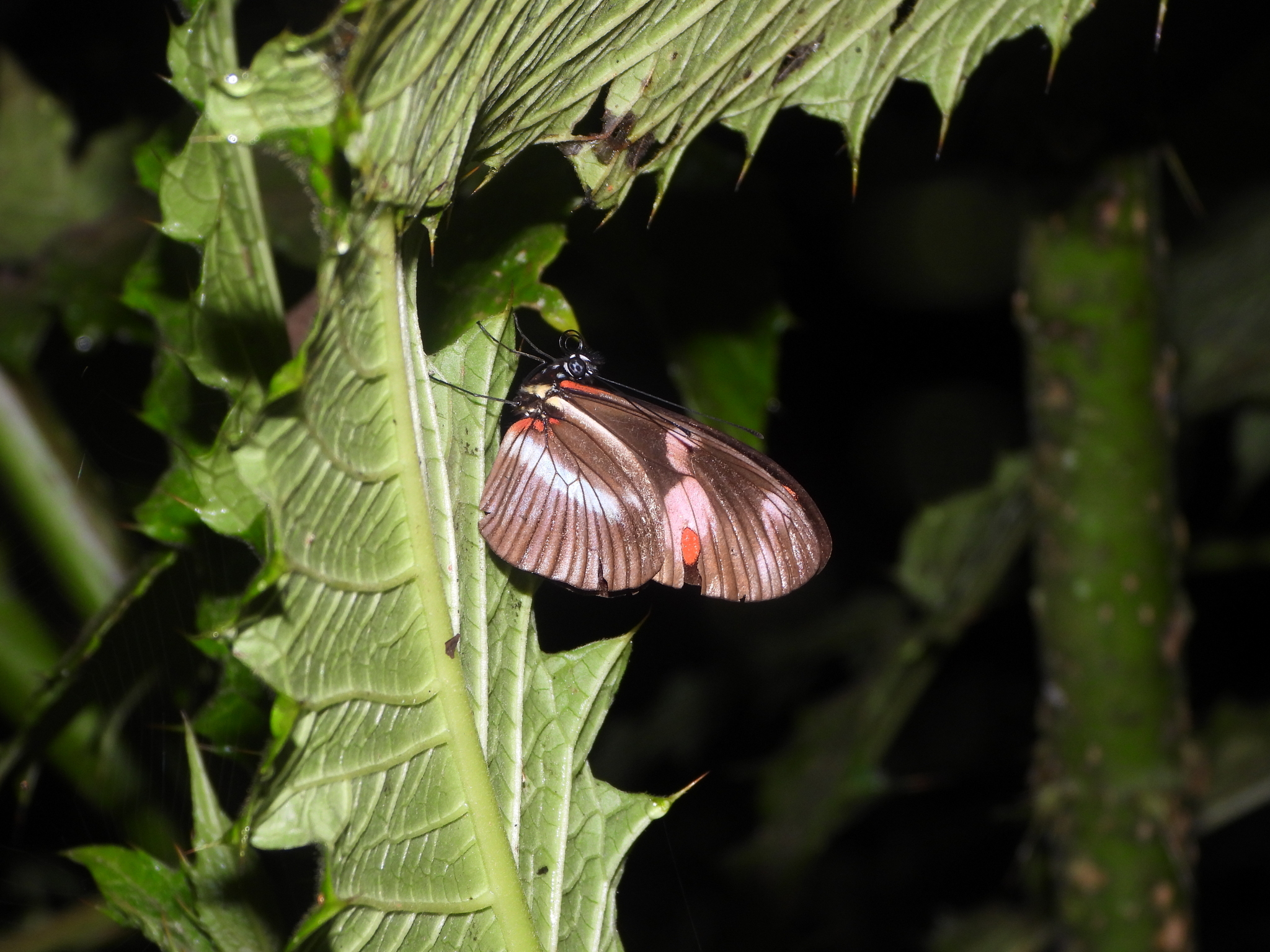
Heliconius comprises a colorful and widespread genus of brush-footed butterflies commonly known as the longwings or heliconians. This genus is distributed throughout the tropical and subtropical regions of the New World, from South America as far north as the southern United States. The larvae of these butterflies eat passion flower vines (Passifloraceae). Adults exhibit bright wing color patterns which signal their distastefulness to potential predators.
Brought to the forefront of scientific attention by Victorian naturalists, these butterflies exhibit a striking diversity and mimicry, both amongst themselves and with species in other groups of butterflies and moths. The study of Heliconius and other groups of mimetic butterflies allowed the English naturalist Henry Walter Bates, following his return from Brazil in 1859, to lend support to Charles Darwin, who had found similar diversity amongst the Galápagos finches.
Model for evolutionary study
1 Model for evolutionary study
1.1 Convergence
1.2 Speciation
1.3 Sexual selection of aposematic colors
1.4 Sexual selection of pheromones
1.5 Mating and offspring
Heliconius butterflies have been a subject of many studies, due partly to their abundance and the relative ease of breeding them under laboratory conditions, but also because of the extensive mimicry that occurs in this group. From the nineteenth century to the present day, their study has helped scientists to understand how new species are formed and why nature is so diverse. In particular, the genus is suitable for the study of both Batesian mimicry and Müllerian mimicry.
Because of the type of plant material that Heliconius caterpillars favor and the resulting poisons they store in their tissues, the adult butterflies are usually unpalatable to predators. This warning is announced, to the mutual benefit of both parties, by bright colors and contrasting wing patterns, a phenomenon known as aposematism. Heliconius butterflies are thus Müllerian mimics of one another,...