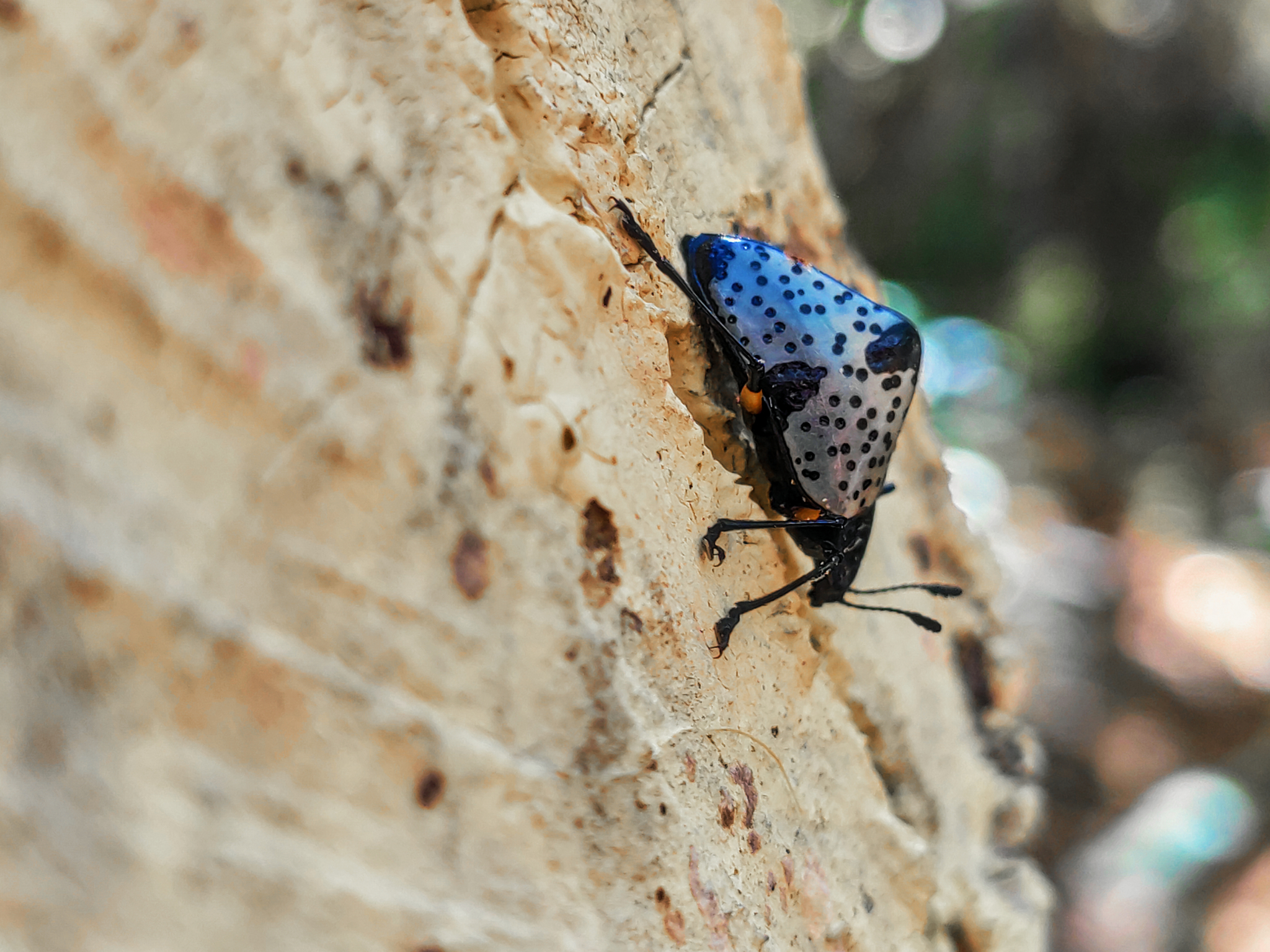
Cypherotylus is an American genus of pleasing fungus beetles (family Erotylidae), belonging to subfamily Erotylinae. This genus frequently appears in the older literature under the name "Gibbifer", but this name is permanently unavailable under ICZN Article 11.4, as are all of Johann Eusebius Voet's names due to his inconsistent use of binomial nomenclature.
The elytra of these large (by Erotylidae standards – up to an inch/over 20 mm) beetles are usually light brownish-grey with a black pattern. While the beetles are alive, their elytra also have structural coloration – metallic iridescence or a light blue bloom –, but this fades away in dead specimens. The elytra are also often elevated into a hump or spike – hence the obsolete genus name "Gibbifer" (Latin for "hump-bearer" or "hunchback"), as well as several species names alluding to humped mammals such as camels.
This genus is moderately diverse by standards of its family, containing a few dozen species. They occur mostly along the eastern rim of the Andes, and into the Neotropical lowlands, as well as throughout most of Central America. One species, C.californicus, ranges into the USA, where it is known as "blue fungus beetle".
Description
Cypherotylus beetles are large by their family's standards, around 13-25 mm (0.5-1 in) long and 7-14 mm wide as adults. They have a plump elongated body, with large but not outsized antennae and legs. The elytra form more or less pronounced humps when the wings are closed, and in some species even pointed spikes
Except for the elytra, Cypherotylus are generally black, with red markings on the pronotum in some species. Unusual for Erotylidae, the elytra of living Cypherotylus have an outer layer that gives them structural coloration – a metallic iridescence or pearlescent sheen in some species, while others have a light blue bloom. This coloration disappears rather quickly after the beetle is dead – even under good storage conditions, it does not last more...