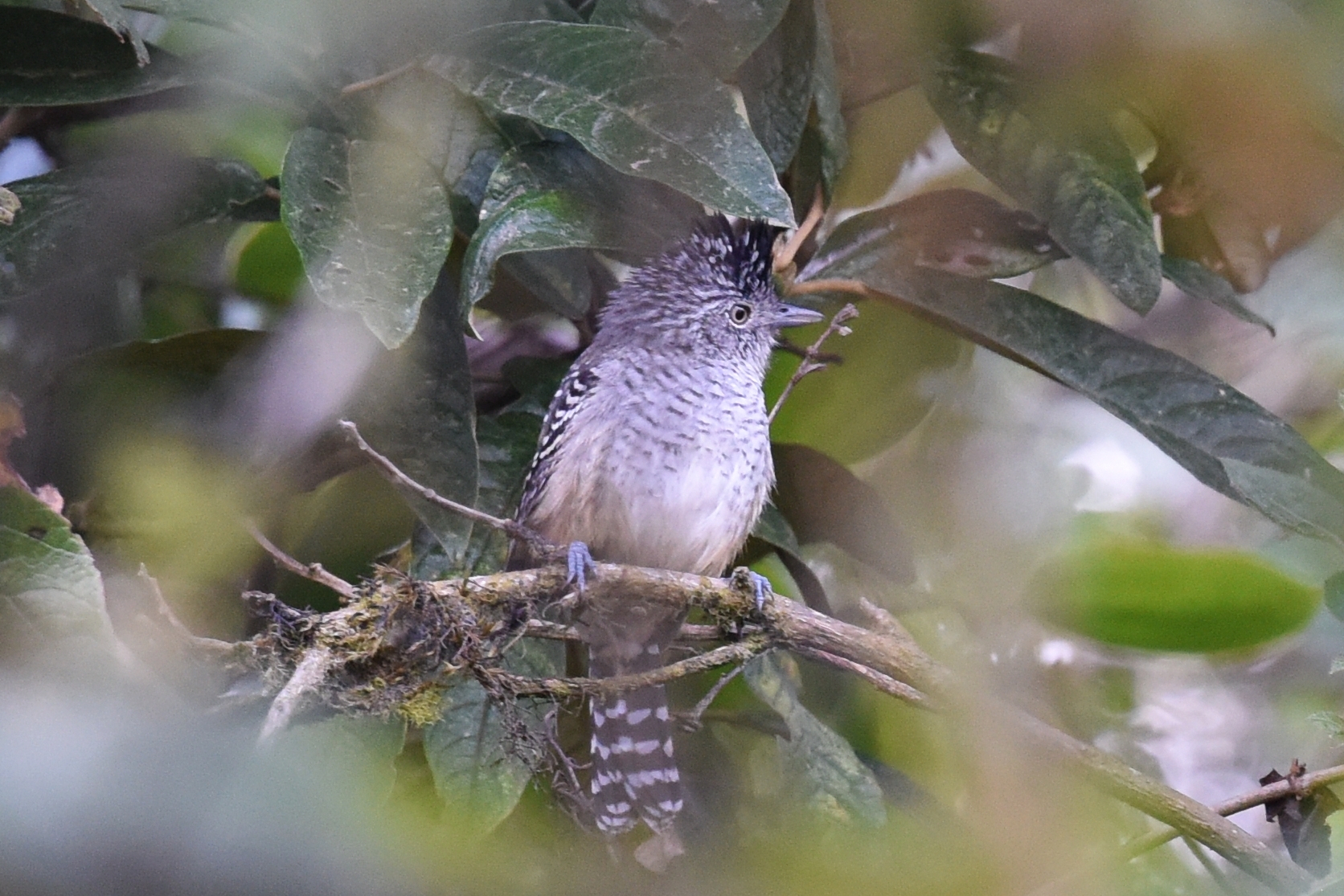
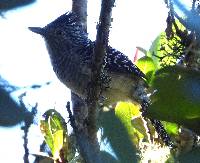
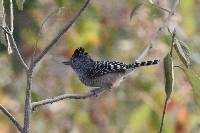
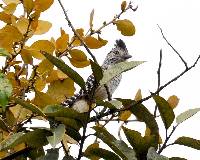
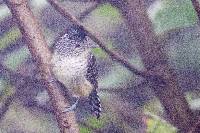
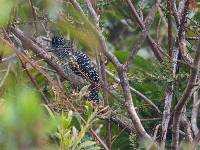
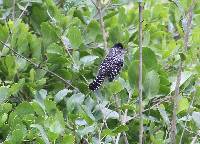
Chapman's antshrike (Thamnophilus zarumae) is a species of bird in subfamily Thamnophilinae of family Thamnophilidae, the "typical antbirds". It is found in Ecuador and Peru.
Taxonomy and systematics
Chapman's antshrike was originally described as a species but was soon transferred to be a subspecies of the barred antshrike (Thamnophilus doliatus). At the same time a new taxon was described as another subspecies of the barred antshrike (T. d. palamblae). In the late twentieth century Chapman's antshrike again began to be recognized as a separate species with palambae as a subspecies, and a few years later a phylogenetic study showed that it was not closely related to the barred antshrike.
The two subspecies of Chapman's antshrike are therefore T. d. zarumae and T. d. palamblae.
Description
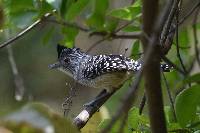
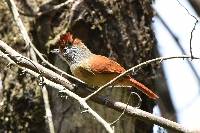
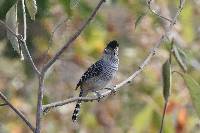
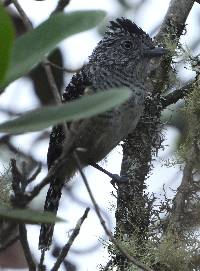
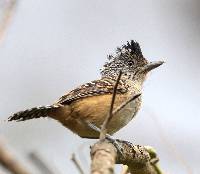
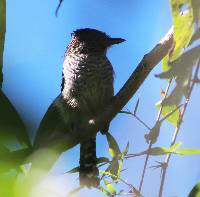
Chapman's antshrike is 14 to 15.5 cm (5.5 to 6.1 in) long and weighs about 22 g (0.78 oz). Members of genus Thamnophilus are largish members of the antbird family; all have stout bills with a hook like those of true shrikes. This species exhibits marked sexual dimorphism though both sexes have a bushy crest. Adult males of the nominate subspecies T. d. zarumae have a black and white streaked forehead and a black crown and crest. Their face and the sides of their neck are streaked with black and white. They have a medium gray "collar". Their back, scapulars, rump, tail, and wings are black with white bars. Their throat is white with black streaks. Their breast and sides are white lightly barred with black, their belly center unmarked white, and their flanks and undertail coverts cinnamon buff. Adult females have a rufous crest. The sides of their head and neck are whitish buff with black streaks. Their collar is olive brown. Their upperparts, wings, and tail are cinnamon rufous. Their throat is pale buff with thin black streaks. Their breast, belly, and sides are buff with faint gray marks on the breast. Adults of both sexes have a pale but variably colored iris, a black maxilla, a...