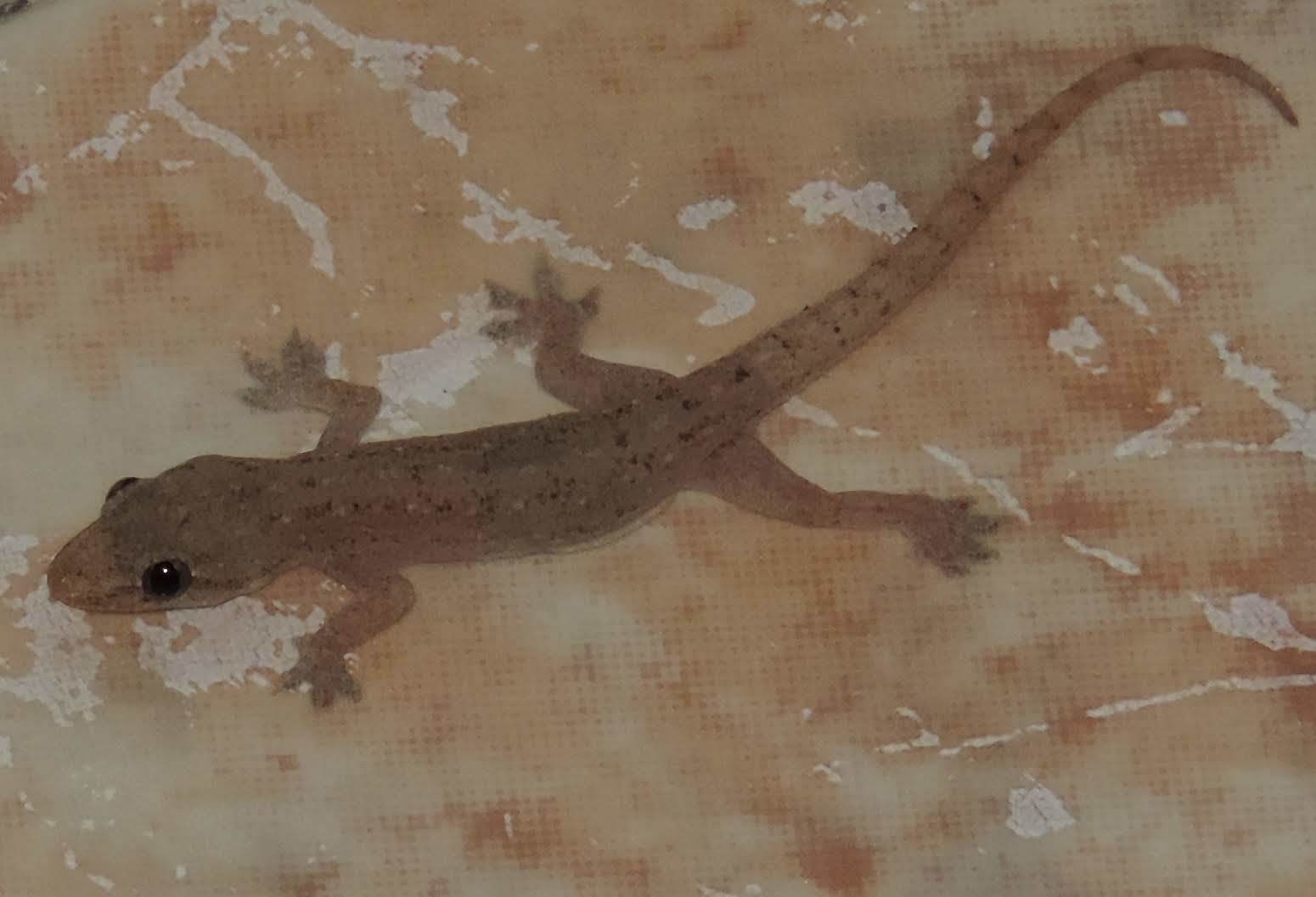
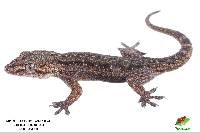
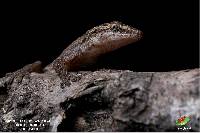
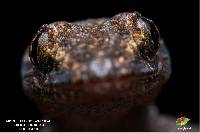
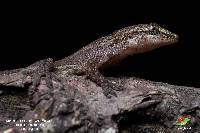
The Common house gecko (Hemidactylus frenatus) is a gecko native to South and Southeast Asia and Near Oceania. It is also known as the Asian house gecko, Pacific house gecko, wall gecko, House lizard, Tiktiki, chipkali and moon lizard.
The common house gecko is nocturnal, hiding during the day and foraging for insects at night. They can be seen climbing walls of houses and other buildings in search of insects attracted to porch lights, and are immediately recognisable by their characteristic chirping.
They grow to a length of between 7.5–15 cm (3–6 in), and live for about 7 years. They are non-venomous and not harmful to humans. Most medium-sized to large geckos are docile, but may bite if distressed, which might pierce skin. The common house gecko is a tropical species, and thrives in warm, humid areas where it can crawl around on rotting wood in search of the insects it eats, as well as within urban landscapes in warm climates. The animal is very adaptable and may prey on insects and spiders, displacing other gecko species which are less robust or behaviourally aggressive. In parts of Australia and Papua New Guinea they are often confused with a similar native lizard, the dubious dtella.
Etymology
The Latin word frenatus means "harnessed" or "bridled". This refers to the dark streaks on the sides of the head between the eyes and the nostrils.
Habitat and diet
Common house gecko with a caught insect in India
The common house gecko is by no means a misnomer, displaying a clear preference for urban environments. The synanthropic gecko displays a tendency to hunt for insects in close proximity to urban lights. They have been found in bushland, but the current evidence seems to suggest they have a preference for urban environments, with their distribution being mostly defined by areas within or in close proximity to city bounds.
The common house gecko appears to prefer areas in the light which are proximal to cracks, or places to escape. Geckos without an immediate...