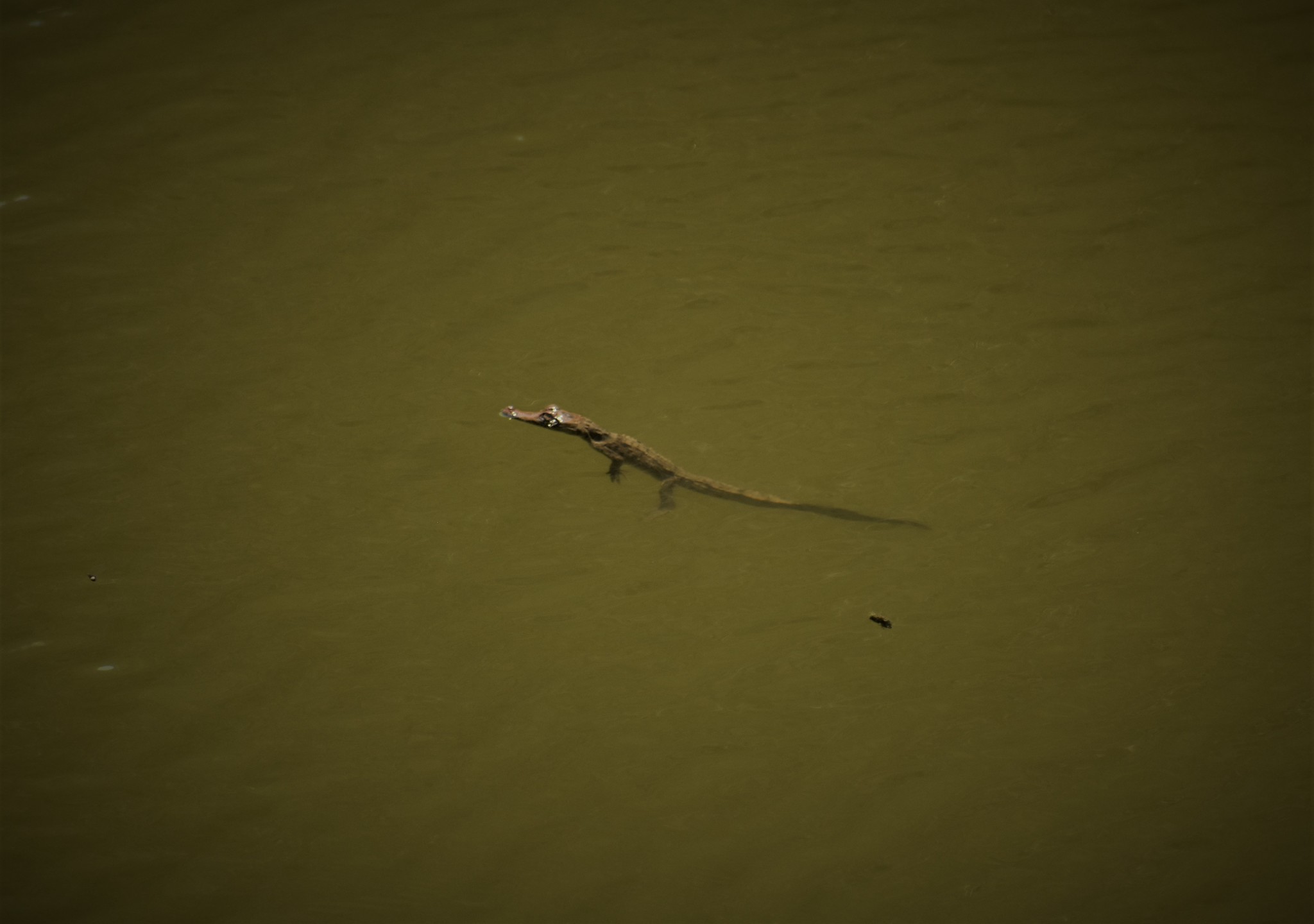
Crocodylus is a genus of true crocodiles in the family Crocodylidae.
Taxonomy
The generic name, Crocodylus, was proposed by Josephus Nicolaus Laurenti in 1768. Crocodylus contains 13–14 extant (living) species and 5 extinct species. There are additional extinct species attributed to the genus Crocodylus that studies have shown no longer belong, although they have not yet been reassigned to new genera.
The 13–14 living species are:
Image
Scientific name
Common name
Distribution
Crocodylus acutus
(Cuvier, 1807)
American crocodile
Southern Florida and the Atlantic and Pacific coasts of north Mexico to North America as far south as Peru and Venezuela, Cuba, Jamaica, Hispaniola and Grand Cayman.
Crocodylus halli
Murray, Russo, Zorrilla & McMahan, 2019
Hall's crocodile
southern New Guinea
Crocodylus intermedius
(Graves, 1819)
Orinoco crocodile
Colombia and Venezuela
Crocodylus johnstoni
Krefft, 1873
Freshwater crocodile
Northern regions of Australia
Crocodylus mindorensis
Schmidt, 1935
Philippine crocodile
Northern Sierra Madre Natural Park within the Luzon rainforest, San Mariano, Isabela, Dalupiri island in the Babuyan Islands, Abra (province) in Luzon and the Ligawasan Marsh, Lake Sebu in South Cotabato, Pulangi River in Bukidnon, and possibly in the Agusan Marsh Wildlife Sanctuary in Mindanao
Crocodylus moreletii
(A. H. A. Duméril & Bibron, 1851)
Morelet's crocodile or Mexican crocodile
Mexico, Belize and Guatemala
Crocodylus niloticus
Laurenti, 1768
Nile crocodile or African crocodile, (the subspecies found in Madagascar, C. n. madagascariensis, is sometimes called the black crocodile)
Israel and Syria (historically), Somalia, Ethiopia, Uganda, Kenya, Egypt, the Central African Republic, the Democratic Republic of the Congo, Equatorial Guinea, Tanzania, Rwanda, Burundi, Zambia, Zimbabwe, Gabon, Angola, South Africa, Malawi, Mozambique, Sudan, South Sudan,...