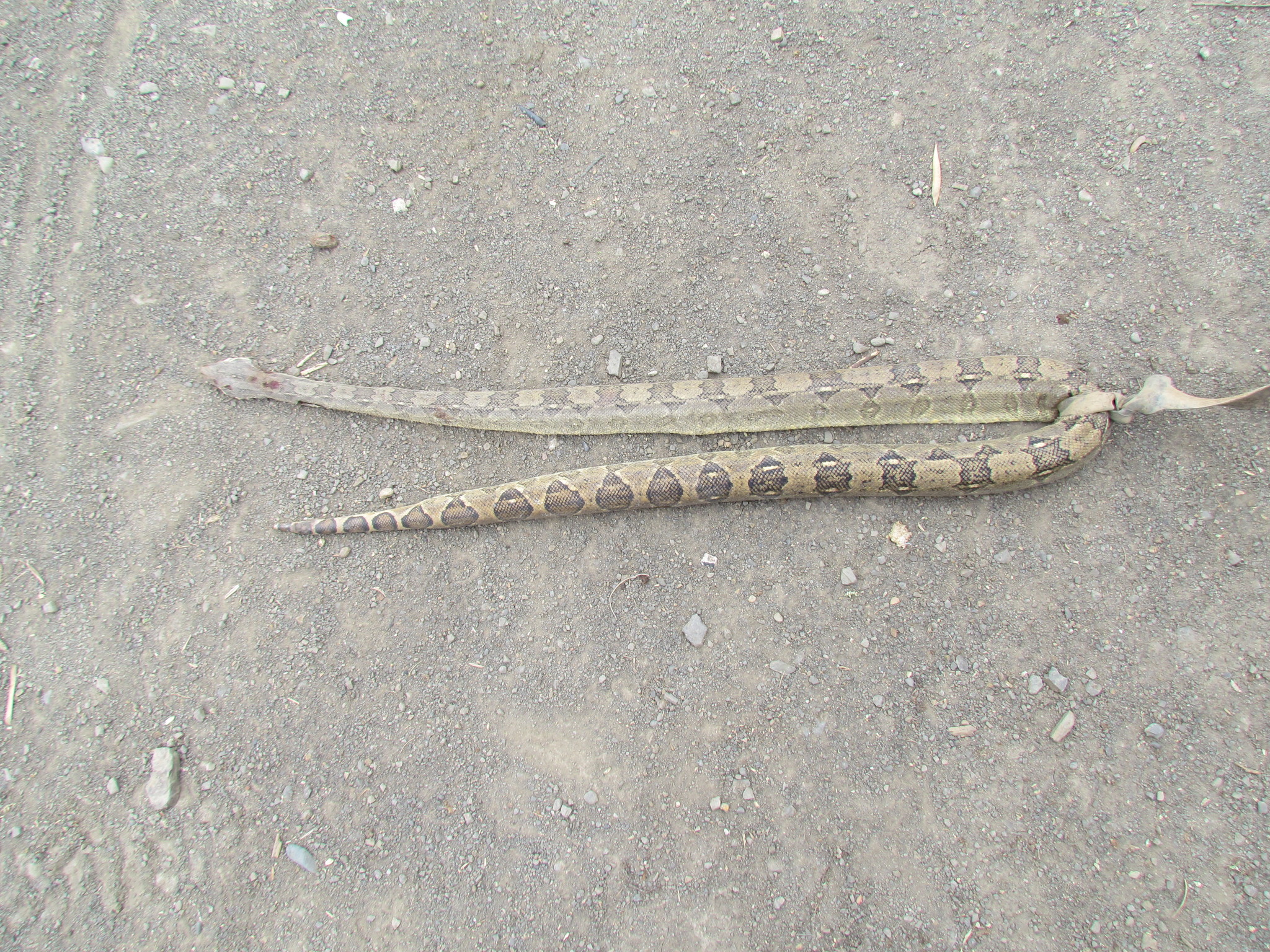
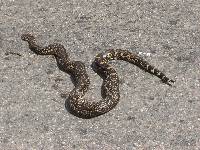
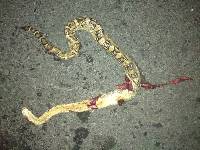
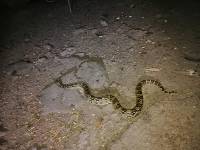
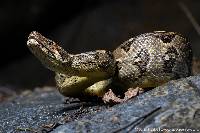
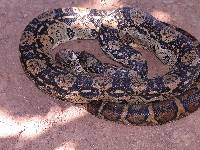
Boa imperator (or Boa constrictor imperator in common usage) is a large and heavy-bodied arboreal species of nonvenomous, constrictor-type snake in the family Boidae. One of the most popular pet snakes (often bred in captivity) in the world, B. imperator's native range is from Mexico through Central and South America (west of the Andes Mountains, mainly in Colombia), with local populations on several small Caribbean islands. It is commonly called the Central American boa, northern boa, Colombian boa (or Colombian red-tailed boa), common boa and common northern boa.
Description
A specimen from the Cayos Cochinos
Boa imperator is a wide-ranging species, living in both Central America and the northern parts of South America. As a result, the appearance of this snake varies greatly depending on the specific locality. As one of the smaller Boa species, they average between 1.3 m (4.2 ft.) and 2.5 m (8.2 ft.) in length when fully grown, but have been known to reach 3.7 m (12 ft.). They usually weigh around 6 kg (13 lb), although females are significantly larger than males. Lifespan in the wild is around 20–30 years, but 40 can be exceeded in captivity.
Although Boa imperator exhibits almost identical patterns to Boa constrictor, this species often has a darker tail, usually dark brown or very dark red. They are, however, usually just as colorful as their counterparts and, like the larger boas, can be bred into a variety of different colors, given the right conditions to breed.
Notably, the species is one of only two in snakes to have a confirmed XY sex chromosome system.
One population, found on the Cayos Cochinos (Hog Islands) off the northern coast of Honduras, have evolved naturally hypomelanistic skin (containing reduced melanin), resulting in lighter-colored snakes; nonetheless, they retain the "signature" darkened tail-tip seen in the species, though the color of the tail may vary from salmon-pink to orange.