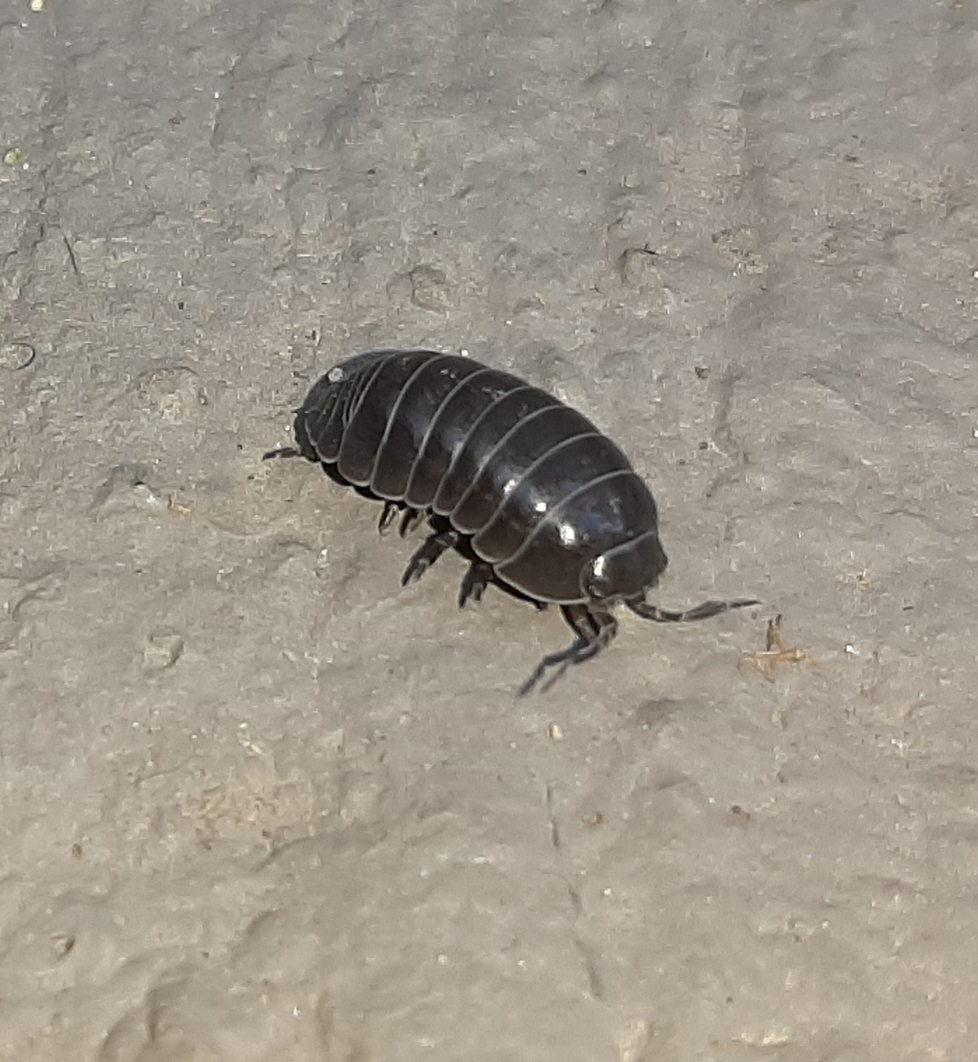
Armadillidium () is a genus of the small terrestrial crustacean known as the woodlouse. It is one of 18 genera nested within the family Armadillidiidae. Armadillidium is also one of the groups commonly known as pill woodlice, leg pebbles, pill bugs, roly-poly, or potato bugs, and are often confused with pill millipedes such as Glomeris marginata. They are characterised by their ability to roll into a ball ("volvation") when disturbed.
With a penchant for damp and dark places, species in the Armadillidium genus can typically be found under rocks, in leaf litter, and in or around the soil. Aided by their dorsoventrally flattened body and small size – usually growing no bigger than 2.5 cm – these pill bugs are able to squeeze into tight cracks and are common household pests as a result.
Description
Unlike other terrestrial arthropods such as insects and spiders, pill bugs do not have a waxy cuticle that would reduce evaporation from their bodies. Pill bugs also use modified lungs, called pseudotrachea, for respiration, and the lungs must remain moist to function. Individual pill bugs typically live for two or three years, and females brood eggs once or twice each summer. In larger species and individuals, up to over a hundred eggs are brooded at a time in the marsupium, a pocket on the ventral side of the female pill bug. The marsupium provides nutrients and oxygen to the eggs until they hatch, resulting in something akin to live birth.
The colouration, especially of young A. klugii resembles the red hourglass marking of the Mediterranean black widow Latrodectus tredecimguttatus. It has been proposed to be a result of Batesian mimicry, to ward off predators that mistake the harmless animal for a venomous spider.
Behaviour
Armadillidium gestroi (Yellow Spotted Isopod) hiding under bark. Picture taken at the University of Alberta.
Pill bugs in the genus Armadillidium are characterized by their ability to roll up into a ball when alarmed. However, this is not their...