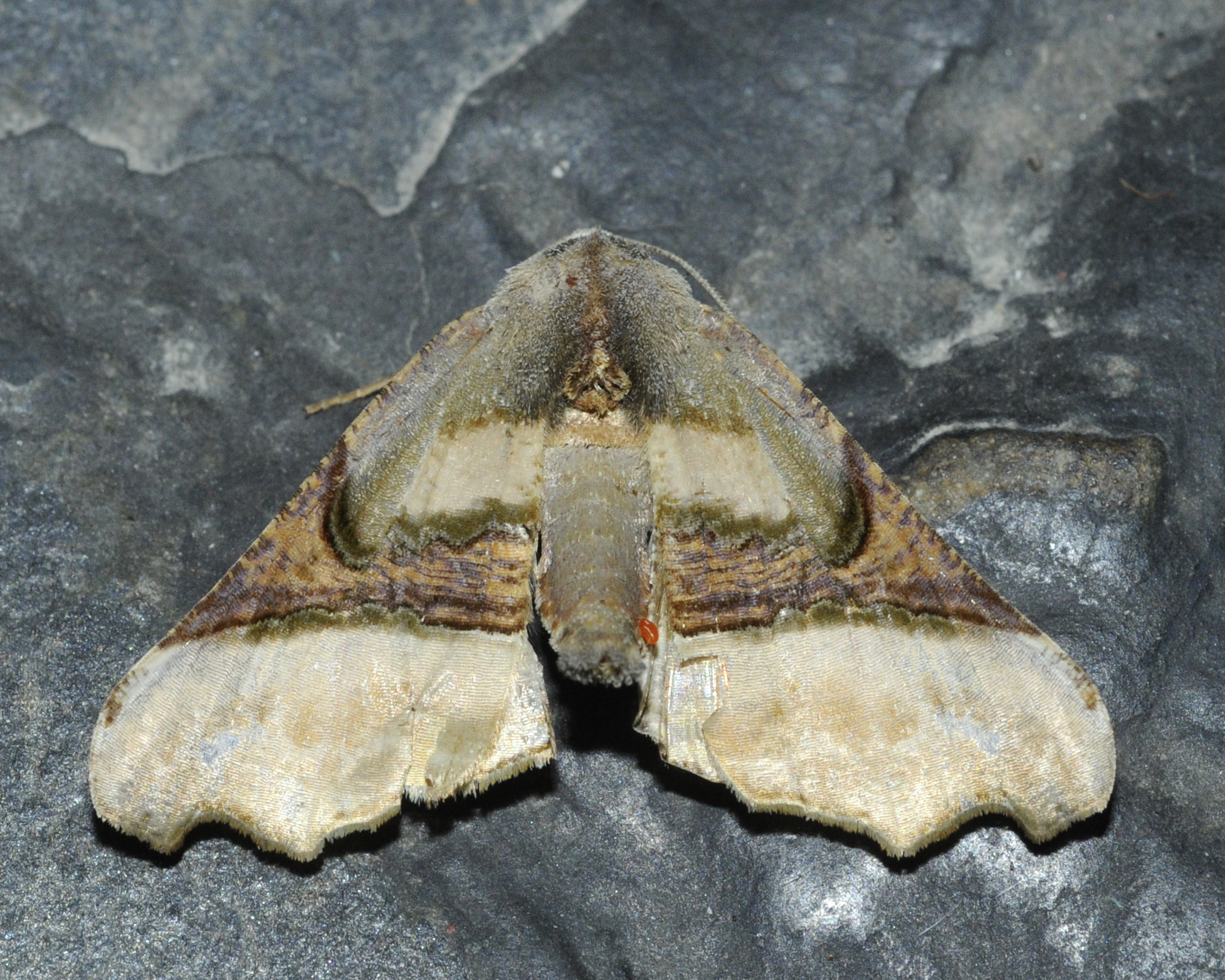
Ennominae is the largest subfamily of the geometer moth family (Geometridae), with some 9,700 described species in 1,100 genera. Most species are fairly small, though some (such as the peppered moth) grow to be considerably large. This subfamily has a global distribution. It includes some species that are notorious defoliating pests. The subfamily was first described by Philogène Auguste Joseph Duponchel in 1845.
The status of several tribes is debated. For example, the Boarmiini are sometimes massively expanded to include the Bistonini, Bupalini, Erannini, Gnophini, Melanolophini, Phaseliini and Theriini. The Nacophorini and perhaps the Campaeini might need to be merged with the Lithinini, and all three might warrant merging into the Ennomini. The group sometimes separated as Cassymini is tentatively included in the Abraxini here. The Alsophilinae, usually treated as a small subfamily in their own right, might simply be a specialized lineage of Boarmiini.
Physiology and life cycle
Individuals of the species are typically fairly small, being composed of slender bodies and broader wings, with adults' wingspans ranging from 15 to 50mm. When at rest, many species hold their wings away from their bodies, often in characteristic positions for their species. Most larvae have two pairs of hind legs, which differ from many other families. However, their lifecycle is similar to other families, going from egg to larva to pupae to adults.
Selected genera
Tribe Baptini
Lomographa
Tribe Boarmiini
†Eogeometer (Fischer, Michalski & Hausmann, 2019)
Tribe Bupalini
Bupalus
Tribe Caberini
Cabera
Tribe Campaeini
Campaea
Tribe Colotoini
Colotois
Tribe Erannini
Erannis
Tribe Gnophini
Charissa
Gnophos
Hirasa
Tribe Gonodontini
Aethiopodes (sometimes in Odontopera)
Odontopera
Genera <i>incertae sedis</i>
Numerous genera have hitherto not been definitely assigned to a tribe. These include: