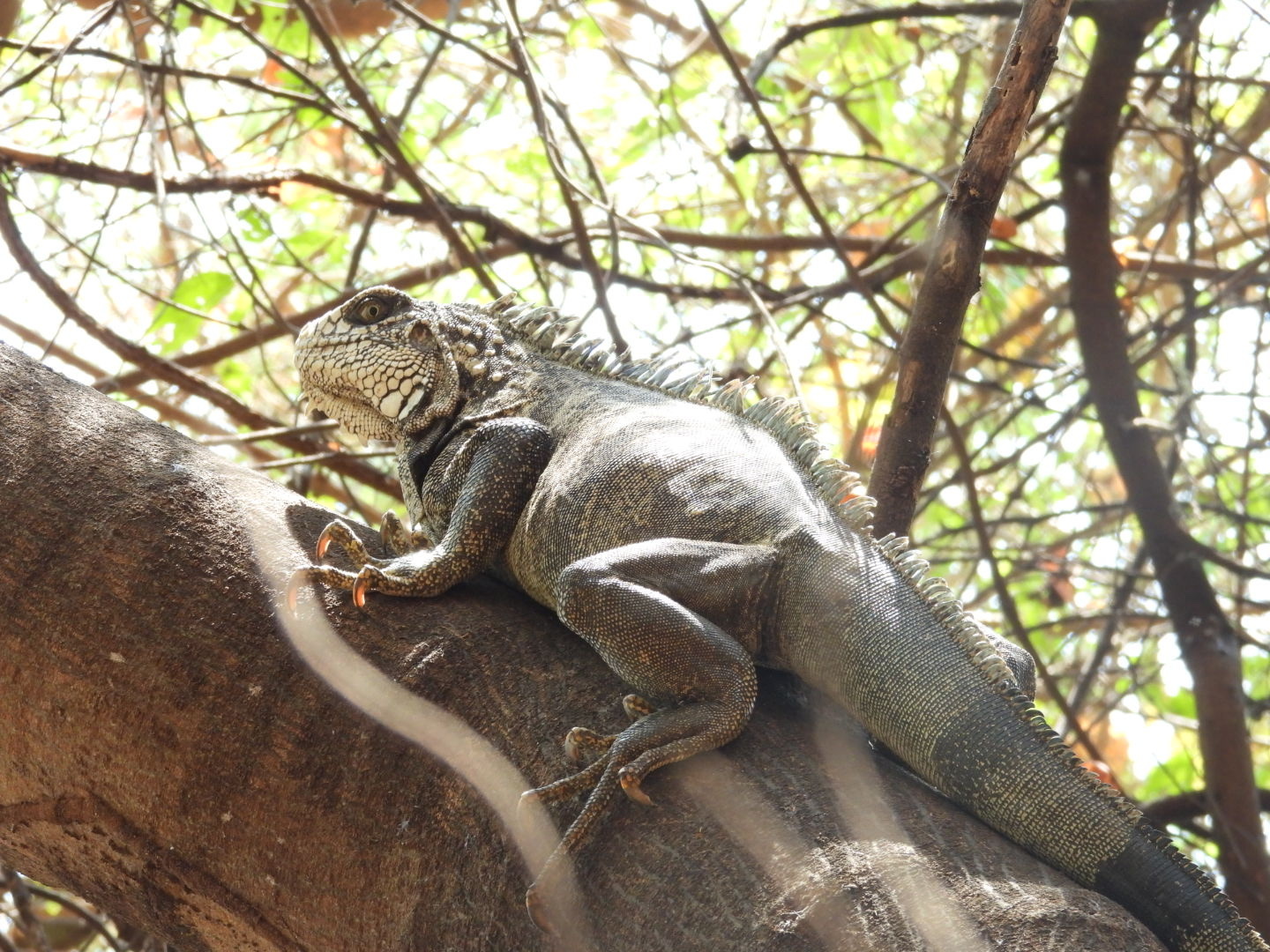
The Iguanidae is a family of lizards composed of the iguanas, chuckwallas, and their prehistoric relatives, including the widespread green iguana.
Taxonomy
This family likely first appeared in Cenozoic, previously identified two Cretaceous genera (Pristiguana and Pariguana) are unlikely to belong to this family. The subfamily Iguaninae, which contains all modern genera, likely originated in the earliest Paleocene, about 62 million years ago. The most basal extant genus, Dipsosaurus, diverged from the rest of Iguaninae during the late Eocene, about 38 million years ago, with Brachylophus following a few million years later at about 35 million years ago, presumably after its dispersal event to the Pacific. All other modern iguana genera formed in the Neogene period.
A phylogenetic tree of Iguaninae is shown here:
body.skin-vector-2022
Dipsosaurus
Brachylophus
Cyclura
Ctenosaura
Cachryx
Amblyrhynchus
Conolophus
Iguana
Sauromalus
Description
Iguanas and iguana-type species are diverse in terms of size, appearance, and habitat. They typically flourish in tropical, warm climates, such as regions of South America and islands in the Caribbean and in the Pacific. Iguanas typically possess dorsal spines across their back, a dewlap on the neck, sharp claws, a long whip-like tail, and a stocky, squat build. Most iguanas are arboreal, living in trees, but some species tend to be more terrestrial, which means they prefer the ground. Iguanas are typically herbivores and their diets vary based on what plant life is available within their habitat. Iguanas across many species remain oviparious, and exhibit little to no parental care when their eggs hatch. They do, however, display nest-guarding behavior. Like all extant non-avian reptiles, they are poikilothermic, and...