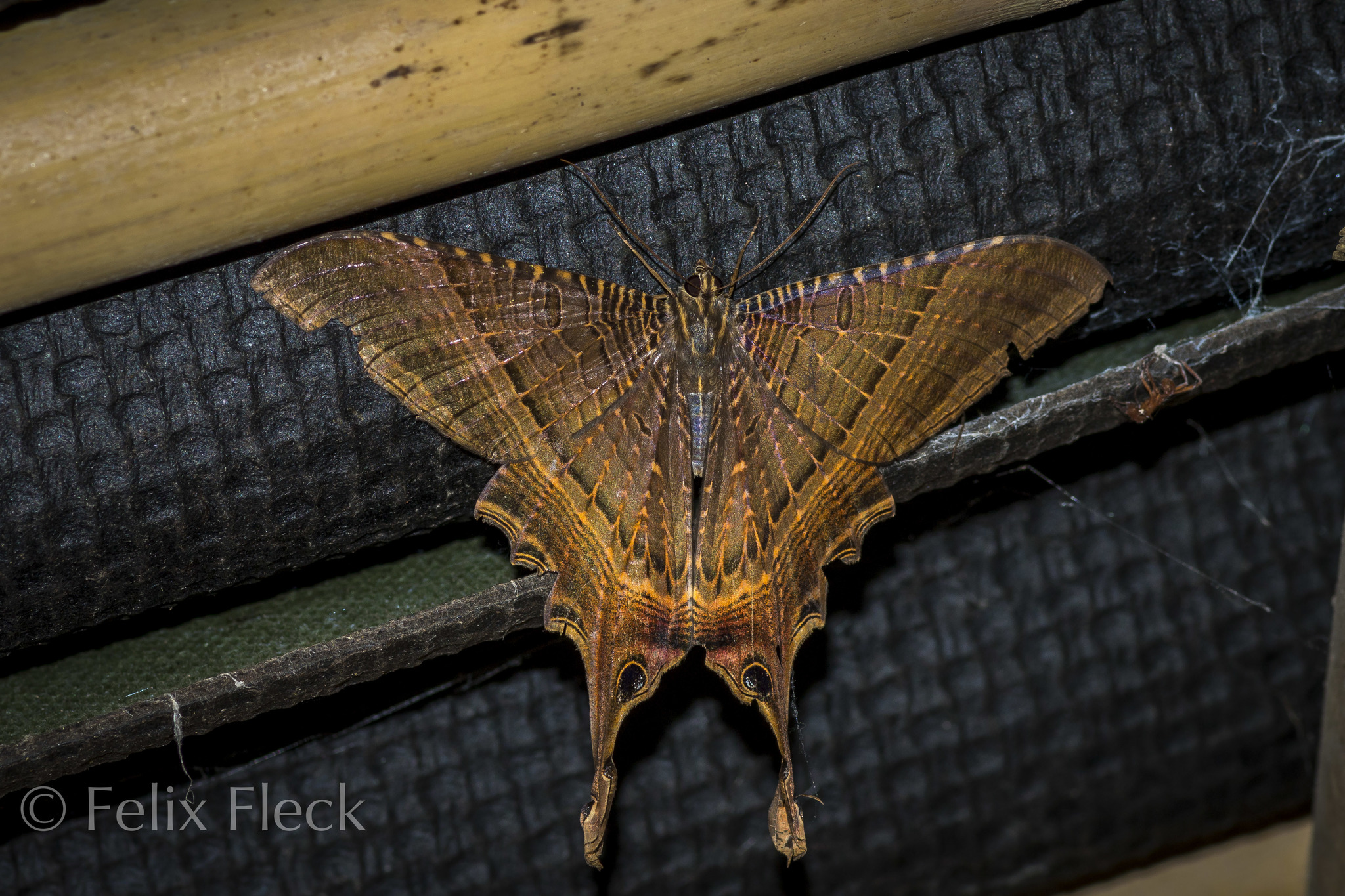
Sematurinae is a subfamily of moths in the family Sematuridae represented by at least 29 species in the Neotropics.
Taxonomy, classification and identification
Sematurinae has three principal genera, and possibly another two. The hindwing of Coronidia is distinguished by an iridescent blue band, but Homidiana characteristically has pink, orange or yellow markings, especially in females (Minet and Scoble, 1999). The genus Mania is large, brown and tailed, resembling to some extent the genus Lyssa. The approximately twelve other sematurid species in the genera Anurapteryx and Lonchotura are placed here for now (making about 41 species) but may not belong in this subfamily; one species, Anurapteryx crenulata reaches the subtropics of Arizona (Minet and Scoble, 1999). The relationships within Sematuridae clearly need deeper investigation.
Note: the name Nothus is preoccupied by a genus of Coleoptera (Minet and Scoble, 1999). The genus name Sematura was also in use for this genus, but it was younger (being published in 1825) than Hübner's name Mania from 1821; a petition to conserve the junior name was rejected by the ICZN in Opinion 2352 (2015), so Hübner's name is officially now the valid name for the genus.
Behaviour
The adult moths of Sematurinae are either day or night flying, depending on the genus and have the wings outspread at rest and the genus Sematura displays impressive eyespots at the hindwing tails.
Biology
The biology of Sematurinae is poorly known. The larva of Homidiana was illustrated by Westwood (1879) who incorrectly placed it among Coronidia, and was described by Anton Hermann Fassl (1910). From 1995 to 1998, caterpillars were found in Costa Rica. Sematurine eggs have been described by Joël Minet and Malcolm J. Scoble (1999:302), and are upright, high, with vertical and finer transverse ribs. The caterpillars of Homidiana subpicta have rows of black spines either side of the dorsal midline and five pairs of prolegs. The larva of Coronidia orithea lacks such spines, and is well camouflaged...