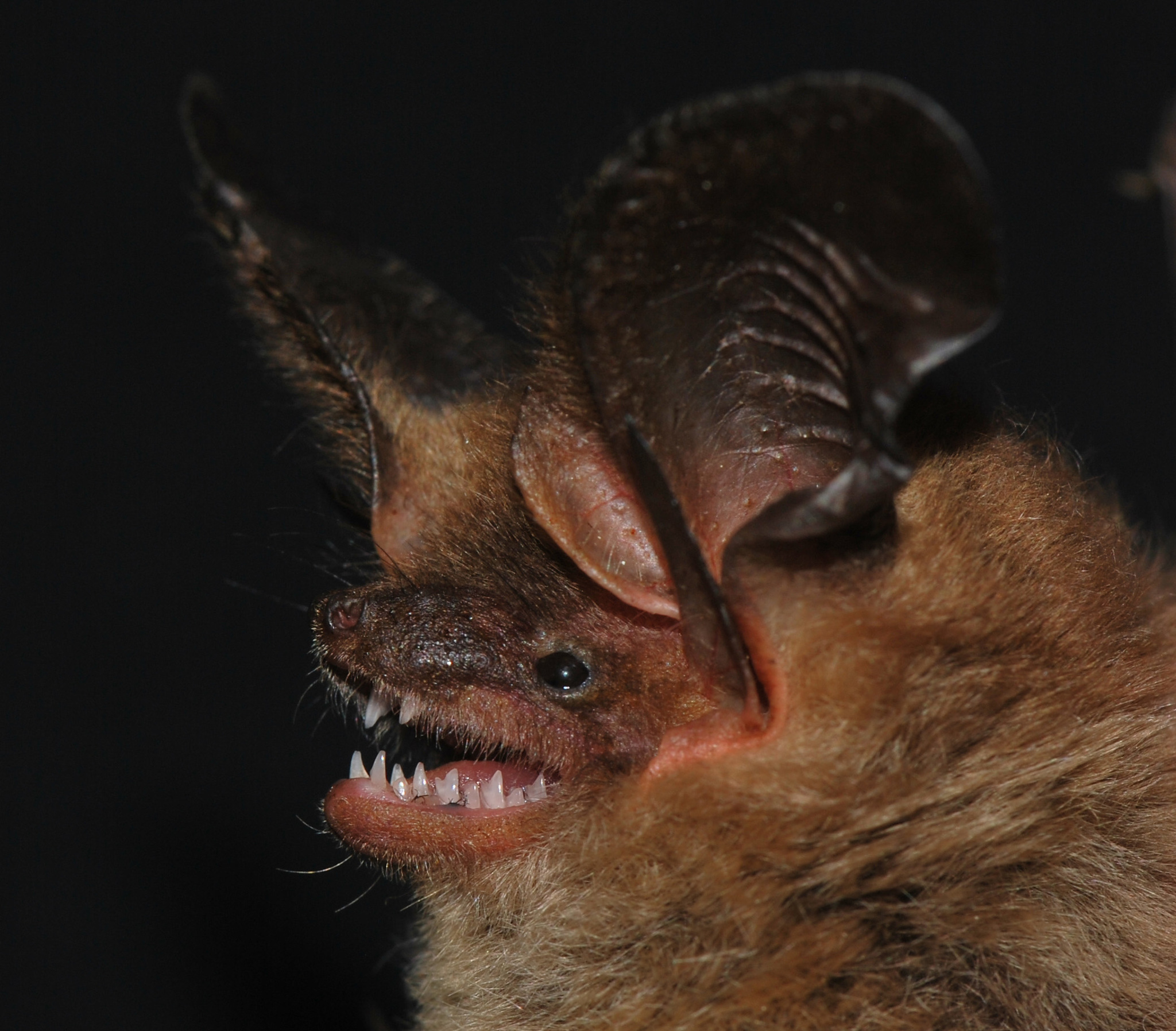
Histiotus (meaning "sail ears") is a genus of South American vesper bats with species that include:
Strange big-eared brown bat, Histiotus alienus
Cadena-García's big-eared brown bat, Histiotus cadenai
Colombian big-eared brown bat, Histiotus colombiae
Transparent-winged big-eared brown bat, Histiotus diaphanopterus
Humboldt big-eared brown bat, Histiotus humboldti
Thomas's big-eared brown bat, Histiotus laephotis
Big-eared brown bat, Histiotus macrotus
Southern big-eared brown bat, Histiotus magellanicus
Moche big-eared brown bat, Histiotus mochica
Small big-eared brown bat, Histiotus montanus
Tropical big-eared brown bat, Histiotus velatus
In Paraguay, Histiotus bats have mainly been collected at human dwellings or around domestic animals, due to the significant increase in human activity in the Paraguayan Chaco over the last 20 years.
Habitat
Histiotus is found in the tropical and temperate zones in South America. Their natural habitat ranges from areas with rocky mountains, to woods in Paraguay, Peru, Brazil, Argentina and Chile.
Behavior
Histiotus are aerial feeders and use echolocation to catch prey. They can create echolocation calls dominated by frequencies below 20 kHz in order to catch prey. Histiotus diet consists of insects; H. montanus mainly eats butterflies and flies, H. macrotus eats flies, and H. velatus eat moths.
Most of the species are colonial and some are considered individual. Individual systems are considered for bats that interact as one or less than ten bats. Females of most temperate zone bats form maternity colonies during summer to communally raise pups. These colonies allow individuals to reduce heat loss by forming a cluster. This is called social thermoregulation. (For more on metabolism go to: Metabolism).
Echolocation and feeding
Histiotus are aerial feeders and use echolocation to catch prey. They can create echolocation calls dominated by frequencies below 20 kHz in order to catch prey. Histiotus diet consists of insects; H. montanus...