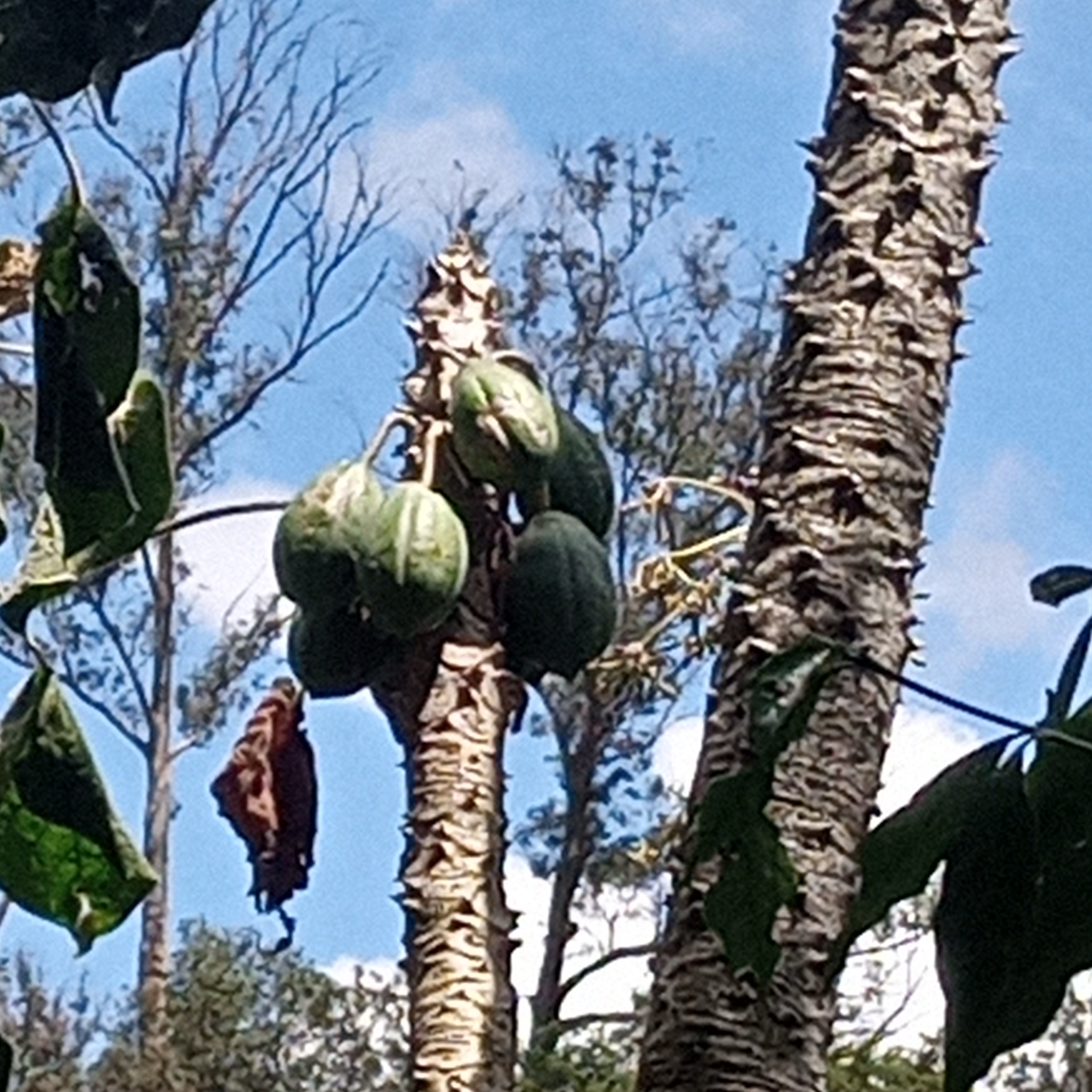
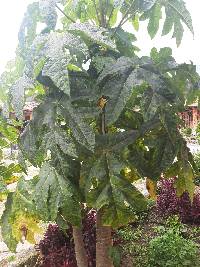
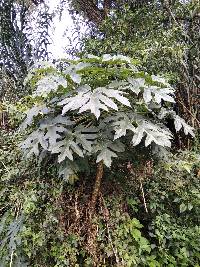
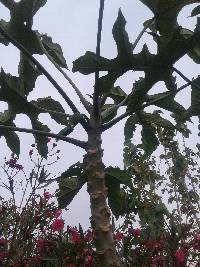
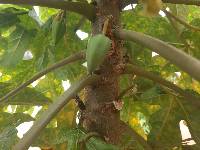
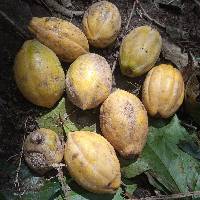
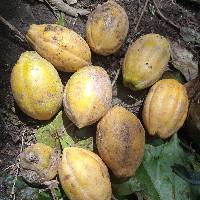
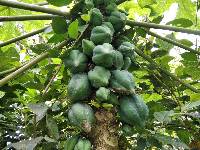
The mountain papaya (Vasconcellea pubescens) also known as mountain pawpaw, papayuelo, chamburo, or simply "papaya" is a species of the genus Vasconcellea, native to the Andes of northwestern South America from Colombia south to central Chile, typically growing at altitudes of 1,500–3,000 metres (4,900–9,800 ft).
It has also been known as Carica pubescens.
Description
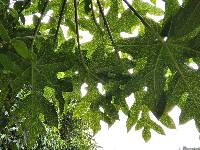
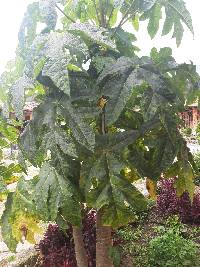
Vasconcellea pubescens is an evergreen pachycaul shrub or small tree with an average height of ca. 5 metres (16 ft) and can grow up to 10 metres (33 ft) tall. It has one central stem and palmate leaves of 5–7 lobes with thick pubescence on the underside of the leaf and petiole. The petioles are long and the top of the leaf has no pubescence. It has a fast growth rate which is one of the reasons it is considered invasive in some regions (see section Invasiveness) and it has an ecological preference for higher altitudes.
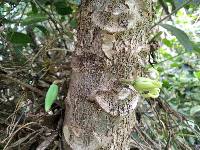
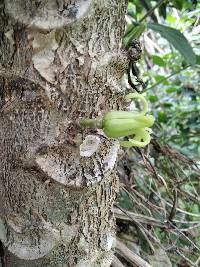
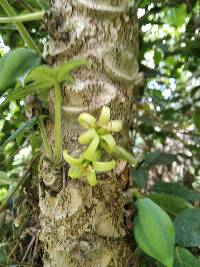
This plant is mostly dioecious but can be found to be monoecious or even andromonoecious. The existence of flowers of different sexes appears to depend on the season.
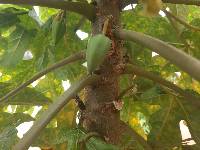
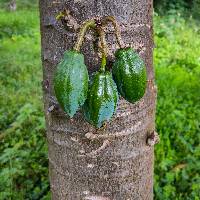
The fruits are arranged spirally along the trunk and a single tree can produce 50–60 fruits per year. The fruit is 6–15 centimetres (2.4–5.9 in) long and 3–8 centimetres (1.2–3.1 in) broad, with five broad longitudinal ribs from base to apex; it is green, maturing yellow to orange. The fruit pulp is edible, similar to papaya, and is usually cooked as a vegetable. It is also eaten raw.
Breeding and cultivars
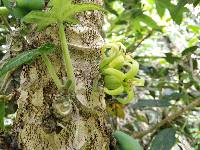
Flower of the mountain papaya
Vasconcellea pubescens is interfertile with other highland papayas giving it a lot of breeding potential. It is one of the parents of the 'Babaco' papaya, a hybrid cultivar widely grown for fruit production in South America, and in subtropical portions of North America.
The papaya ringspot virus (PRSV) presents a significant problem for papaya production worldwide. By contrast, V. pubescens has been consistently reported to be resistant to PRSV-P. Attempts at...