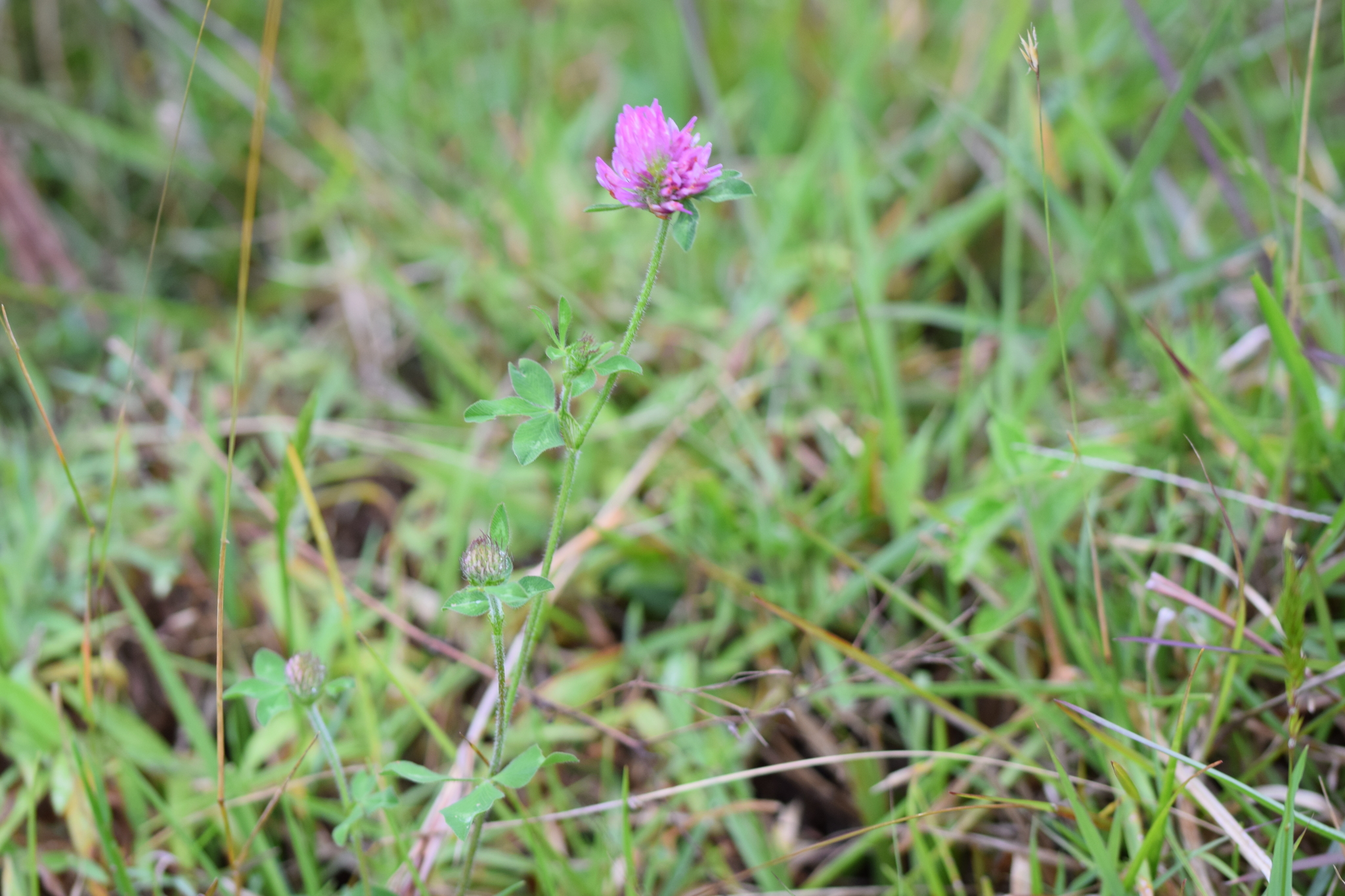
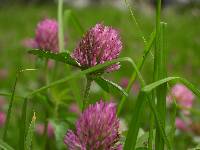
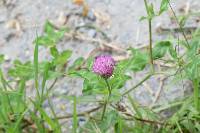
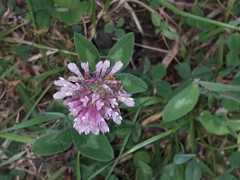
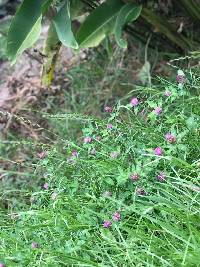
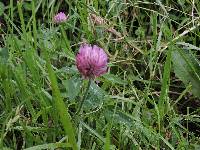
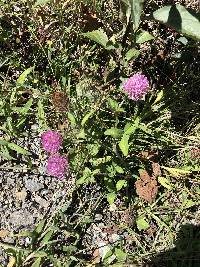
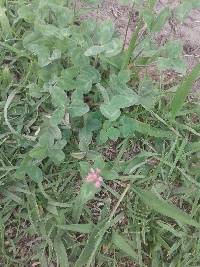
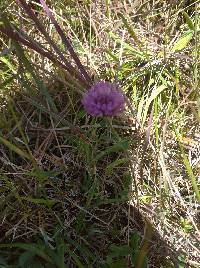
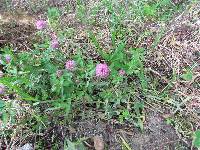
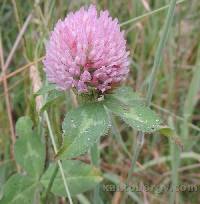
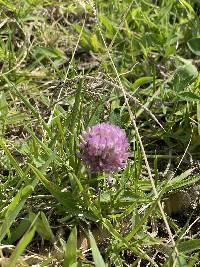
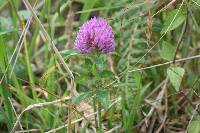
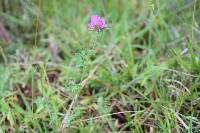
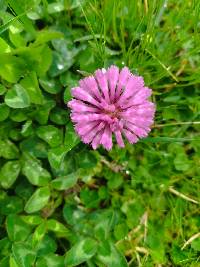
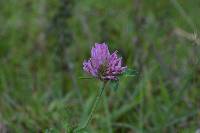
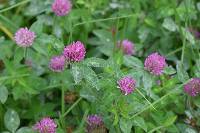
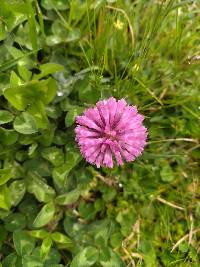
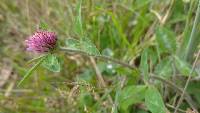
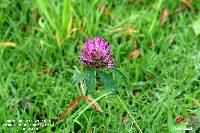
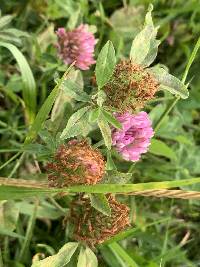
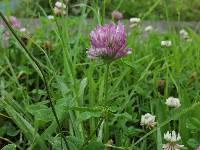
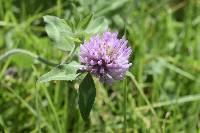
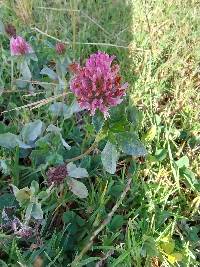
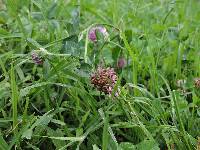
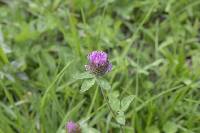
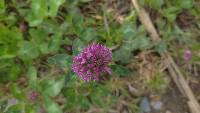
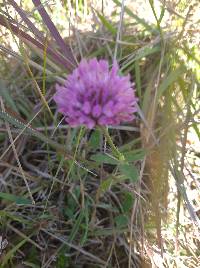
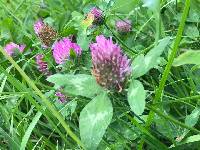
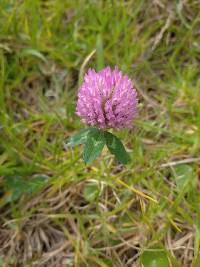
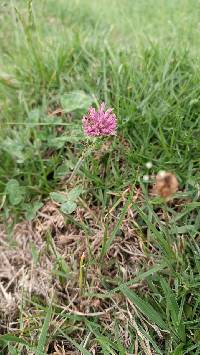
Trifolium pratense (from Latin prātum, meaning meadow), red clover, is a herbaceous species of flowering plant in the bean family, Fabaceae. It is native to the Old World, but planted and naturalised in many other regions.
Description
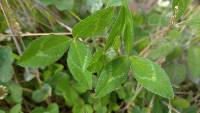
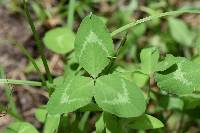
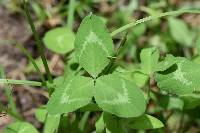
The red clover is a herbaceous, short-lived perennial plant, which is generally variable in size, growing to 20–80 cm (8–31 in) tall. It has a deep taproot which makes it tolerant to drought and gives it a good soil structuring effect. The leaves are alternate, trifoliate (with three leaflets), each leaflet
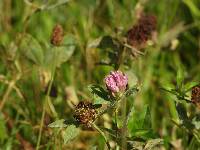
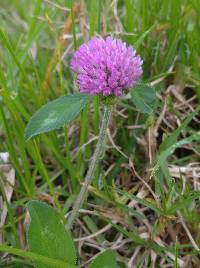
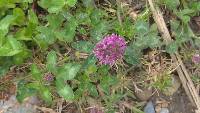
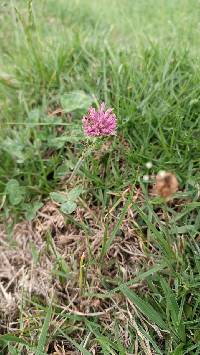
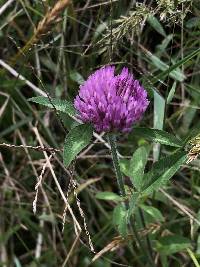
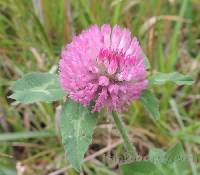
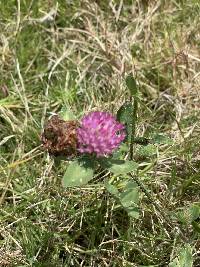
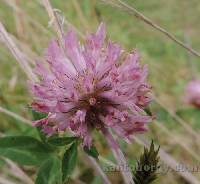
The flowers are dark pink with a paler base, 12–15 mm (1⁄2–5⁄8 in) long, produced in a dense inflorescence. In individual flowers, sepals are fused from the base into a hairy calyx tube with 5 teeth. The typical family 5 petals (standard, 2 wings and 2 keel) are also joined together at the base, and are up to 3 times longer than the calyx. The upper of the 10 stamens is free, with the filaments of the 9 other joined into a tube surrounding the style. They are mostly visited by bumblebees.
Cultivated varieties are substantially larger than the wild plants.
@media all and (max-width:720px){
Latvian specimen
Stem cross section
Leaf skin peel
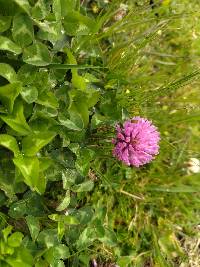
Flower
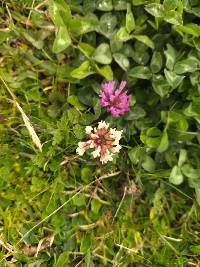
White-flowered form
Taxonomy
Trifolium pratense was initially published by Carl Linnaeus in his book Species Plantarum (1753).
The genus has 3 known subspecies:
The red clover is native to Europe, Western Asia, and northwest Africa, but it has been naturalised in other continents, like North and South America. Specifically, the red clover was brought to Argentina and Chile over 100 years ago, although it is not clear how exactly it was introduced. Additionally, it has been introduced to New Zealand.
Ecology
Red clover is a good pollen and nectar source for...