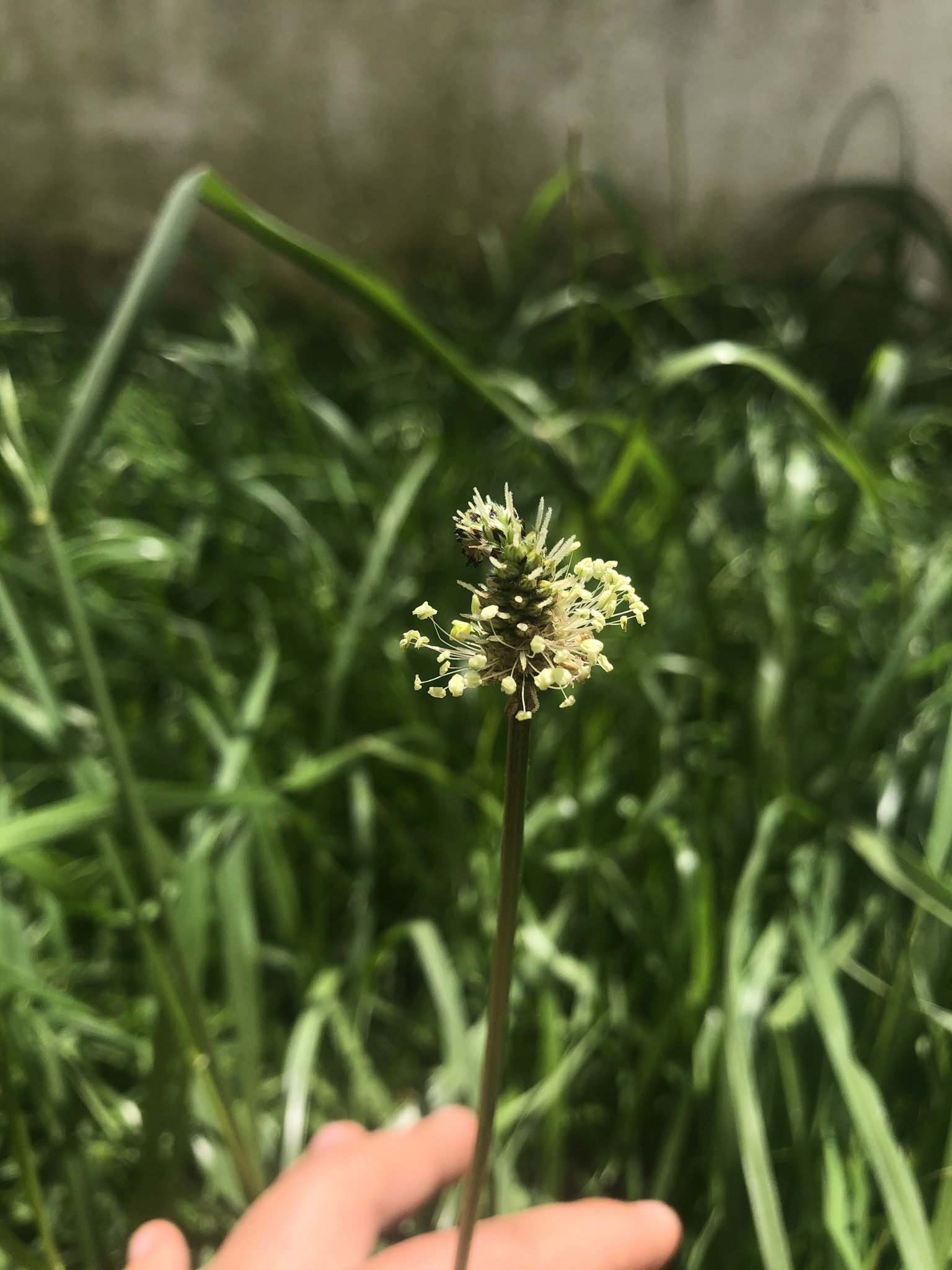
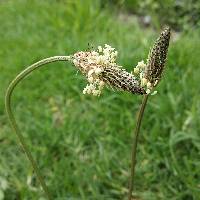
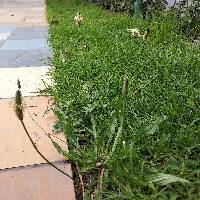
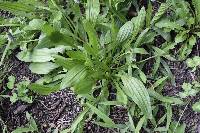
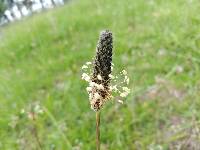
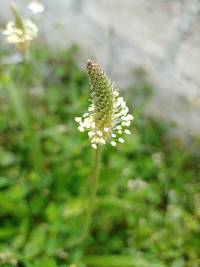
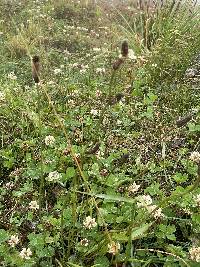
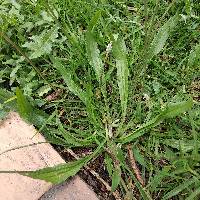
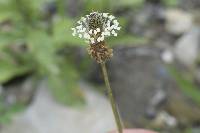
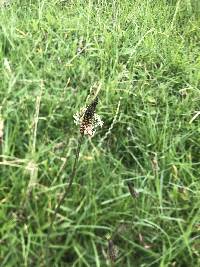
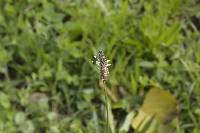
Plantago lanceolata is a species of flowering plant in the plantain family Plantaginaceae. It is known by the common names ribwort plantain, narrowleaf plantain, English plantain, ribleaf, lamb's tongue, and buckhorn. It is a common weed on cultivated or disturbed land.
Description
P. lanceolata (Japan)
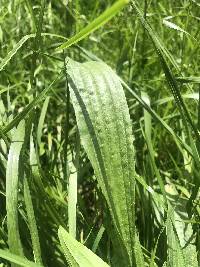
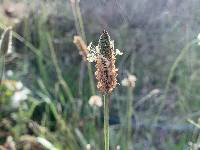
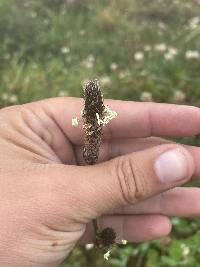
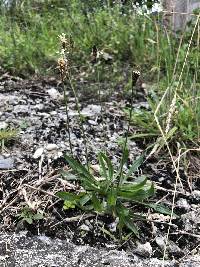
The plant is a rosette-forming perennial herb, with leafless, silky, hairy flower stems, growing to
The mode of reproduction can vary among populations. Reproduction occurs sexually, with the pollen being wind dispersed for the most part, though the plant is occasionally pollinated by bees.
Plantago lanceolata contains phenylethanoids such as acteoside (verbascoside), cistanoside F, lavandulifolioside, plantamajoside and isoacteoside. It also contains the iridoid glycosides aucubin and catalpol.
Reproduction
The mode of reproduction can vary among populations. Reproduction occurs sexually, with the pollen being wind dispersed for the most part, though the plant is occasionally pollinated by bees.
Chemistry
Plantago lanceolata contains phenylethanoids such as acteoside (verbascoside), cistanoside F, lavandulifolioside, plantamajoside and isoacteoside. It also contains the iridoid glycosides aucubin and catalpol.
Distribution and habitat
Plantago lanceolata is native to Europe and western Asia and is common across this range, including in Britain. It is widespread throughout the British Isles, but scarce on the most acidic soils (pH < 4.5). It has been introduced elsewhere in the world, including North America, Oceania and Japan at least 200 years ago and South Africa and Chile 150 years ago.
Considered to be an indicator of agriculture in pollen diagrams, P. lanceolata has been found in western Norway from the Early Neolithic onwards, which is considered an indicator of grazing in that area at the time.
The species can live anywhere from very dry meadows to places similar to a rain forest, but it does best in open, disturbed areas. It is therefore...