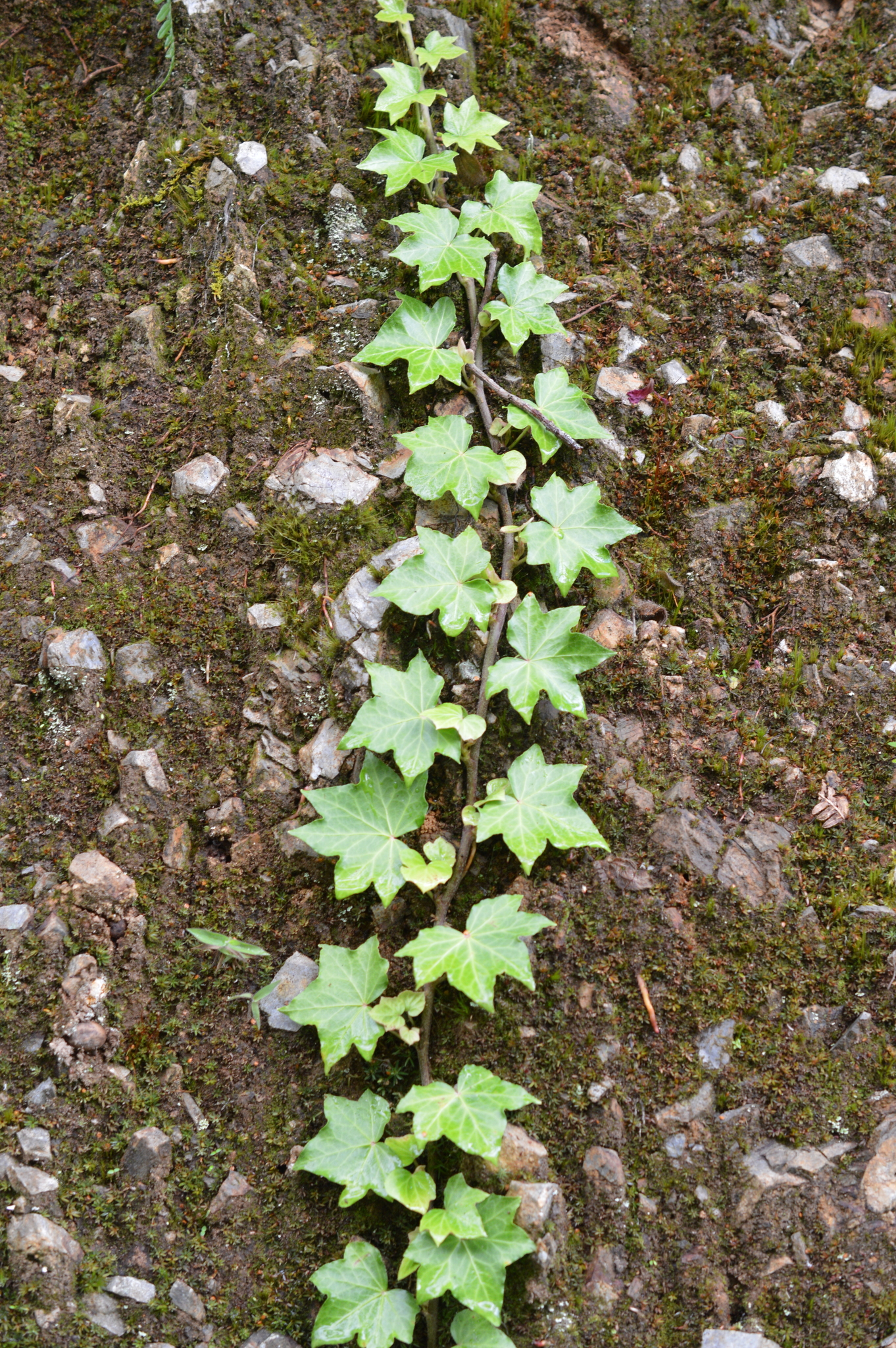
Hedera helix, simply ivy, or common ivy, English ivy, European ivy, or King's choice ivy, is a species of flowering plant in the family Araliaceae. It is native to most of Europe and parts of western Asia. Ivy is a clinging evergreen vine that grows on tree trunks, walls, and fences in gardens, waste spaces, and wild habitats. Ivy is common as an ornamental plant, but escaped plants become naturalised outside its native range. Ivy has considerable cultural significance and symbolism.
Synonyms include Hedera acuta, Hedera arborea ('tree ivy'), Hedera baccifera, and Hedera grandifolia. Other common names are bindwood and lovestone.
Description
Hedera helix is an evergreen climbing plant, growing to 20–30 m (66–98 ft) high where suitable surfaces (trees, cliffs, walls) are available, and also growing as groundcover where no vertical surfaces occur. It climbs by means of aerial rootlets with matted pads which cling strongly to the substrate. The ability to climb on surfaces varies with the plant's variety and other factors: H. helix prefers non-reflective, darker and rough surfaces with near-neutral pH. It generally thrives in a wide range of soil pH with 6.5 being ideal, prefers moist, shady locations and avoids exposure to direct sunlight, the latter promoting drying out in winter.
The leaves are alternate, 50–100 mm (2–4 in) long, with a 15–20 mm (0.6–0.8 in) petiole; they are of two types, with palmately five-lobed juvenile leaves on creeping and climbing stems, and unlobed cordate adult leaves on fertile flowering stems exposed to full sun, usually high in the crowns of trees or the top of rock faces.
The flowers are produced from late summer until late autumn, individually small, in 3-to-5 cm-diameter (1.2-to-2.0 in) umbels, greenish-yellow, and very rich in nectar, an important late autumn food source for bees and other insects.
The fruit are purple-black to orange-yellow berries 6–8 mm...