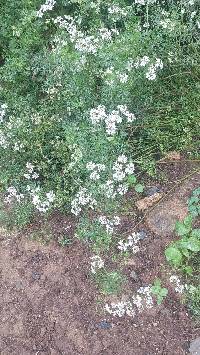
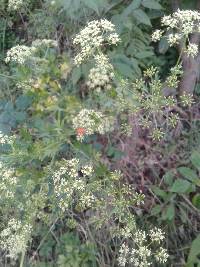
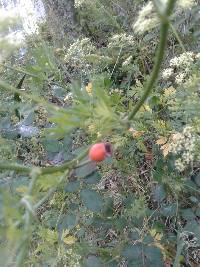
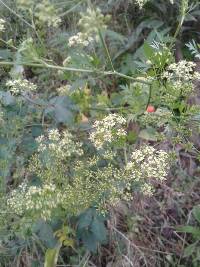
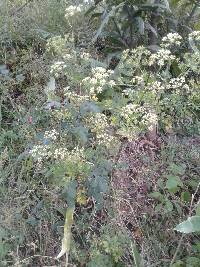
Coriander (), or Coriandrum sativum, is an annual herb in the family Apiaceae. The leaves are known as cilantro () in the US. Most people perceive the leaves as having a fresh, slightly citrus taste. Due to variations in the gene OR6A2, some people perceive its flavor to be more soaplike or rotten.
The species is native to the Mediterranean Basin. All parts of the plant are edible, with the fresh leaves and dried seeds most traditionally used in cooking. It is included in Peruvian, Mexican, Indian and Southeast Asian cuisines.
Description
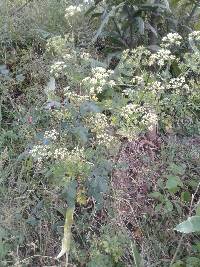
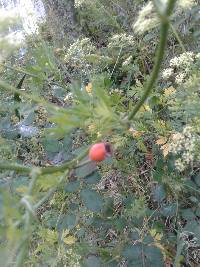
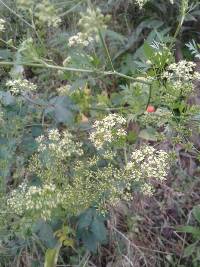
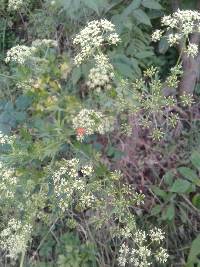
Coriandrum sativum flowers
It is a soft plant growing to 50 cm (20 in) tall. The leaves are variable in shape, broadly lobed at the base of the plant, and slender and feathery higher on the flowering stems.
The flowers are borne in small umbels, white or very pale pink, asymmetrical, with the petals pointing away from the centre of the umbel longer (
Linalool, a terpenoid, is a major contributor to the fragrance of coriander.
The essential oil from coriander leaves and seeds contains mixed polyphenols and terpenes, including linalool as the major constituent accounting for the aroma and flavour of coriander.
Different people may perceive the taste of coriander leaves differently. Those who enjoy it say it has a refreshing, lemony or lime-like flavour, while those who dislike it have a strong aversion to its pungent taste and smell, characterizing it as soapy or rotten. Studies also show variations in preference among different ethnic groups: 21% of East Asians, 17% of Europeans, and 14% of people of African descent expressed a dislike for coriander, but among the groups where coriander is popular in their cuisine, only 7% of South Asians, 4% of Hispanics, and 3% of Middle Eastern subjects expressed a dislike.
About 80% of identical twins shared the same preference for the herb, but fraternal twins agreed only about half the time, strongly suggesting a genetic component to the preference. In a genetic...