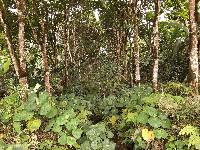
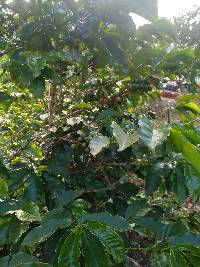
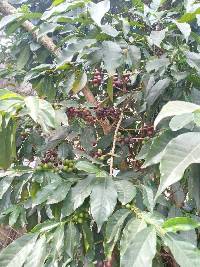
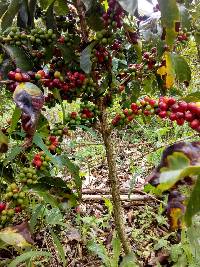
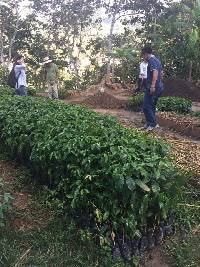
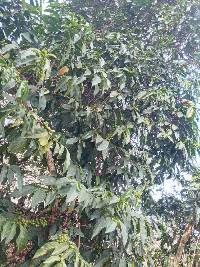
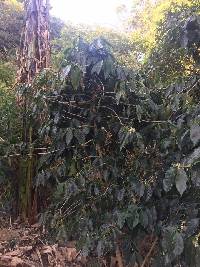
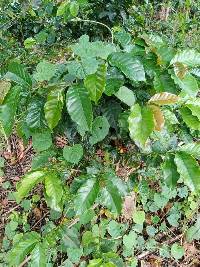
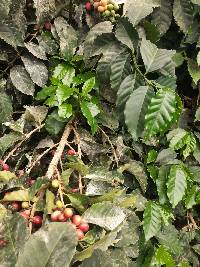
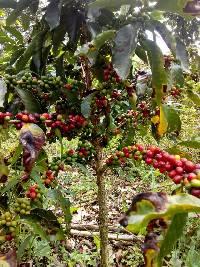
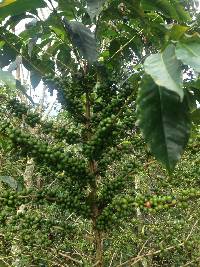
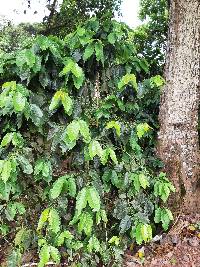
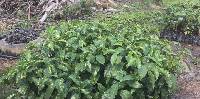
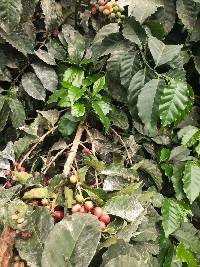
Coffea arabica (), also known as the Arabica coffee, is a species of flowering plant in the coffee and madder family Rubiaceae. It is believed to be the first species of coffee to have been cultivated and is the dominant cultivar, representing about 60% of global production. Coffee produced from the less acidic, more bitter, and more highly caffeinated robusta bean (C. canephora) makes up most of the remaining coffee production. The natural populations of Coffea arabica are restricted to the forests of South Ethiopia, South Sudan, and Yemen.
Description
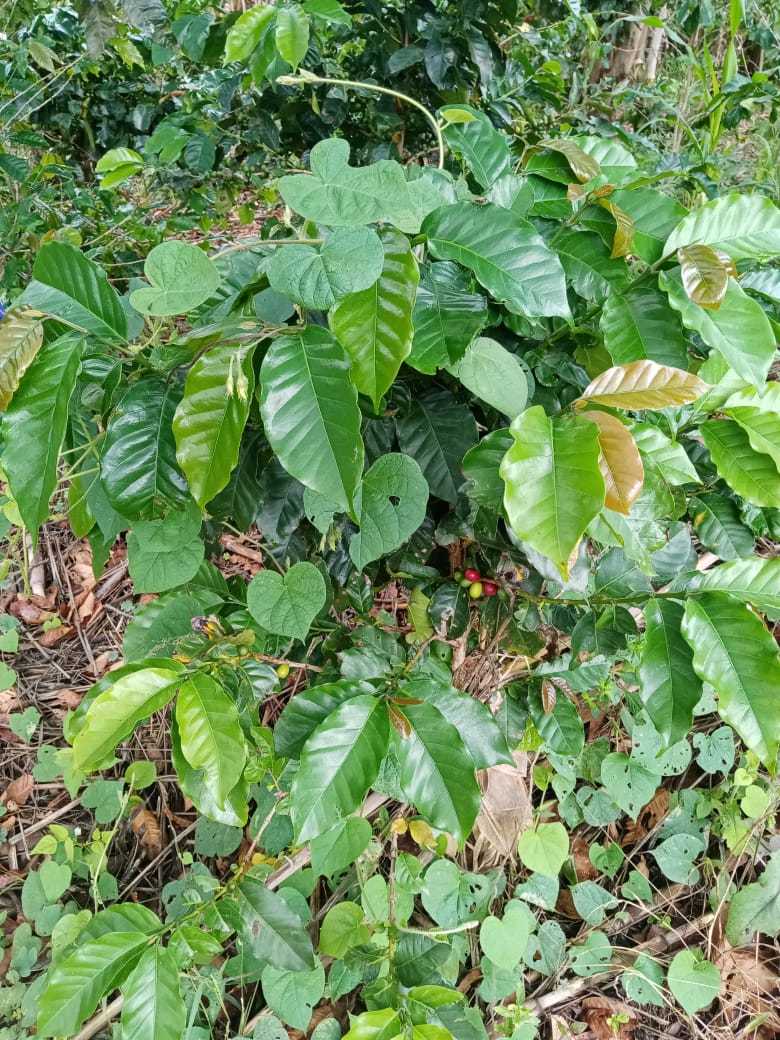
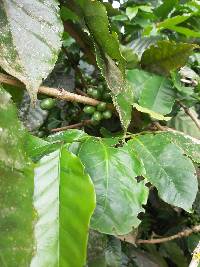
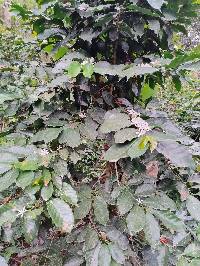
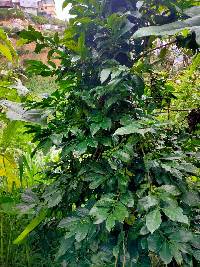
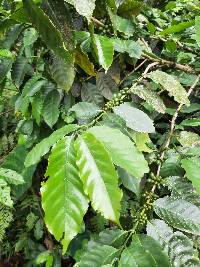
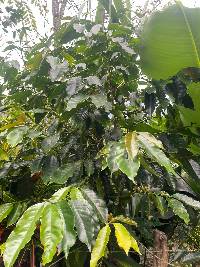
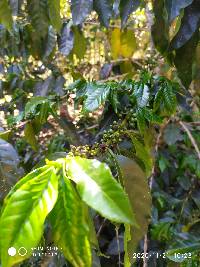
Wild plants grow between 9 and 12 m (30 and 39 ft) tall, and have an open branching system; the leaves are opposite, simple elliptic-ovate to oblong, 6–12 cm (2.5–4.5 in) long and 4–8 cm (1.5–3 in) broad, glossy dark green, with prominent veins and wavy margins.
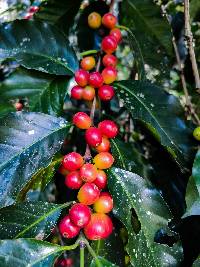
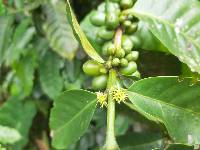
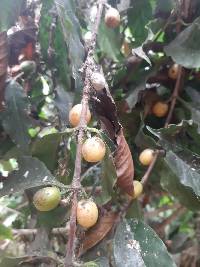
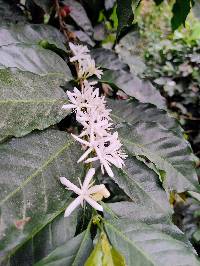
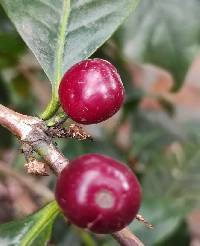
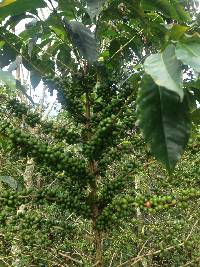
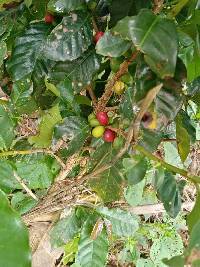
The flowers are white, 10–15 mm in diameter, and grow in axillary clusters of 2 to 9. The fruit is a drupe (commonly called a "cherry") 10–15 mm in diameter, maturing bright red to purple and typically containing two seeds each which become coffee beans.
Taxonomy
The botanical name Coffea arabica was formally published by Carl Linnaeus in his Species plantarum in 1753. The species had been described and depicted before, as Linnaeus was able to refer to Antoine de Jussieu, who named it Jasminum arabicum, published in 1715, after studying a specimen sent to him from the Botanic Garden of Amsterdam, Gaspard Bauhin's Pinax of 1623 under 'Evonymus IV' and Prospero Alpini's De plantis Aegypti liber, published in 1592.
Coffea arabica is one of the polyploid species of the genus Coffea, as it carries four copies of the eleven chromosomes (44 total) instead of the 2 copies of diploid species. Specifically, Coffea arabica is itself the result of a hybridization between the diploids Coffea canephora and Coffea eugenioides, thus making it an allotetraploid, with two copies of two different genomes. This hybridization...