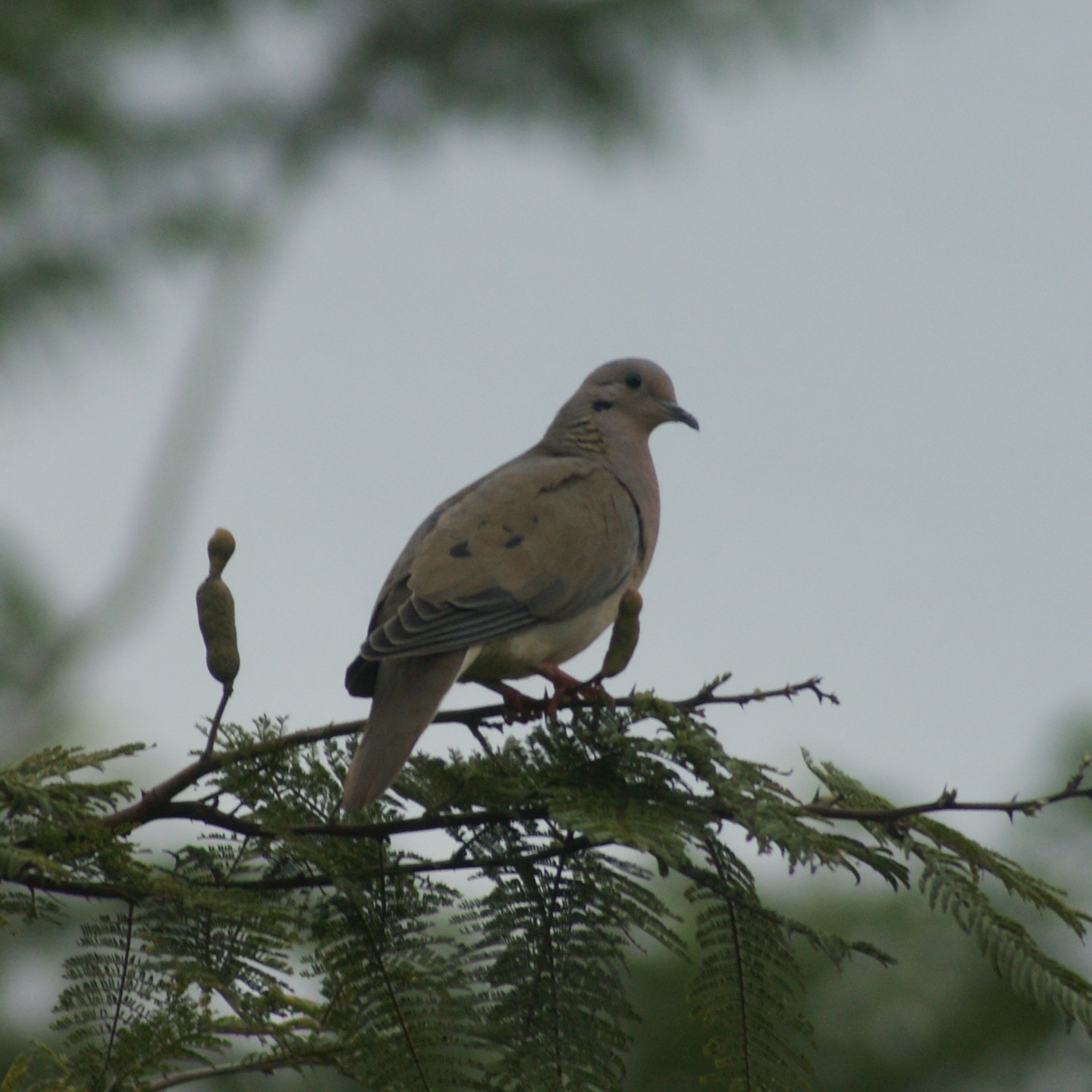
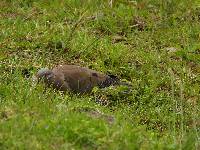
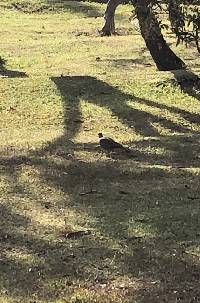
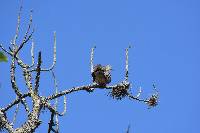
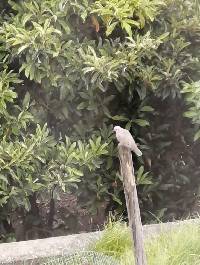
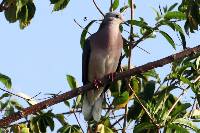
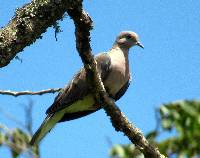
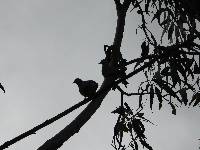
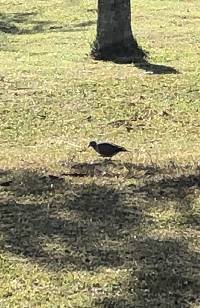
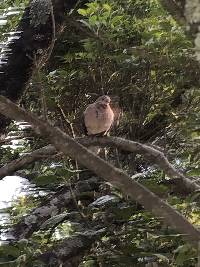
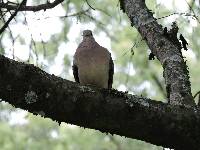
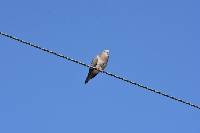
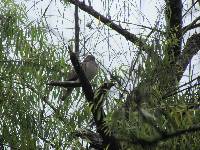
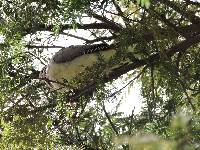
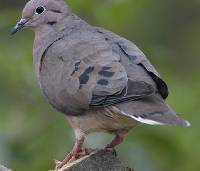
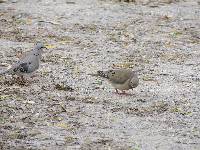
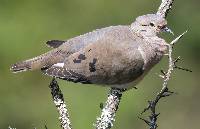
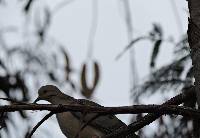
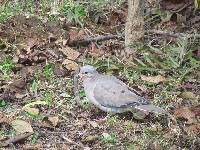
The eared dove (Zenaida auriculata) is a New World dove. It is a resident breeder throughout South America from Colombia to southern Argentina and Chile, and on the offshore islands from the Grenadines southwards. It may be a relatively recent colonist of Tobago and Trinidad. It appears to be partially migratory, its movements driven by food supplies.
It is a close relative of the North American mourning dove. With that species, the Socorro dove, and possibly the Galápagos dove, it forms a superspecies. The latter two are insular offshoots, the Socorro birds from ancestral mourning doves, and the Galápagos ones from more ancient stock.
Description
body.skin-vector-2022
Zenaida
White-winged dove (Z. asiatica)
West Peruvian dove (Z. meloda)
Zenaida dove (Z. aurita)
Eared dove (Z. auriculata)
Socorro dove (Z. graysoni)
Mourning dove (Z. macroura)
Cladogram showing the relationships of six species of doves in the genus Zenaida. This study did not include the Galápagos dove (Z. galapagoensis).
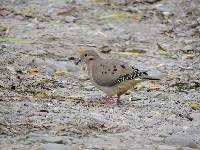
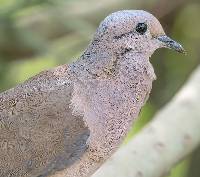
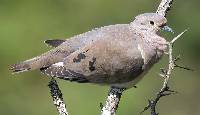
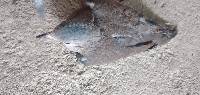
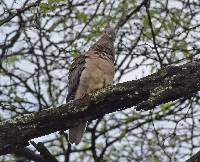
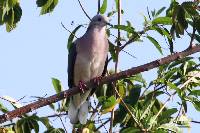
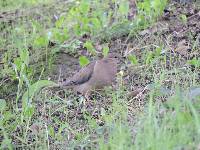
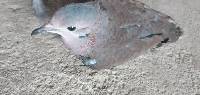
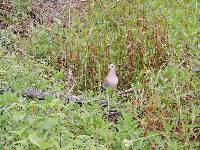
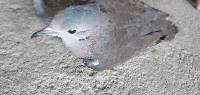
The eared dove is 24 cm (9.4 in) long with a long, wedge-shaped tail, and weighs normally about 112 g (4.0 oz). Adult males have mainly olive-brown upperpart plumage, with black spots on the wings. The head has a grey crown, black line behind the eye, and the blue-black on the lower ear coverts. These black markings give the species its English and specific names. The underparts are vinous, and the tail is tipped with cinnamon. The bill is black and the legs dark red.
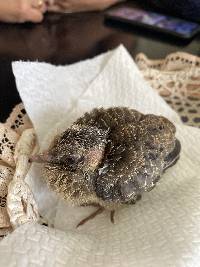
The female is duller than the male, and immature birds are greyish-brown, very dull, with pale barring. The species' call is a deep soft oo-ah-oo.
Ecology
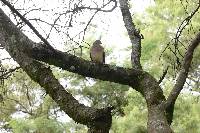
In southern Brazil, in the pampa region
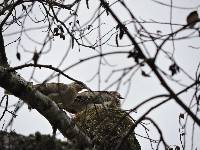
Adult and chicks in Uruguay
The eared dove is common to abundant in savannahs and other open areas,...