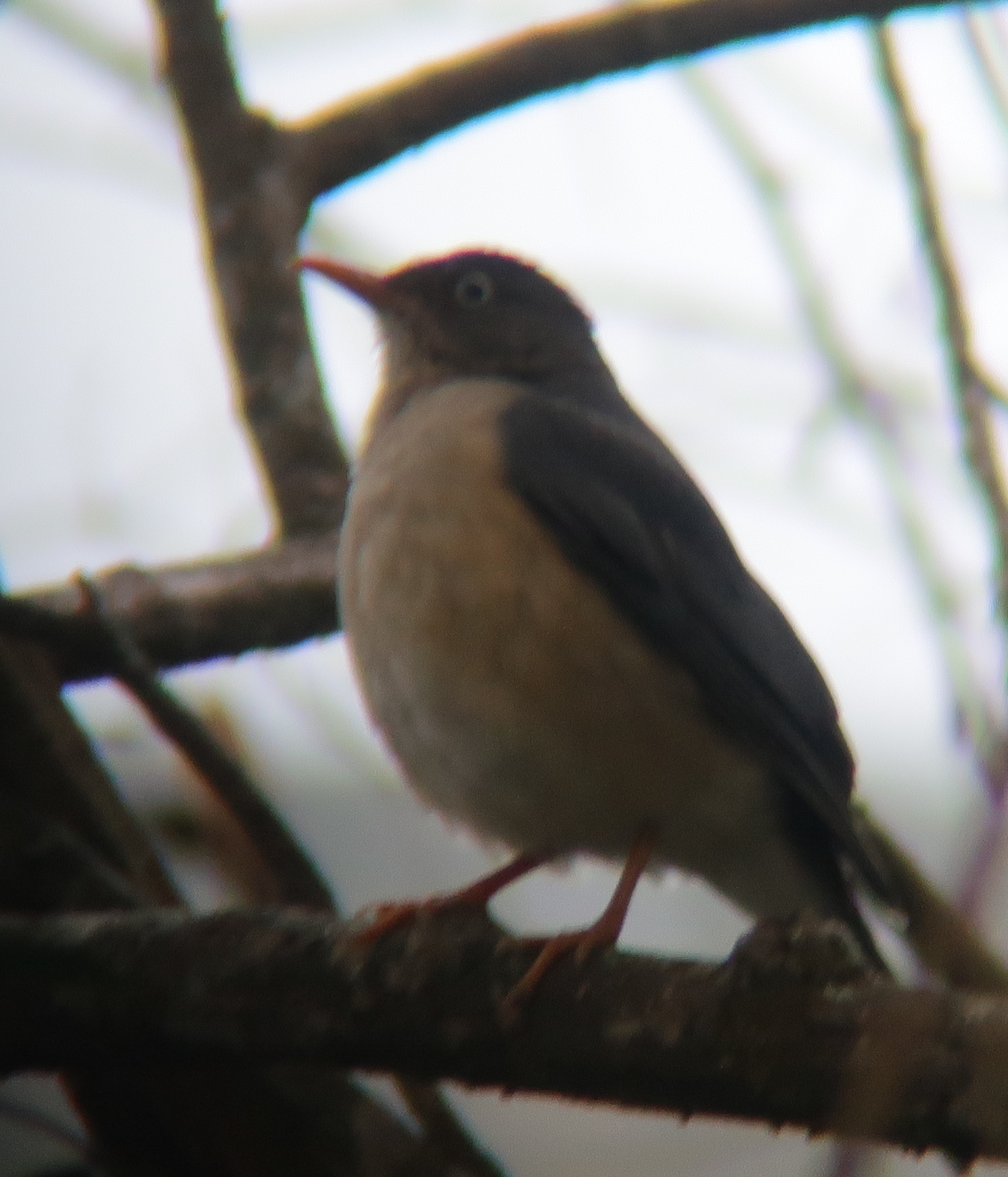
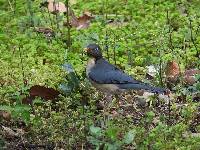
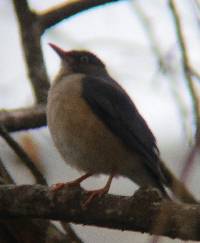
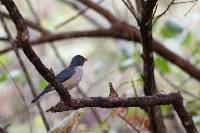
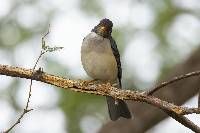
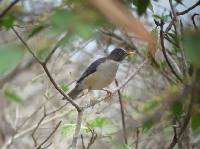
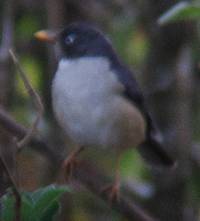
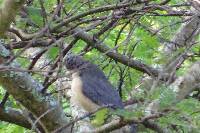
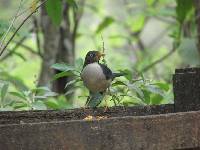
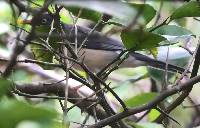
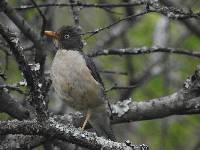
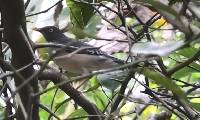
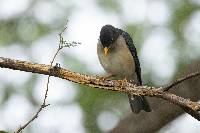
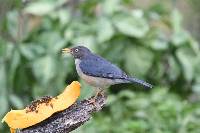
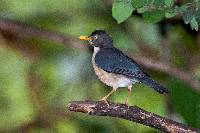
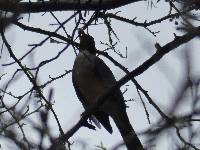
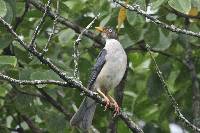
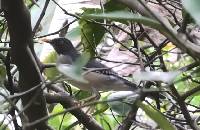
The plumbeous-backed thrush (Turdus reevei) is a species of bird in the family Turdidae. It is found in Ecuador and Peru.
Taxonomy and systematics
The plumbeous-backed thrush was originally described by George Newbold Lawrence in 1869 with its current binomial Turdus reevei. Lawrence chose the specific epithet reevei to honor J. F. Reeve, who collected the species' type specimen.
The plumbeous-backed thrush is monotypic.
Description
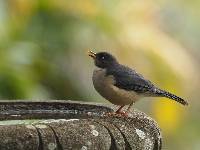
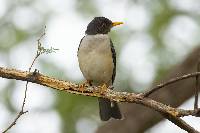
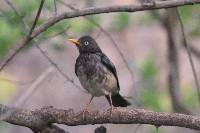
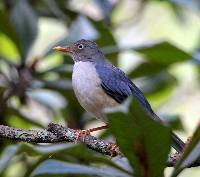
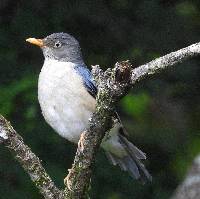
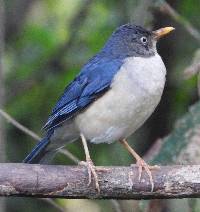
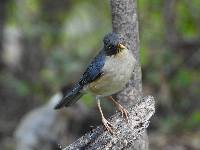
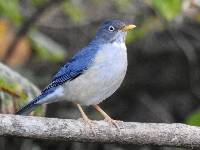
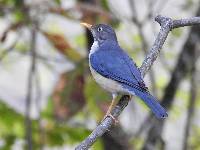
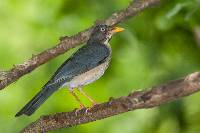
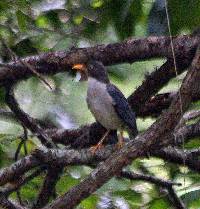
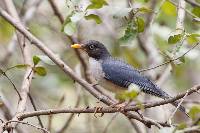
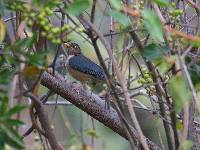
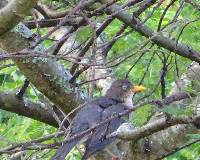
The plumbeous-backed thrush is 23 to 24 cm (9.1 to 9.4 in) long and weighs 61 to 66 g (2.2 to 2.3 oz). The sexes have almost the same plumage. Adult males have a mostly bluish slate-gray head with a dark-streaked white throat. Female's heads are slightly browner. Both sexes have bluish slate-gray upperparts, wings, and tail. They have a white crescent below the streaked throat, a pale gray breast that becomes white on the belly and vent, and an orange-buff wash on the flanks. Both sexes have a white to bluish white iris, a pale yellow bill, and pale yellow legs and feet. Juveniles are similar to adults but browner with buff spots and streaks on the upperparts and dark scallops in the underparts.
Distribution and habitat
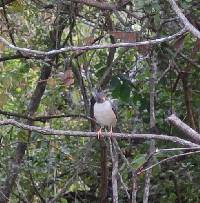
The plumbeous-backed thrush is found from central Manabí and northern Los Rios provinces in western Ecuador south into Peru to eastern Lambayeque and western Cajamarca departments. It inhabits the interior, edges, and clearings of deciduous forest, somewhat humid evergreen forest, deciduous and evergreen woodlands, and scrublands. In Peru it apparently favors areas along rivers. In Ecuador it occurs mostly below 1,600 m (5,200 ft) and in Peru occurs up to 1,500 m (4,900 ft).
Behavior
The plumbeous-backed thrush is believed to make seasonal movements that include occupying drier areas only during the rainy season.
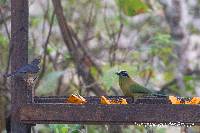
The plumbeous-backed thrush's diet has not been studied but is known to include fruits. It forages mostly in trees and often gathers in single-species flocks in fruiting ones. It also sometimes joins...