Bixa orellana, also known as achiote, is a shrub or small tree native to Mexico and Central and South America. Bixa orellana is grown in many countries worldwide.
The plant is best known as the source of annatto, a natural orange-red condiment (also called achiote or bijol) obtained from the waxy arils that cover its seeds. The ground seeds are widely used in traditional dishes in Central and South America, Mexico, and the Caribbean, such as cochinita pibil, chicken in achiote, caldo de olla, and nacatamal. Annatto and its extracts are also used as an industrial food coloring to add yellow or orange color to many products such as butter, cheese, margarine, ice creams, meats, and condiments. Some of the indigenous peoples of North, Central, and South America originally used the seeds to make red body paint and lipstick, as well as a spice. For this reason, the Bixa orellana is sometimes called the lipstick tree.
Etymology and common names
The name Bixa orellana was given by Linnaeus. The botanical genus name derives from the aboriginal Taíno word "bixa", while the specific epithet was derived in honor of the Amazon explorer Francisco de Orellana, an early explorer of the Amazon River. The name achiote derives from the Nahuatl word for the shrub, āchiotl [aːˈt͡ʃiot͡ɬ]. It may also be referred to as aploppas, or by its original Tupi name uruku, urucu or urucum ("red color"), which is also used for the body paint prepared from its seeds. Colloquial names include bija, roucou, orellana, annatto, achiote, and many other names used regionally. The nickname, "lipstick tree", derived from use of the dye as a cosmetic.
Description
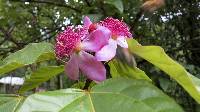
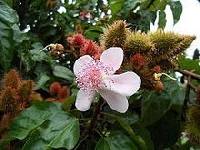
Bixa orellana is a perennial, tall shrub to small evergreen tree that can reach 6–10 m (20–33 ft) high. It bears clusters of 5 cm (2 in) bright white or pink flowers, resembling single wild roses, that appear at the tips of the branches. The fruits of the Bixa orellana are globular, ovoid capsules arranged in clusters resembling spiky...