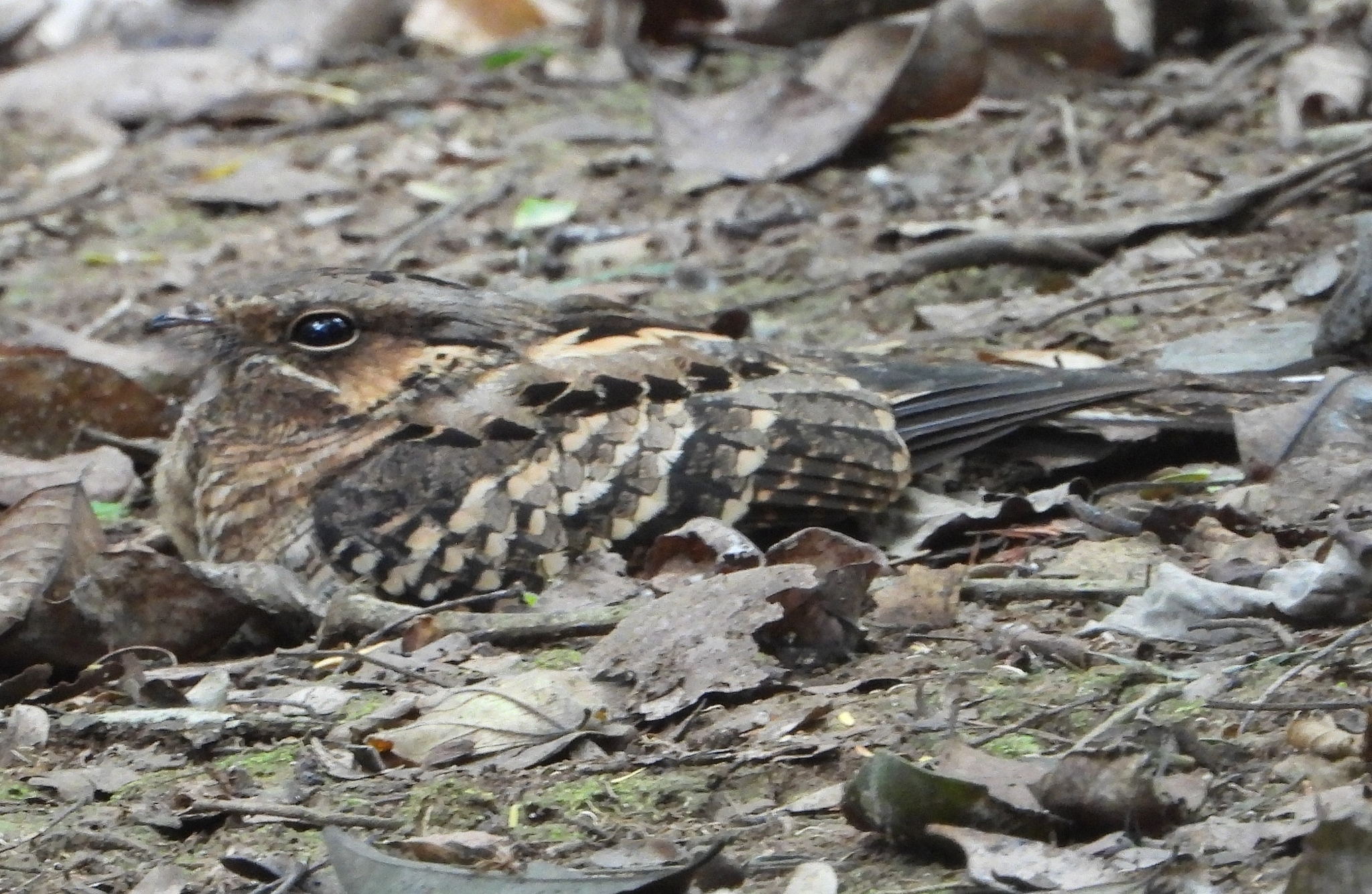
The pauraque (Nyctidromus albicollis) – also called the common pauraque to distinguish it from similar species – is a nightjar species, one of two birds in the genus Nyctidromus. It breeds in the subtropical and tropical regions of the New World, and except for northernmost birds it is largely resident all year round.
Taxonomy
The pauraque was formally described in 1789 by the German naturalist Johann Friedrich Gmelin in his revised and expanded edition of Carl Linnaeus's Systema Naturae. He placed it with all the other nightjars in the genus Caprimulgus and coined the binomial name Caprimulgus albicollis. Gmelin based his description on the "white-throated goatsucker" that had been described in 1783 by the English ornithologist John Latham in his A General Synopsis of Birds. Latham had examined a preserved specimen in London that was thought to have come from Cayenne, French Guiana. The pauraque is now placed with Anthony's nightjar in the genus Nyctidromus that was introduced in 1838 by the English ornithologist John Gould. The genus name combines the Ancient Greek nukti- meaning "nocturnal" or "night-" with -dromos meaning "-racer". The specific epithet albicollis combines the Latin albus meaning "white" with the Modern Latin "-collis" meaning "-necked".
The common name "pauraque" may be an onomatopoeia from the bird's wailing call.
Six subspecies are recognised:
N. a. insularis Nelson, 1898 – Tres Marías Is. (off w Mexico)
N. a. merrilli Sennett, 1888 – south Texas (USA) and northeast Mexico
N. a. yucatanensis Nelson, 1901 – west, east Mexico (including Yucatán Peninsula) to central Guatemala
N. a. gilvus Bangs, 1902 – central, east Panama and north Colombia
N. a. albicollis (Gmelin, JF, 1789) – south Guatemala to northwest Peru; east Colombia, northwest Peru and Venezuela through the Guianas and Brazil
N. a. derbyanus Gould, 1838 – Bolivia, central, south Brazil, Paraguay and northeast Argentina
Common pauraque roosting in Manuel...