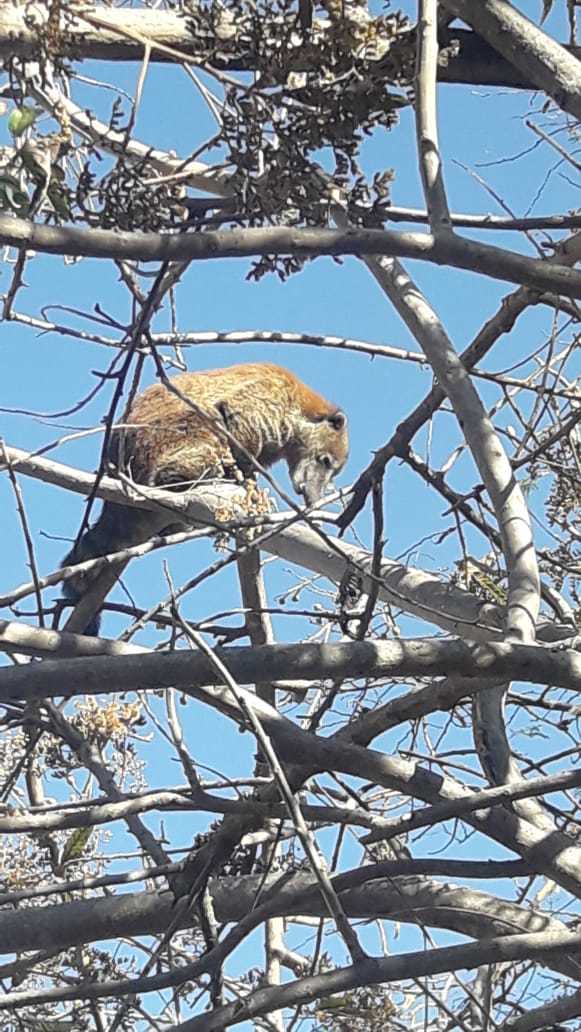
Nasua is a genus of coatis of the family Procyonidae. Two additional species of coatis, commonly known as mountain coatis, are placed in the genus Nasuella.
Characteristics
Nasua differs from Nasuella in being larger and having larger canine teeth, but preliminary genetic evidence (cytochrome b sequences) suggests that Nasuella should be merged into Nasua. Other genetic studies have shown that the closest relatives of the coatis are the olingos (genus Bassaricyon), from which they diverged about 10.2 million years ago.
Diet
Like other procyonids, coatis are omnivores. Their diet consists largely of insects (including their larvae), spiders and other invertebrates as well as the occasional small vertebrate discovered while energetically foraging, with their sensitive noses to the ground, in forest leaf litter. On Barro Colorado Island, Panama, where they have been studied in greatest detail, they supplement this diet with copious amounts of fruit as it becomes available seasonally from favored trees, such as figs (Ficus insipida) and hog plums (Spondias mombin).
Behavior
Coati band performing mutual grooming after reaggregation
Their very active foraging behavior appears to be interrelated with their distinctive social organization. Exceptional among procyonids, coatis are diurnal and for much of the year gregarious. Though females nest, and bear and nurse their young in isolation, shortly after the altricial young become mobile the females aggregate into social groups known as bands. Bands consist of adult females (two or more years old), and sub-adults (1–2 years old) and juveniles (less than 1 year old) of both sexes. At maturity, at two years of age, males are excluded from bands and take up a solitary lifestyle. They are aggressively repelled from bands, except during the mating season when typically one male ingratiates himself to a band through submissive behavior, forages with it for a period of a few weeks, and mates with all of the adult females. During the nesting...